
Bengaluru Metro Phase 3 to Affect 6,868 Trees
RAILWAYS & METRO RAIL

Bengaluru Metro Phase 3 to Affect 6,868 Trees

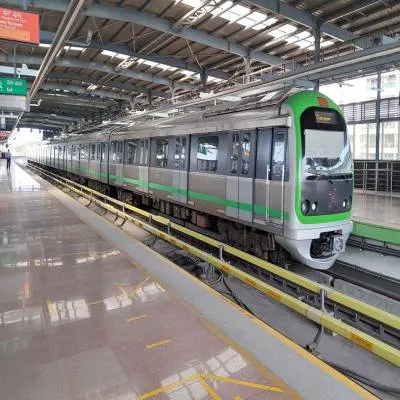
As many as 6,868 trees will be affected by Namma Metro Phase 3, according to the project’s Environmental Impact Assessment (EIA) report, significantly lower than the earlier estimate of 11,137 trees. Of the affected trees, 65 per cent will be felled, 15 per cent transplanted and 20 per cent pruned.

For every tree felled, Bangalore Metro Rail Corporation Ltd (BMRCL) has committed to transplanting 10 saplings of native species at a cost of Rs 2,000 per sapling. The EIA notes that a heritage banyan tree with a girth of 2,700 cm and a canopy spread of 1,242 sq m—one of the city’s largest—will also be impacted, as highlighted in a separate study by Azim Premji University.

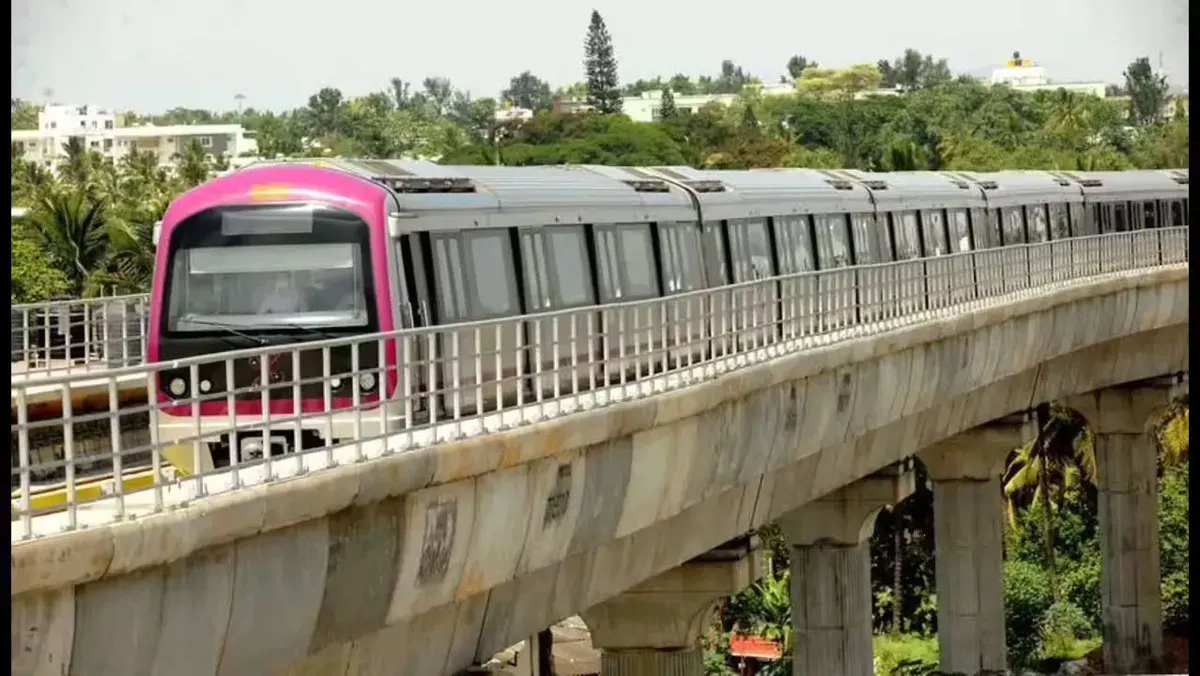
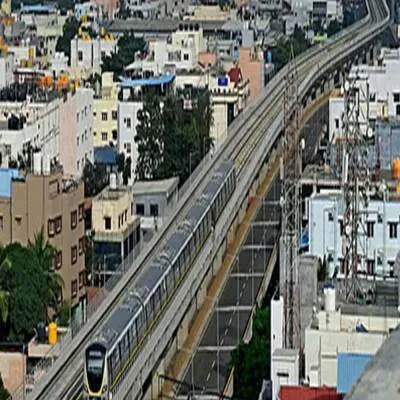
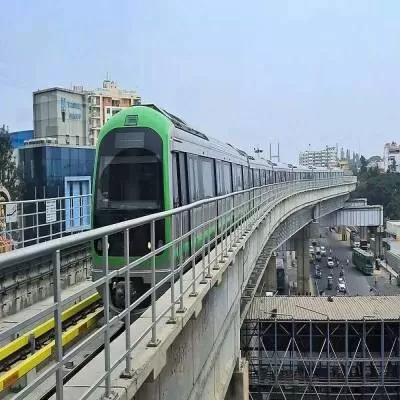
Phase 3 comprises two elevated corridors spanning 44.65 km. Corridor 1, measuring 32.2 km, will run from JP Nagar 4th Phase to Kempapura, while Corridor 2, at 12.45 km, will connect Hosahalli to Kadabagere along Magadi Road. Once completed, Phase 3 will expand Bengaluru’s metro network to 222.2 km, with the project currently slated for completion in May 2031.

Although the project has secured all statutory clearances, construction was delayed due to revised plans to build a 37.12-km double-decker metro-cum-road structure along the alignment. BMRCL plans to float tenders later this month, with construction expected to begin in June.

BMRCL said only trees that obstruct construction will be transplanted, felled or pruned, based on on-site verification by the Tree Expert Committee. Trees not designated for removal will not be damaged during construction. The corporation has also committed to monitoring the survival of transplanted trees and saplings for five years, replacing any that do not survive on an annual basis.

To mitigate environmental impact, BMRCL plans to plant native shrubs and groundcovers in medians beneath elevated sections to create green belts and improve streetscapes. Under compensatory afforestation, it will spend Rs 71.8 million along Corridor 1 and Rs 16.9 million along Corridor 2. Additional allocations of Rs 197 million and Rs 62.6 million, respectively, have been earmarked for environmental monitoring during construction.

Tree-cutting permission for Package 1 (JP Nagar–Mysuru Road) was granted in September 2025, and approvals for the entire project are expected by mid-2026. The EIA also notes potential impacts on the bonnet macaque, a vulnerable species listed on the IUCN Red List, for which a species-specific conservation plan has been prepared.

However, concerns have been raised by environmental groups. Dattatreya T Devare of the Bangalore Environment Trust said the EIA lacks sufficient detail on affected trees and alleged inadequate transparency, noting that public consultations were held in August and September without adequate information being shared in advance.

As many as 6,868 trees will be affected by Namma Metro Phase 3, according to the project’s Environmental Impact Assessment (EIA) report, significantly lower than the earlier estimate of 11,137 trees. Of the affected trees, 65 per cent will be felled, 15 per cent transplanted and 20 per cent pruned. For every tree felled, Bangalore Metro Rail Corporation Ltd (BMRCL) has committed to transplanting 10 saplings of native species at a cost of Rs 2,000 per sapling. The EIA notes that a heritage banyan tree with a girth of 2,700 cm and a canopy spread of 1,242 sq m—one of the city’s largest—will also be impacted, as highlighted in a separate study by Azim Premji University. Phase 3 comprises two elevated corridors spanning 44.65 km. Corridor 1, measuring 32.2 km, will run from JP Nagar 4th Phase to Kempapura, while Corridor 2, at 12.45 km, will connect Hosahalli to Kadabagere along Magadi Road. Once completed, Phase 3 will expand Bengaluru’s metro network to 222.2 km, with the project currently slated for completion in May 2031. Although the project has secured all statutory clearances, construction was delayed due to revised plans to build a 37.12-km double-decker metro-cum-road structure along the alignment. BMRCL plans to float tenders later this month, with construction expected to begin in June. BMRCL said only trees that obstruct construction will be transplanted, felled or pruned, based on on-site verification by the Tree Expert Committee. Trees not designated for removal will not be damaged during construction. The corporation has also committed to monitoring the survival of transplanted trees and saplings for five years, replacing any that do not survive on an annual basis. To mitigate environmental impact, BMRCL plans to plant native shrubs and groundcovers in medians beneath elevated sections to create green belts and improve streetscapes. Under compensatory afforestation, it will spend Rs 71.8 million along Corridor 1 and Rs 16.9 million along Corridor 2. Additional allocations of Rs 197 million and Rs 62.6 million, respectively, have been earmarked for environmental monitoring during construction. Tree-cutting permission for Package 1 (JP Nagar–Mysuru Road) was granted in September 2025, and approvals for the entire project are expected by mid-2026. The EIA also notes potential impacts on the bonnet macaque, a vulnerable species listed on the IUCN Red List, for which a species-specific conservation plan has been prepared. However, concerns have been raised by environmental groups. Dattatreya T Devare of the Bangalore Environment Trust said the EIA lacks sufficient detail on affected trees and alleged inadequate transparency, noting that public consultations were held in August and September without adequate information being shared in advance.

Next Story
Infrastructure Urban

Mount Invests Rs 250 Cr, Adds PUF & PEB Plants, 400+ Jobs

TUMKUR, Karnataka, January 8, 2025 - Mount Roofing & Structures Private Limited, one of India's  fastest-growing manufacturers in PUF and a leading solutions provider across Pre-Engineered Building  (PEB) and Polycarbonate sheets, simultaneously inaugurated its second fully automated continuous  Sandwich Panel manufacturing line and a new PEB manufacturing plant at its integrated campus in  Tumkur." The milestone expansion, part of a total investment of INR 250 crores, marks a significant  advancement in the company's commitment to engineered performance, manu..

Next Story
Infrastructure Urban

Titan Intech Strengthens UltraLED Push With Global LED Veteran

Titan Intech has announced the induction of global LED industry veteran Su Piow Ko to its Board of Directors, marking a strategic step in strengthening its UltraLED Displays roadmap and building globally competitive LED display solutions from India.The appointment aligns with Titan Intech’s ambition to position India as a hub for advanced, high-quality LED display manufacturing. With an increased focus on UltraLED Displays, the company aims to enhance technical governance, raise manufacturing standards and expand its presence across global markets.Su Piow Ko brings over three decades of inte..

Next Story
Infrastructure Urban

Dun & Bradstreet Flags New Growth Engines in India 2026 Outlook

Dun & Bradstreet has released its India 2026: D&B’s Perspective report, projecting a stable macroeconomic environment underpinned by fresh opportunities for productivity-led and inclusive growth. The report outlines how India’s next growth phase will be driven by digitised logistics, trusted data ecosystems, clean energy and rising city vitality.According to the outlook, India’s GDP growth is expected to reach around 6.6 per cent by FY2027, supported by resilient consumer demand and sustained public investment. Manufacturing is seen entering a new phase, moving beyond scale towar..

Advertisement

Subscribe to Our Newsletter

Get daily newsletters around different themes from Construction world.

STAY CONNECTED

Advertisement

Advertisement

Advertisement

Advertisement

Open In App