Cabinet Approves Two Multitracking Rail Projects Adding 601 km
RAILWAYS & METRO RAIL

Cabinet Approves Two Multitracking Rail Projects Adding 601 km

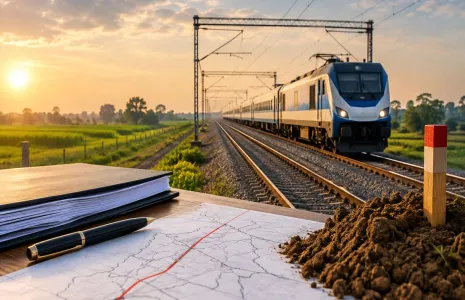
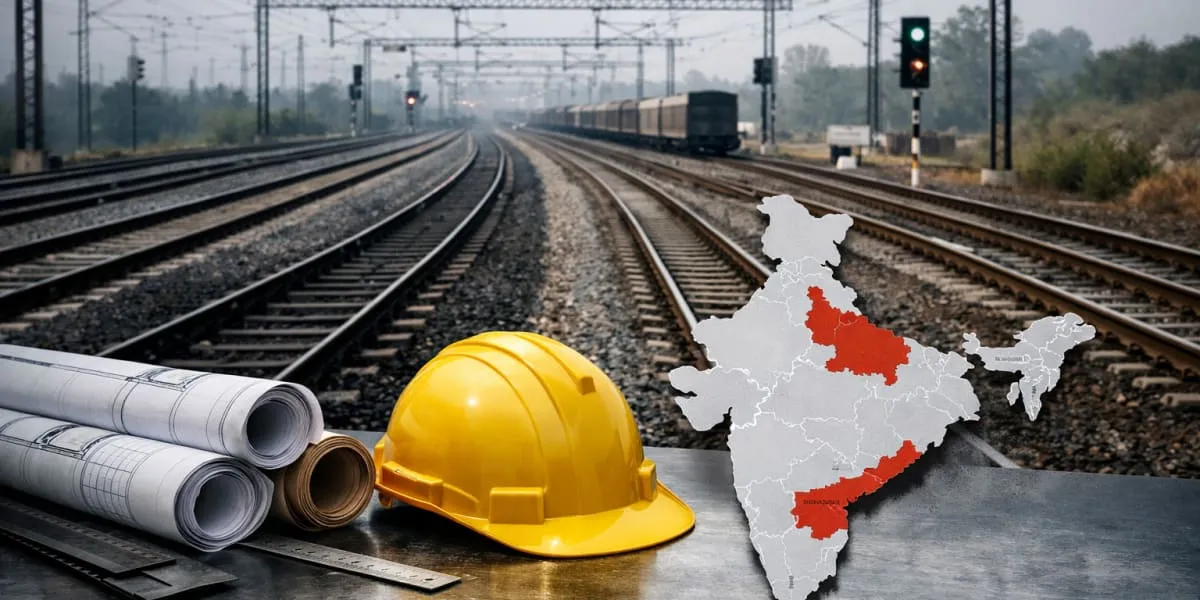
The Cabinet Committee on Economic Affairs, chaired by the Prime Minister, approved two multitracking projects by the Ministry of Railways with a combined cost of Rs 24,815 crore to be completed by 2030-31. The cost is Rs 248.15 billion (bn) and the projects will add about 601 km to the network across 15 districts in Uttar Pradesh and Andhra Pradesh, increasing track length by 1,317 km. The approval is part of the PM?Gati Shakti National Master Plan to enhance multi?modal connectivity and logistic efficiency.

The Ghaziabad–Sitapur third and fourth line covers a route length of 403 km and a track length of 859 km on the Delhi–Guwahati High Density Network. The section operates at about 168 per cent capacity and would reach 207 per cent if the project is not taken up. The project cost is Rs 14,926 crore, or Rs 149.26 bn, and it is expected to generate 27.4 million (mn) human?days of employment while saving about 1,287.7 mn kg of CO2 equivalent and yielding logistic savings of Rs 28.77 bn per year.

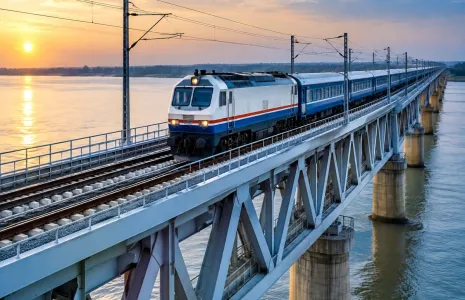
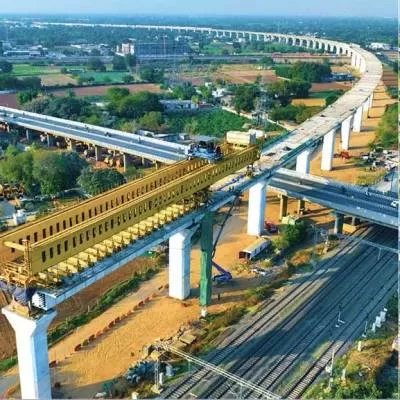
The Rajahmundry (Nidadavolu)–Visakhapatnam (Duvvada) third and fourth line covers 198 km of route and 458 km of track as part of the Howrah–Chennai High Density Network. The section is operating at about 130 per cent capacity and serves major ports and industrial centres on the east coast. The project includes a 4.3 km rail bridge over the Godavari and a 2.67 km viaduct, shortens the alignment by around 8 km and has an estimated cost of Rs 9,889 crore, or Rs 98.89 bn, with 13.5 mn human?days of employment and annual logistic savings of Rs 11.51 bn.

Together the projects are projected to support additional freight of 35.72 million tonnes per annum (MTPA) and 29.04 MTPA, improve access to tourist destinations and industrial hubs and boost regional opportunities. The measures contribute to national climate goals by lowering CO2 emissions by about 1,803.1 mn kg, equivalent to the plantation of 73.3 mn trees, while improving service reliability for Indian Railways. Stakeholder consultations and integrated planning will guide implementation.

The Cabinet Committee on Economic Affairs, chaired by the Prime Minister, approved two multitracking projects by the Ministry of Railways with a combined cost of Rs 24,815 crore to be completed by 2030-31. The cost is Rs 248.15 billion (bn) and the projects will add about 601 km to the network across 15 districts in Uttar Pradesh and Andhra Pradesh, increasing track length by 1,317 km. The approval is part of the PM?Gati Shakti National Master Plan to enhance multi?modal connectivity and logistic efficiency. The Ghaziabad–Sitapur third and fourth line covers a route length of 403 km and a track length of 859 km on the Delhi–Guwahati High Density Network. The section operates at about 168 per cent capacity and would reach 207 per cent if the project is not taken up. The project cost is Rs 14,926 crore, or Rs 149.26 bn, and it is expected to generate 27.4 million (mn) human?days of employment while saving about 1,287.7 mn kg of CO2 equivalent and yielding logistic savings of Rs 28.77 bn per year. The Rajahmundry (Nidadavolu)–Visakhapatnam (Duvvada) third and fourth line covers 198 km of route and 458 km of track as part of the Howrah–Chennai High Density Network. The section is operating at about 130 per cent capacity and serves major ports and industrial centres on the east coast. The project includes a 4.3 km rail bridge over the Godavari and a 2.67 km viaduct, shortens the alignment by around 8 km and has an estimated cost of Rs 9,889 crore, or Rs 98.89 bn, with 13.5 mn human?days of employment and annual logistic savings of Rs 11.51 bn. Together the projects are projected to support additional freight of 35.72 million tonnes per annum (MTPA) and 29.04 MTPA, improve access to tourist destinations and industrial hubs and boost regional opportunities. The measures contribute to national climate goals by lowering CO2 emissions by about 1,803.1 mn kg, equivalent to the plantation of 73.3 mn trees, while improving service reliability for Indian Railways. Stakeholder consultations and integrated planning will guide implementation.

Next Story
Equipment

India CE Industry Ends FY26 on a Steady Recovery Path

India’s construction equipment industry closed FY26 on a stable note, reflecting measured resilience and gradually improving momentum. Total sales in Q4 FY26 rose 4 per cent year on year to 42,906 units, extending the recovery seen over the past two years.Domestic demand for the full year remained under pressure, declining 7 per cent, but exports provided strong support. Overall exports grew 31 per cent, while non-OEM exports increased 13 per cent, highlighting sustained demand from overseas markets.March 2026 further underlined the recovery, with sales rising 6 per cent year on year and 13 ..

Next Story
Infrastructure Urban

Leaders Question FIR Against Anil Agarwal

Several industry and public figures have questioned the FIR filed against Anil Agarwal following the boiler accident in Chhattisgarh, while also expressing condolences over the loss of lives and calling for a thorough investigation.Naveen Jindal said the tragedy was deeply painful and stressed that compensation, livelihood support for affected families and a fair probe were essential. He also questioned naming Agarwal in the FIR before completion of the investigation.Kiran Bedi urged restraint, saying investigations should focus on learning lessons and strengthening systems rather than prematu..

Next Story
Infrastructure Urban

Tier 2, 3 Cities Drive 66% of New D2C Orders

Tier 2 and Tier 3 cities accounted for 66 per cent of new direct-to-consumer (D2C) orders in FY 2026, according to a new analysis by Unicommerce.The report said buyers from smaller cities also contributed 60 per cent of incremental gross merchandise value (GMV) in FY 2026 compared with FY 2025, highlighting rising demand beyond metro markets.Overall, India’s D2C segment recorded strong growth, with order volumes rising 33 per cent and GMV increasing 32 per cent year-on-year. The findings are based on more than 400 million order items processed through brand websites on Unicommerce’s Uniwar..

Advertisement

Subscribe to Our Newsletter

Get daily newsletters around different themes from Construction world.

STAY CONNECTED

Advertisement

Advertisement

Advertisement