+
Centre Plans Underground Rail Tracks Along 40 km Corridor
RAILWAYS & METRO RAIL

Centre Plans Underground Rail Tracks Along 40 km Corridor

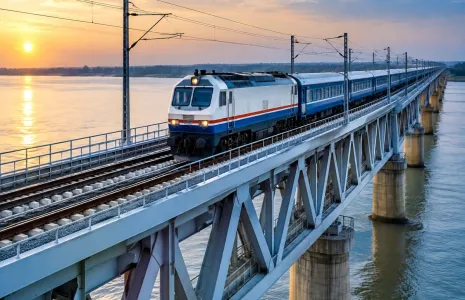
The Central government is planning to construct underground rail tracks along a 40 km corridor to strengthen rail connectivity between NE and the rest of India, Railway Minister Ashwini Vaishnaw has said. The project is being presented as a strategic measure to overcome surface constraints and to provide a resilient link for passenger and freight movement. Planning is at an early stage and officials are conducting preliminary assessments of route alignment and technical feasibility. Detailed studies will determine the precise scope and engineering approach.

The proposed underground alignment is intended to reduce land acquisition pressures and limit disruption in sensitive or congested areas while maintaining capacity for through services. Authorities expect tunnelling to mitigate environmental and social impacts compared with extensive surface works. Integration with existing networks will be a priority to ensure seamless connections within the NE rail grid and to long distance corridors serving other regions. Stakeholders are likely to focus on interoperability, signalling standards and freight handling facilities.

Execution will require coordination across the Ministry of Railways and state administrations as well as clearances from environmental and urban planning bodies. Feasibility studies will address geology, groundwater considerations and the need for specialised construction techniques in varying terrain. Technical teams will assess options such as single bore tunnels, cut and cover sections and station designs tailored to local conditions. Procurement and financing strategies will be developed alongside risk assessments to guide implementation.

The initiative is expected to be phased and subject to detailed budgeting and approvals before major construction commences. If realised, the corridor would enhance economic integration, shorten transit times and expand capacity for both passenger services and freight movements between NE and mainland markets. Officials say sustained planning and intergovernmental cooperation will be essential to translate the proposal into an operational link. The 40 km underground corridor is being framed as a long-term investment in national connectivity.

The Central government is planning to construct underground rail tracks along a 40 km corridor to strengthen rail connectivity between NE and the rest of India, Railway Minister Ashwini Vaishnaw has said. The project is being presented as a strategic measure to overcome surface constraints and to provide a resilient link for passenger and freight movement. Planning is at an early stage and officials are conducting preliminary assessments of route alignment and technical feasibility. Detailed studies will determine the precise scope and engineering approach. The proposed underground alignment is intended to reduce land acquisition pressures and limit disruption in sensitive or congested areas while maintaining capacity for through services. Authorities expect tunnelling to mitigate environmental and social impacts compared with extensive surface works. Integration with existing networks will be a priority to ensure seamless connections within the NE rail grid and to long distance corridors serving other regions. Stakeholders are likely to focus on interoperability, signalling standards and freight handling facilities. Execution will require coordination across the Ministry of Railways and state administrations as well as clearances from environmental and urban planning bodies. Feasibility studies will address geology, groundwater considerations and the need for specialised construction techniques in varying terrain. Technical teams will assess options such as single bore tunnels, cut and cover sections and station designs tailored to local conditions. Procurement and financing strategies will be developed alongside risk assessments to guide implementation. The initiative is expected to be phased and subject to detailed budgeting and approvals before major construction commences. If realised, the corridor would enhance economic integration, shorten transit times and expand capacity for both passenger services and freight movements between NE and mainland markets. Officials say sustained planning and intergovernmental cooperation will be essential to translate the proposal into an operational link. The 40 km underground corridor is being framed as a long-term investment in national connectivity.

Next Story
Infrastructure Transport

Lucknow Metro East-West Corridor Consultancy Contract Awarded

The Uttar Pradesh Metro Rail Corporation has awarded the first construction-related consultancy contract for the Lucknow Metro East West Corridor to a joint venture of AYESA Ingenieria Arquitectura SAU and AYESA India Pvt Ltd. The firm was declared the lowest bidder for the Detailed Design Consultant contract for Lucknow Metro Line-2 under Phase 1B and the contract was recommended following the financial bid. The contract is valued at Rs 159.0 million (mn), covering design services for the corridor. Lucknow Metro Line-2 envisages the construction of an 11.165 kilometre corridor connecting Cha..

Next Story
Infrastructure Urban

Div Com Kashmir Urges Fast Tracking Of Jhelum Water Transport Project

The Divisional Commissioner of Kashmir has called for the fast-tracking of the Jhelum water transport project, urging district administrations and relevant agencies to accelerate planning and clearances. In a meeting convened at the divisional headquarters, the commissioner instructed officials from irrigation, public health engineering and municipal departments to prioritise the project and coordinate survey and design work. The directive emphasised removal of administrative bottlenecks and close monitoring to ensure timely mobilisation of resources and contractors. Officials were told to in..

Next Story
Infrastructure Urban

Interarch Reports Strong Q3 And Nine Month Results

Interarch Building Solutions Limited reported unaudited results for the third quarter and nine months ended 31 December 2025, recording strong revenue growth driven by execution and a robust order book. Net revenue for the third quarter rose by 43.7 per cent to Rs 5.225 billion (bn), compared with Rs 3.636 bn a year earlier, reflecting heightened demand in pre-engineered building projects. The company’s total order book as at 31 January 2026 stood at Rs 16.85 bn, supporting near-term visibility. EBITDA excluding other income for the quarter increased by 43.2 per cent to Rs 503 million (mn),..

Advertisement

Subscribe to Our Newsletter

Get daily newsletters around different themes from Construction world.

STAY CONNECTED

Advertisement

Advertisement

Advertisement

Open In App