Delhi Double Decker Flyover on Pink Line Aims For Year End Completion
RAILWAYS & METRO RAIL

Delhi Double Decker Flyover on Pink Line Aims For Year End Completion

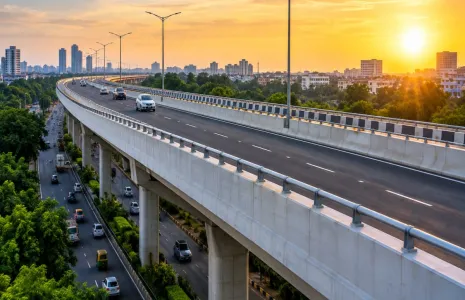
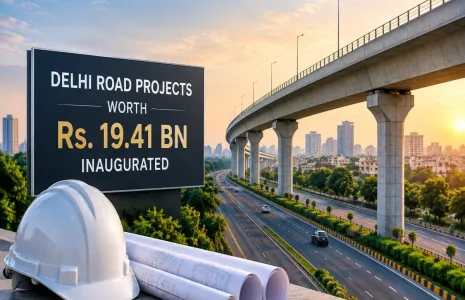
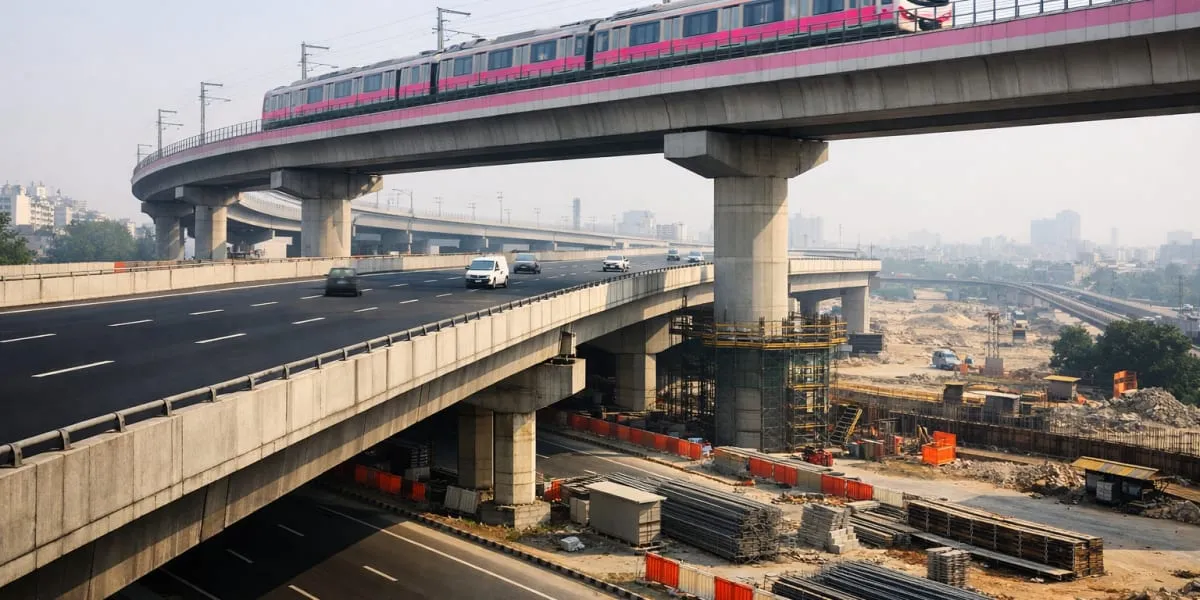
A double-decker flyover being constructed along the Pink Line corridor in Delhi is scheduled for completion by the end of the year as part of Phase four of the metro expansion. The project combines a metro viaduct on the upper deck with a road flyover on the lower deck to integrate rail and road movement within the same right of way. It forms part of the Maujpur Majlis Park corridor, a key stretch that helped complete the near circular Pink Line route across the capital.\n\nThe dual-level design places metro tracks above and vehicular lanes below, enabling simultaneous movement of mass transit and private vehicles while reducing surface footprint. Authorities say the approach is intended to optimise land use in densely built areas where conventional widening is not feasible. By stacking infrastructure vertically, planners aim to increase capacity without significant displacement or additional land acquisition.\n\nThe Bhajanpura-Yamuna Vihar stretch measures approximately one point four kilometres and is among the main sections featuring the double-decker configuration. Metro operations on parts of the corridor have progressed while work on road ramps and ancillary infrastructure continues, contributing to a revised completion timeline. The broader Pink Line now functions as India's first ring metro system, linking multiple radial corridors to improve cross-city connectivity and reduce reliance on central interchange stations.\n\nSimilar double-decker structures are being planned on other corridors under Phase four, including stretches on the Magenta Line and forthcoming routes, as part of a strategy to expand the metro network while upgrading surface roads. Once operational, the structure is intended to ease congestion on arterial roads and improve last-mile connectivity to stations in north-east Delhi. The project illustrates a shift towards multi-modal infrastructure planning that seeks to deliver parallel mobility solutions within constrained urban corridors.

"Join industry leaders at RAHSTA Expo, India's premier platform for roads, highways and traffic infrastructure. Register now to explore innovations, network with experts and shape the future of mobility."

A double-decker flyover being constructed along the Pink Line corridor in Delhi is scheduled for completion by the end of the year as part of Phase four of the metro expansion. The project combines a metro viaduct on the upper deck with a road flyover on the lower deck to integrate rail and road movement within the same right of way. It forms part of the Maujpur Majlis Park corridor, a key stretch that helped complete the near circular Pink Line route across the capital.\n\nThe dual-level design places metro tracks above and vehicular lanes below, enabling simultaneous movement of mass transit and private vehicles while reducing surface footprint. Authorities say the approach is intended to optimise land use in densely built areas where conventional widening is not feasible. By stacking infrastructure vertically, planners aim to increase capacity without significant displacement or additional land acquisition.\n\nThe Bhajanpura-Yamuna Vihar stretch measures approximately one point four kilometres and is among the main sections featuring the double-decker configuration. Metro operations on parts of the corridor have progressed while work on road ramps and ancillary infrastructure continues, contributing to a revised completion timeline. The broader Pink Line now functions as India's first ring metro system, linking multiple radial corridors to improve cross-city connectivity and reduce reliance on central interchange stations.\n\nSimilar double-decker structures are being planned on other corridors under Phase four, including stretches on the Magenta Line and forthcoming routes, as part of a strategy to expand the metro network while upgrading surface roads. Once operational, the structure is intended to ease congestion on arterial roads and improve last-mile connectivity to stations in north-east Delhi. The project illustrates a shift towards multi-modal infrastructure planning that seeks to deliver parallel mobility solutions within constrained urban corridors.

Next Story
Infrastructure Urban

ABS Marine Sees CRISIL Credit Rating Upgrade

ABS Marine Services has secured an upgrade to its long term and short term credit ratings from CRISIL, reflecting improved profitability and revenue growth through long term contracts. CRISIL moved the long term rating from BBB+/Stable to A-/Stable and revised the short term rating from A2 to A2+. The action signals strengthened financial metrics and operational resilience. The company benefited from durable client relationships with firms such as ONGC and Schlumberger. The rating decision followed stronger cash flows and an enlarged bank loan facility, which increased from Rs 3,705 million (m..

Next Story
Infrastructure Transport

Project BRAHMANK Marks 16 Years Of Strategic Roads In Arunachal

Project BRAHMANK is marking 16 years of work to establish strategic road and bridge links across Arunachal Pradesh, maintaining and developing 811 kilometres of roads and nearly 86 bridges that range from small culverts to large steel and arch bridges. These transport links are described as critical for ensuring year-round movement of defence personnel, equipment and essential supplies while improving everyday travel for people in remote villages. The project balances national security requirements with regional development by focusing on reliable access in challenging terrain. Notable enginee..

Next Story
Infrastructure Transport

Longleng CSOs Give One Week Ultimatum Over Two-Lane Highway

Civil society organisations (CSOs) in Longleng district have demanded immediate restoration of the deteriorating Changtongya–Longleng two-lane road and sought a detailed status report on the stalled construction within one week. The demand followed a consultative meeting convened under the Phom Peoples' Council (PPC) to discuss welfare and development concerns. PPC president YB Angam Phom said prolonged non-maintenance had caused hardship to commuters and affected transportation, local commerce and the district's development. The meeting urged authorities to undertake immediate restoration a..

Advertisement

Subscribe to Our Newsletter

Get daily newsletters around different themes from Construction world.

STAY CONNECTED

Advertisement

Advertisement

Advertisement