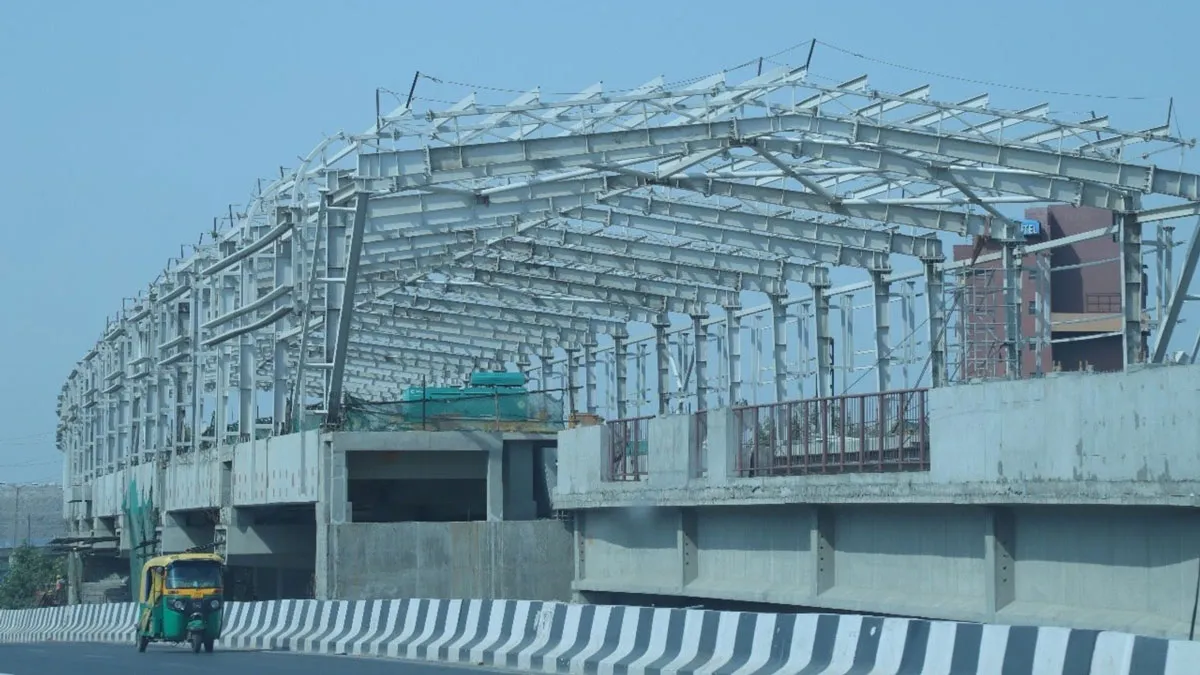
Delhi Metro Phase-4 Sites Get Enhanced Safety Measures
RAILWAYS & METRO RAIL

Delhi Metro Phase-4 Sites Get Enhanced Safety Measures

The Delhi Metro Rail Corporation (DMRC) has implemented extensive safety measures across Phase-4 construction sites, installing nearly 20 kilometres of barricading, LED rope lights and blinkers to protect motorists and pedestrians amid large-scale construction activity.

To improve visibility during winter nights and foggy conditions, around 17 kilometres of LED rope lights and blinkers have been fitted along barricades, making construction zones easier to identify. DMRC said these measures aim to minimise risks and ensure safer movement around work sites.

More than 270 traffic marshals have been deployed to manage vehicular flow and ensure safety near construction zones round the clock. Trained by traffic experts, the marshals assist in coordinating the movement of heavy machinery and cranes, particularly during night-time operations.

DMRC has also installed road studs to slow down vehicles near vulnerable points, along with adequate warning signage indicating diversions and ongoing work. As part of Phase-4 implementation, dedicated impact protection vehicles have been introduced to safeguard workers and road users during the movement and placement of heavy equipment. These vehicles are designed to withstand collisions from speeding vehicles.

Additional safety measures have been adopted to counter reduced visibility during winter fog, including fog lights on barricades, reflective tapes on workers’ helmets and high-visibility jackets. Where diversions are required, DMRC said detailed planning is undertaken in coordination with the Delhi Traffic Police, supported by a three-layer safety system comprising plastic barriers, sand- or water-filled drums and concrete crash barriers.

The barricades are designed to be bottom-heavy and anchored to the ground to prevent toppling during strong winds or heavy rain, with individual units secured using nuts and bolts. Concrete crash barriers are also deployed as hard barricading to protect vehicles from colliding with heavy machinery within construction zones. These barriers are manufactured using recycled construction waste and reinforced with additional protective layers.

To ensure uniform safety standards, DMRC has incorporated detailed traffic management guidelines in its tender documents, making compliance mandatory for contractors. These norms are based on previous project experience and Indian Road Congress guidelines.

Despite the challenges of executing mass transit projects in densely populated urban areas, DMRC said vehicular and pedestrian movement around Phase-4 sites has remained largely incident-free, reflecting the effectiveness of the enhanced safety framework.

The Delhi Metro Rail Corporation (DMRC) has implemented extensive safety measures across Phase-4 construction sites, installing nearly 20 kilometres of barricading, LED rope lights and blinkers to protect motorists and pedestrians amid large-scale construction activity. To improve visibility during winter nights and foggy conditions, around 17 kilometres of LED rope lights and blinkers have been fitted along barricades, making construction zones easier to identify. DMRC said these measures aim to minimise risks and ensure safer movement around work sites. More than 270 traffic marshals have been deployed to manage vehicular flow and ensure safety near construction zones round the clock. Trained by traffic experts, the marshals assist in coordinating the movement of heavy machinery and cranes, particularly during night-time operations. DMRC has also installed road studs to slow down vehicles near vulnerable points, along with adequate warning signage indicating diversions and ongoing work. As part of Phase-4 implementation, dedicated impact protection vehicles have been introduced to safeguard workers and road users during the movement and placement of heavy equipment. These vehicles are designed to withstand collisions from speeding vehicles. Additional safety measures have been adopted to counter reduced visibility during winter fog, including fog lights on barricades, reflective tapes on workers’ helmets and high-visibility jackets. Where diversions are required, DMRC said detailed planning is undertaken in coordination with the Delhi Traffic Police, supported by a three-layer safety system comprising plastic barriers, sand- or water-filled drums and concrete crash barriers. The barricades are designed to be bottom-heavy and anchored to the ground to prevent toppling during strong winds or heavy rain, with individual units secured using nuts and bolts. Concrete crash barriers are also deployed as hard barricading to protect vehicles from colliding with heavy machinery within construction zones. These barriers are manufactured using recycled construction waste and reinforced with additional protective layers. To ensure uniform safety standards, DMRC has incorporated detailed traffic management guidelines in its tender documents, making compliance mandatory for contractors. These norms are based on previous project experience and Indian Road Congress guidelines. Despite the challenges of executing mass transit projects in densely populated urban areas, DMRC said vehicular and pedestrian movement around Phase-4 sites has remained largely incident-free, reflecting the effectiveness of the enhanced safety framework.

Next Story
Real Estate

Union Budge: Infra-Led Urban Shift

The Union Budget FY27 reinforces infrastructure-led urbanisation as the backbone of India’s real estate and housing growth. Higher public capital expenditure, City Economic Regions, risk-mitigation mechanisms and REIT-led asset monetisation are being widely viewed as long-term enablers, even as the industry continues to seek sharper supply-side reforms and affordability-focused measures. Here are a few industry insights:Dr Niranjan Hiranandani, Chairman, NAREDCO & Hiranandani Group“The Union Budget 2026-27 is growth-oriented and stability-focused, supporting consumption and aiming to s..

Next Story
Infrastructure Urban

Budget 2026 Charts Path for Infrastructure-Led, Tech-Driven Growth

The Union Budget 2026–27 signals strong continuity in India’s macroeconomic strategy, anchored in elevated public capital expenditure, fiscal discipline, and a sharper focus on manufacturing, infrastructure, and regional development. With capital outlay pegged at ₹12.2 lakh crore and a fiscal deficit target of around 4.3 per cent, the Budget balances growth ambition with stability, offering long-term visibility to investors and project developers.A dominant theme is the centrality of infrastructure as a multiplier for economic expansion. Public capex now accounts for over 3.3 per cent of..

Next Story
Infrastructure Energy

Tata Power Arm Crosses 10 GW EPC Milestone

Tata Power Renewable Energy Ltd (TPREL) has achieved a major milestone by executing 10 gigawatts of engineering, procurement and construction (EPC) renewable energy projects to date, reinforcing its position in India’s clean energy infrastructure sector. According to the company, the executed portfolio comprises 4.2 gigawatts of in-house projects and 5.8 gigawatts of third-party projects. Of the total 10 gigawatts commissioned so far, 9.7 gigawatts are solar projects and 290 megawatts are wind projects. In the first nine months of FY26, TPREL commissioned 1.88 gigawatts of EPC renewable en..

Advertisement

Subscribe to Our Newsletter

Get daily newsletters around different themes from Construction world.

STAY CONNECTED

Advertisement

Advertisement

Advertisement

Advertisement

Open In App