Delhi Metro to Add 20 Weekday Train Trips as GRAP 1 Begins
RAILWAYS & METRO RAIL

Delhi Metro to Add 20 Weekday Train Trips as GRAP 1 Begins

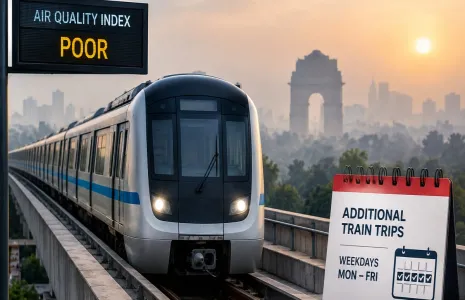
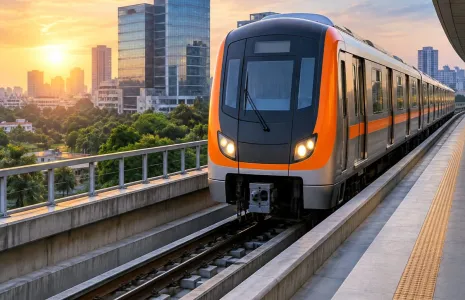
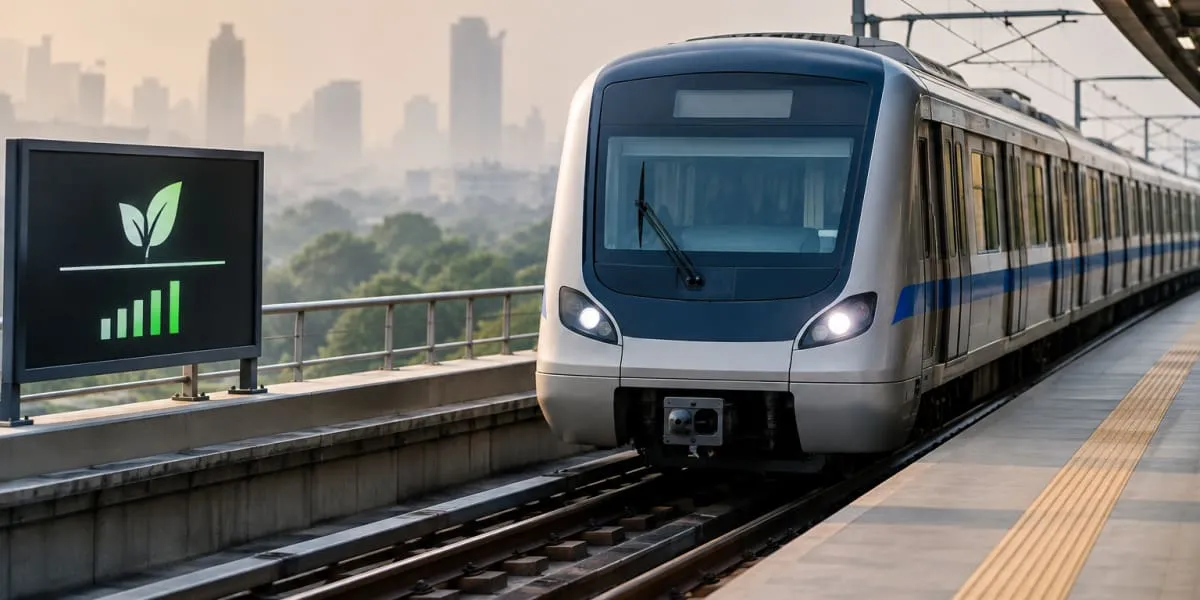
The Delhi Metro Rail Corporation (DMRC) will operate 20 additional train trips on weekdays from Thursday, after Stage 1 of the Graded Response Action Plan (GRAP) came into force in Delhi. The move is intended to encourage greater use of public transport as authorities respond to deteriorating air quality. The additional services will run across its network on weekdays and form part of the wider response to the pollution episode.

The corporation said it would also intensify anti-pollution measures at construction sites and nearby areas across the capital. The programme includes reducing dust, clearing road dust from adjoining stretches, and removing garbage from footpaths and road medians. These actions are aimed at limiting pollution from areas affected by Metro construction and related road activity.

DMRC engineers will inspect construction sites and adjoining roads to check that construction materials are properly covered and wheel-washing facilities for vehicles leaving the sites remain operational. The inspections will support existing pollution-control measures being implemented by the corporation. Around 31 km of city roads are under DMRC’s temporary jurisdiction for Metro construction, and most of these stretches have already been repaired to limit dust from damaged surfaces.

More than 250 anti-smog and mist guns have been installed at construction sites, Metro stations and office buildings. The DMRC’s Environment Department is carrying out daily inspections to monitor compliance with environmental norms and ensure that the measures remain effective. The corporation is also coordinating dust-control drives around construction locations and adjoining public areas.

Delhi authorities enforced GRAP Stage 1 on Wednesday amid worsening air quality. The Central Pollution Control Board said the Air Quality Index reached 238 on Wednesday morning, entering the poor category for the first time this season. The increase before winter has heightened concern over emissions from road and construction dust, vehicles and industrial units, with air quality to be monitored closely in the coming days.

The Delhi Metro Rail Corporation (DMRC) will operate 20 additional train trips on weekdays from Thursday, after Stage 1 of the Graded Response Action Plan (GRAP) came into force in Delhi. The move is intended to encourage greater use of public transport as authorities respond to deteriorating air quality. The additional services will run across its network on weekdays and form part of the wider response to the pollution episode. The corporation said it would also intensify anti-pollution measures at construction sites and nearby areas across the capital. The programme includes reducing dust, clearing road dust from adjoining stretches, and removing garbage from footpaths and road medians. These actions are aimed at limiting pollution from areas affected by Metro construction and related road activity. DMRC engineers will inspect construction sites and adjoining roads to check that construction materials are properly covered and wheel-washing facilities for vehicles leaving the sites remain operational. The inspections will support existing pollution-control measures being implemented by the corporation. Around 31 km of city roads are under DMRC’s temporary jurisdiction for Metro construction, and most of these stretches have already been repaired to limit dust from damaged surfaces. More than 250 anti-smog and mist guns have been installed at construction sites, Metro stations and office buildings. The DMRC’s Environment Department is carrying out daily inspections to monitor compliance with environmental norms and ensure that the measures remain effective. The corporation is also coordinating dust-control drives around construction locations and adjoining public areas. Delhi authorities enforced GRAP Stage 1 on Wednesday amid worsening air quality. The Central Pollution Control Board said the Air Quality Index reached 238 on Wednesday morning, entering the poor category for the first time this season. The increase before winter has heightened concern over emissions from road and construction dust, vehicles and industrial units, with air quality to be monitored closely in the coming days.

Related Stories

Gold Stories
Next Story
Infrastructure Urban

NDMC Approves Five Prakriti Cafés in Three Delhi Parks

The New Delhi Municipal Council (NDMC) approved the setting up of five Prakriti Cafés across three prominent parks in the capital during its council meeting on Tuesday. The locations include Lodhi Garden, Nehru Park and BRICS Garden on Shanti Path. Two cafés will be developed in Lodhi Garden, while two others will come up in Nehru Park. The remaining café is planned for BRICS Garden. The council granted in-principle approval to explore the project under the Build-Operate-Transfer (BOT) model. Under the proposed arrangement, the selected agency will develop the cafés at its own cost and man..

Next Story
Infrastructure Transport

Air India and Airbus to Build India's First Corporate SAF Programme

Air India and Airbus have partnered to develop a framework for India’s first voluntary corporate Sustainable Aviation Fuel (SAF) programme. The feasibility study will examine how businesses can reduce lifecycle emissions associated with air travel by voluntarily supporting the procurement and use of SAF. Jürgen Westermeier, President and Managing Director of Airbus India and South Asia, and P Balaji, Group Head of Governance, Risk and Compliance and Corporate Affairs at Air India, signed the Feasibility Study Agreement. The signing took place in the presence of Rammohan Naidu Kinjarapu, Min..
Next Story
Infrastructure Energy

Indian Companies to Buy US LPG from Four Firms in 2027

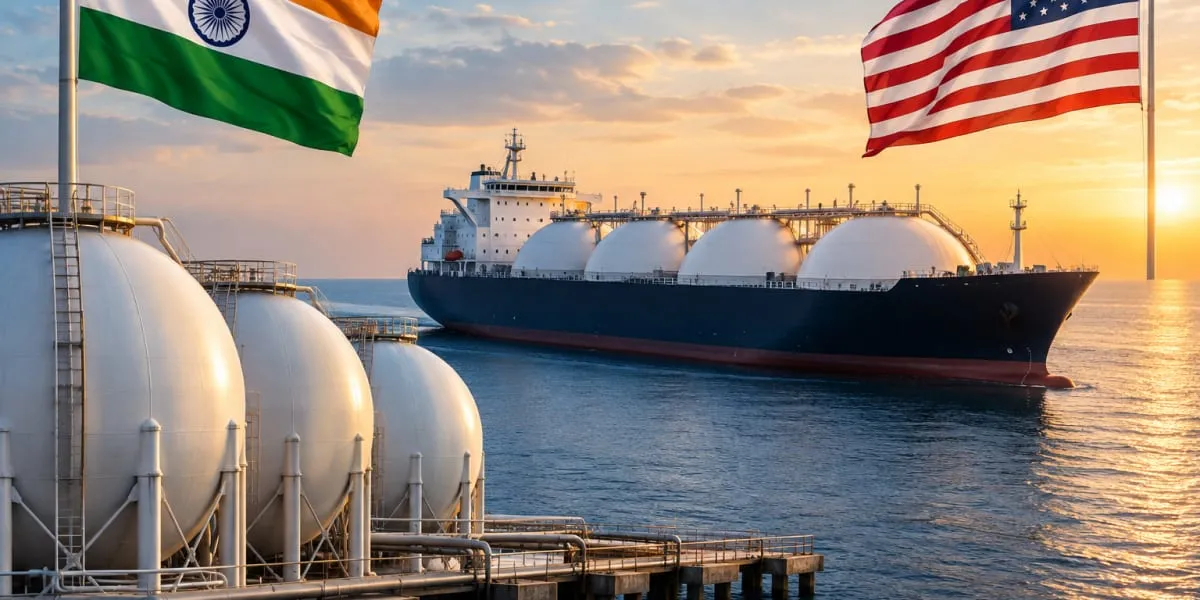
Indian state-run oil companies have awarded a joint tender to Saudi Aramco, Chevron, TotalEnergies Trading SA (Totsa) and Vitol for the import of about 2.75 mn t of US liquefied petroleum gas (LPG) in 2027. The contracts are intended to diversify supplies and reduce India’s reliance on the Middle East. Indian Oil, Bharat Petroleum and Hindustan Petroleum floated the tender in September. They sought four very large gas carrier (VLGC) cargoes each month on a delivered basis and one cargo each month on a free-on-board basis from the US. A VLGC typically carries about 46,000 t of LPG, which cons..

Advertisement

Subscribe to Our Newsletter

Get daily newsletters around different themes from Construction world.

STAY CONNECTED

Advertisement

SPECIAL OFFER
QR Code