Kerala Reviews Thiruvananthapuram Metro Alignment
RAILWAYS & METRO RAIL

Kerala Reviews Thiruvananthapuram Metro Alignment

The Kerala government is set to make a critical decision on a revised alignment for the Thiruvananthapuram Metro project by the end of this month. Following consultations with Delhi Metro Rail Corporation (DMRC), the state is exploring alternate routes that would better serve the urban population, improve connectivity, and reduce costs. This review aims to address concerns over environmental impact, feasibility, and efficiency of the proposed routes.

The decision comes as the government assesses both ridership potential and urban development priorities. Current plans suggest extending the alignment to reach additional populous areas, enhancing public accessibility to the metro system. This is particularly relevant in the wake of projected population growth in Thiruvananthapuram, which has increased the urgency for an efficient mass transit solution to ease traffic congestion and reduce pollution levels.

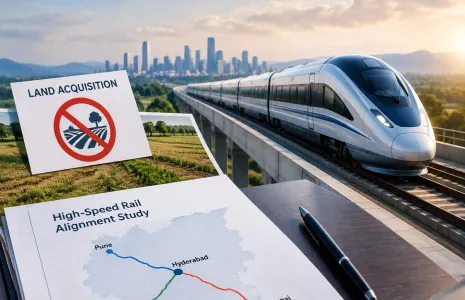
Officials from DMRC and the Kerala State Transport Project (KSTP) are considering factors such as land acquisition requirements, construction costs, and environmental clearances. Various stakeholder meetings have been held to incorporate feedback from residents, urban planners, and environmental experts.

If approved, the realignment could expedite the metro’s construction timeline and possibly reduce overall expenses. This shift in strategy reflects Kerala's broader goals to create a sustainable and accessible urban transit system. Finalizing the alignment will mark a pivotal step forward, potentially allowing construction to start early next year and meet the targeted completion deadlines.

The Kerala government is set to make a critical decision on a revised alignment for the Thiruvananthapuram Metro project by the end of this month. Following consultations with Delhi Metro Rail Corporation (DMRC), the state is exploring alternate routes that would better serve the urban population, improve connectivity, and reduce costs. This review aims to address concerns over environmental impact, feasibility, and efficiency of the proposed routes. The decision comes as the government assesses both ridership potential and urban development priorities. Current plans suggest extending the alignment to reach additional populous areas, enhancing public accessibility to the metro system. This is particularly relevant in the wake of projected population growth in Thiruvananthapuram, which has increased the urgency for an efficient mass transit solution to ease traffic congestion and reduce pollution levels. Officials from DMRC and the Kerala State Transport Project (KSTP) are considering factors such as land acquisition requirements, construction costs, and environmental clearances. Various stakeholder meetings have been held to incorporate feedback from residents, urban planners, and environmental experts. If approved, the realignment could expedite the metro’s construction timeline and possibly reduce overall expenses. This shift in strategy reflects Kerala's broader goals to create a sustainable and accessible urban transit system. Finalizing the alignment will mark a pivotal step forward, potentially allowing construction to start early next year and meet the targeted completion deadlines.

Next Story
Infrastructure Transport

MMRDA advances 250 m on Orange Gate–Marine Drive tunnel

The Mumbai Metropolitan Region Development Authority (MMRDA) has completed 250 m of underground tunnelling for the Orange Gate–Marine Drive Urban Road Tunnel using India’s largest slurry shield tunnel boring machine (TBM) deployed for an urban road project.The project involves twin tunnels extending over 7 km beneath critical transport corridors, including Central Railway, Western Railway and Metro Line 3. The work requires high-precision engineering to navigate densely developed urban infrastructure.Once completed, the tunnel is expected to reduce travel time between Orange Gate and Marin..

Next Story
Infrastructure Urban

Hindustan Zinc Pays Rs 188.46 Billion in FY26

Hindustan Zinc contributed Rs 188.46 billion to the public exchequer in FY 2025-26, according to its 9th Tax Transparency Report. The contribution, equivalent to 46 per cent of the company’s revenue, included direct and indirect taxes, government royalties, dividends to the Government of India, withholding taxes and other statutory levies.The company’s five-year cumulative contribution to the exchequer stood at Rs 915.72 billion. In FY26, Hindustan Zinc reported revenue of Rs 408.44 billion, EBITDA of Rs 221.62 billion and profit after tax of Rs 138.32 billion. It also achieved its highest..

Next Story
Infrastructure Urban

World of Concrete India 2026 Opens in Mumbai

Informa Markets in India will host the 12th edition of World of Concrete India 2026 from 3–5 June 2026 at the Bombay Exhibition Centre, Mumbai. The specialised B2B exhibition will bring together manufacturers, suppliers, contractors, developers, architects, consultants, infrastructure companies, project leaders and government stakeholders.The event is expected to feature over 350 brands and more than 18,000 trade professionals. It will cover concrete and cement, dry mortar, precast technologies, formwork, construction chemicals, industrial and commercial flooring, scaffolding, safety solutio..

Advertisement

Subscribe to Our Newsletter

Get daily newsletters around different themes from Construction world.

STAY CONNECTED

Advertisement

Advertisement

Advertisement

-->