
Mumbai Metro Line 6 Likely To Open In H2 2026
RAILWAYS & METRO RAIL

Mumbai Metro Line 6 Likely To Open In H2 2026

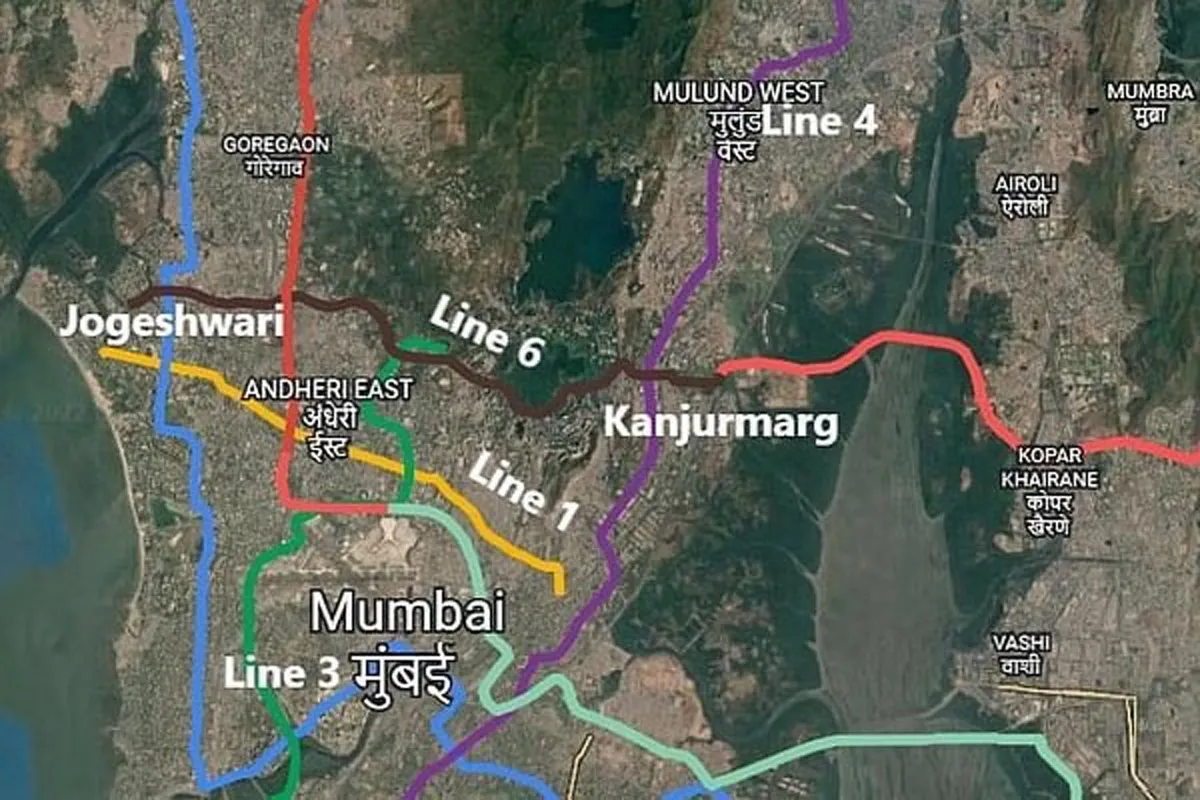
Mumbai’s Metro Line 6 is now expected to become operational in the second half of 2026, even as uncertainty persists over the proposed car depot at Kanjurmarg. The Mumbai Metropolitan Region Development Authority (MMRDA) has decided to proceed with operations through an alternative maintenance arrangement to avoid further delays caused by land clearance issues.

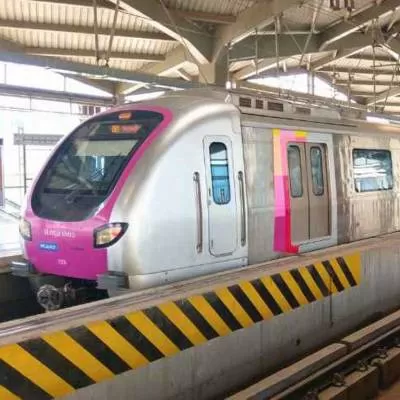
The 15.31-kilometre Pink Line will connect Swami Samarth Nagar in Andheri (West) with Vikhroli, providing a vital east–west connectivity corridor across Mumbai. The project is expected to significantly improve urban mobility in one of the city’s most congested transport corridors.

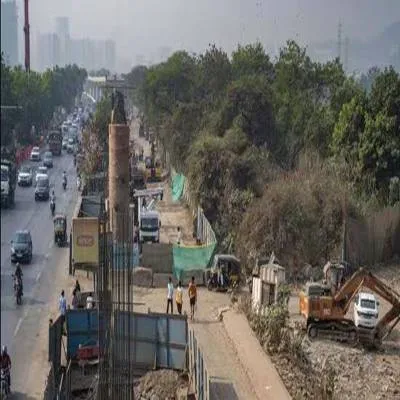
In the absence of a full-scale depot, MMRDA is implementing an unconventional solution—an elevated eight-lane maintenance corridor equipped with pit lines running parallel to the Eastern Express Highway. Construction of this structure is already under way and is designed to support routine maintenance and inspection of metro rakes.

According to MMRDA officials, the elevated corridor will feature eight pit lines to facilitate regular servicing and safety checks. For scheduled periodic overhauls, trains will be transported to the Mandale depot. Officials noted that the interim arrangement would allow Metro Line 6 to begin operations without waiting for the Kanjurmarg depot, which could otherwise delay the project by several years.

The delay stems from challenges in securing around 15 hectares of land at Kanjurmarg, classified as salt pan land, which is yet to receive final government approval. Officials said that even after land allocation, depot construction would take two to three years.

Metro Line 6, estimated to cost around Rs 67 billion, has faced multiple setbacks since construction began in 2017. Interestingly, the originally proposed depot site near the Eastern Express Highway is now being utilised for the elevated maintenance corridor, highlighting the adaptive approach adopted by MMRDA to keep the project on track.

The interim maintenance strategy reflects MMRDA’s effort to balance infrastructure constraints with operational timelines, ensuring that the critical east–west metro corridor can be delivered within a realistic timeframe.

Mumbai’s Metro Line 6 is now expected to become operational in the second half of 2026, even as uncertainty persists over the proposed car depot at Kanjurmarg. The Mumbai Metropolitan Region Development Authority (MMRDA) has decided to proceed with operations through an alternative maintenance arrangement to avoid further delays caused by land clearance issues. The 15.31-kilometre Pink Line will connect Swami Samarth Nagar in Andheri (West) with Vikhroli, providing a vital east–west connectivity corridor across Mumbai. The project is expected to significantly improve urban mobility in one of the city’s most congested transport corridors. In the absence of a full-scale depot, MMRDA is implementing an unconventional solution—an elevated eight-lane maintenance corridor equipped with pit lines running parallel to the Eastern Express Highway. Construction of this structure is already under way and is designed to support routine maintenance and inspection of metro rakes. According to MMRDA officials, the elevated corridor will feature eight pit lines to facilitate regular servicing and safety checks. For scheduled periodic overhauls, trains will be transported to the Mandale depot. Officials noted that the interim arrangement would allow Metro Line 6 to begin operations without waiting for the Kanjurmarg depot, which could otherwise delay the project by several years. The delay stems from challenges in securing around 15 hectares of land at Kanjurmarg, classified as salt pan land, which is yet to receive final government approval. Officials said that even after land allocation, depot construction would take two to three years. Metro Line 6, estimated to cost around Rs 67 billion, has faced multiple setbacks since construction began in 2017. Interestingly, the originally proposed depot site near the Eastern Express Highway is now being utilised for the elevated maintenance corridor, highlighting the adaptive approach adopted by MMRDA to keep the project on track. The interim maintenance strategy reflects MMRDA’s effort to balance infrastructure constraints with operational timelines, ensuring that the critical east–west metro corridor can be delivered within a realistic timeframe.

Next Story
Real Estate

A Paradigm Shift

The Indian real-estate and construction sector, which employs a significant number of organised and unorganised workers in the country, has embarked on a paradigm shift in its regulatory framework from an employment law perspective. With the four Labour Codes – the Code on Wages, 2019 (Wage Code); the Industrial Relations Code, 2020 (IR Code); the Code on Social Security, 2020 (SS Code) and the Occupational Safety, Health and Working Conditions Code, 2020 (OSH Code) – coming into effect in India from November 21, 2025, the industry is shifting away from a fragmented, contractor- driven com..

Next Story
Technology

We offer end-to-end traceability at scale

mjunction has evolved from an e-auction pioneer into a multi-vertical digital commerce platform with deep expertise in complex steel and coal supply chains. Its end-to-end, AI-led architecture focuses on price discovery, traceability, compliance and scalability, enabling transparent procurement, efficient logistics and data-driven decision-making across geographies. Vinaya Varma, MD, shares more about the company in conversation with CW.From a technology standpoint, what are the core USPs of mjunction today that differentiate it in steel and coal supply chains?mjunction has evolved b..

Next Story
Infrastructure Urban

Henkel, Rotary Recycle PoP Ganesha Idols Under Project HARMONY

Henkel India, in partnership with the Rotary Club of Navi Mumbai – Joy of Giving and with support from the Navi Mumbai Municipal Corporation (NMMC), has advanced circular sustainability through Project HARMONY by recycling Plaster of Paris (PoP) Ganesha idols into community learning assets. The initiative highlights an integrated approach to environmental restoration and social impact.As part of the project, materials collected after Ganesh Visarjan 2025 at Nerul were responsibly diverted from land and water bodies and processed at an authorised recycling facility, with on-ground execution s..

Advertisement

Subscribe to Our Newsletter

Get daily newsletters around different themes from Construction world.

STAY CONNECTED

Advertisement

Advertisement

Advertisement

Advertisement

Open In App