Namo Bharat Rapid Rail to Redefine Medium-Distance Intercity Travel
RAILWAYS & METRO RAIL

Namo Bharat Rapid Rail to Redefine Medium-Distance Intercity Travel

India’s urban and regional transport landscape has steadily evolved alongside rapid urbanisation, population growth and economic expansion. The foundation of this journey was laid with early suburban rail networks such as the Mumbai Suburban Railway, introduced in 1853, and tram systems in cities including Kolkata and Chennai. These were followed by modern rapid transit solutions to improve urban mobility, beginning with the Kolkata Metro in 1984 and later the Delhi Metro in 2002. Together, these systems transformed intra-city travel by offering safer, faster and more reliable connectivity within major urban centres.

As metropolitan regions expanded and merged into larger economic clusters, the focus gradually shifted towards improving city-to-city mobility. This led to the introduction of the Regional Rapid Transit System (RRTS), envisioned as semi-high-speed corridors for short intercity travel, with the Delhi–Meerut corridor becoming the first operational route. For longer distances, India took a significant leap with the under-construction Mumbai–Ahmedabad High-Speed Rail corridor, marking the country’s entry into the bullet train segment.

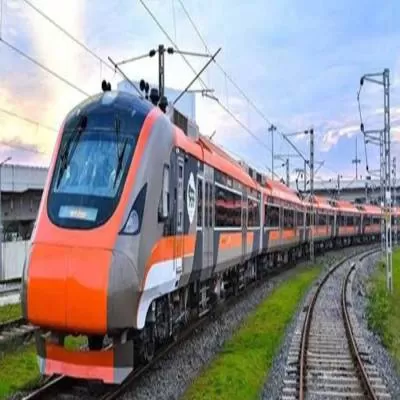
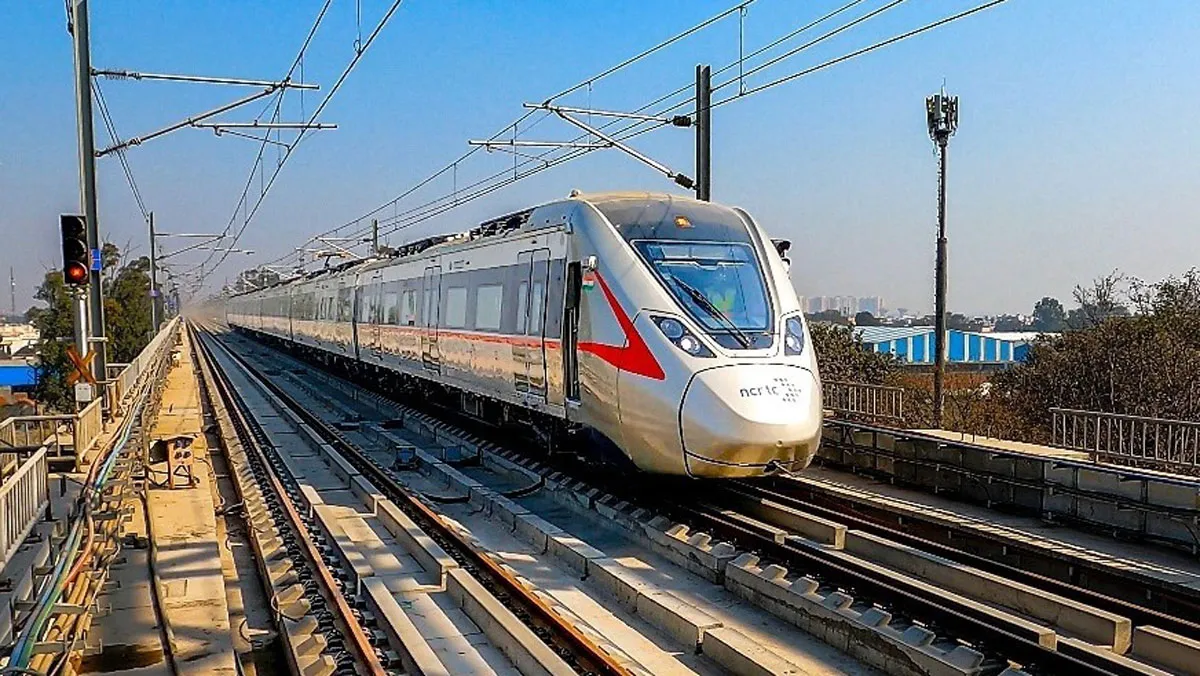
Building on this progression, Indian Railways identified a critical gap in the 100–250 km travel segment, where neither suburban services nor high-speed rail offered an optimal solution. To address this need, the Namo Bharat Rapid Rail project was launched as a modern, efficient and passenger-centric system for medium-distance intercity travel. The initiative is designed to bridge the space between RRTS services and long-haul bullet trains, delivering faster journeys, improved comfort and enhanced reliability.

Inspired by the success of the Vande Bharat Express, the Namo Bharat Rapid Rail reflects Indian Railways’ broader vision to modernise short- and medium-distance rail services. The project is also aligned with plans to supplement or eventually replace ageing EMU and MEMU fleets that dominate dense suburban and intercity corridors but lack contemporary amenities, energy efficiency and advanced safety features.

Key networks such as the Mumbai Suburban Railway are central to this transformation. By deploying next-generation systems like Namo Bharat Rapid Rail on high-demand corridors, Indian Railways aims to increase capacity, ease congestion, reduce travel times and significantly elevate the commuter experience, bringing regional rail mobility closer to global standards.

News source: Metro Rail News

India’s urban and regional transport landscape has steadily evolved alongside rapid urbanisation, population growth and economic expansion. The foundation of this journey was laid with early suburban rail networks such as the Mumbai Suburban Railway, introduced in 1853, and tram systems in cities including Kolkata and Chennai. These were followed by modern rapid transit solutions to improve urban mobility, beginning with the Kolkata Metro in 1984 and later the Delhi Metro in 2002. Together, these systems transformed intra-city travel by offering safer, faster and more reliable connectivity within major urban centres.As metropolitan regions expanded and merged into larger economic clusters, the focus gradually shifted towards improving city-to-city mobility. This led to the introduction of the Regional Rapid Transit System (RRTS), envisioned as semi-high-speed corridors for short intercity travel, with the Delhi–Meerut corridor becoming the first operational route. For longer distances, India took a significant leap with the under-construction Mumbai–Ahmedabad High-Speed Rail corridor, marking the country’s entry into the bullet train segment.Building on this progression, Indian Railways identified a critical gap in the 100–250 km travel segment, where neither suburban services nor high-speed rail offered an optimal solution. To address this need, the Namo Bharat Rapid Rail project was launched as a modern, efficient and passenger-centric system for medium-distance intercity travel. The initiative is designed to bridge the space between RRTS services and long-haul bullet trains, delivering faster journeys, improved comfort and enhanced reliability.Inspired by the success of the Vande Bharat Express, the Namo Bharat Rapid Rail reflects Indian Railways’ broader vision to modernise short- and medium-distance rail services. The project is also aligned with plans to supplement or eventually replace ageing EMU and MEMU fleets that dominate dense suburban and intercity corridors but lack contemporary amenities, energy efficiency and advanced safety features.Key networks such as the Mumbai Suburban Railway are central to this transformation. By deploying next-generation systems like Namo Bharat Rapid Rail on high-demand corridors, Indian Railways aims to increase capacity, ease congestion, reduce travel times and significantly elevate the commuter experience, bringing regional rail mobility closer to global standards.News source: Metro Rail News

Next Story
Infrastructure Transport

HG Infra Arm Gets Appointed Date for Rs 7.63 Bn NH-227B Project

HG Infra Engineering said its wholly owned subsidiary, HG Bahuvan Jagarnathpur Highway, has received the appointed date for a major National Highway project in Uttar Pradesh. The appointed date has been declared by the Superintending Engineer, National Highways Circle, Public Works Department (PWD), Lucknow.The project involves the improvement and upgradation of a two-lane highway with paved shoulders on the newly notified National Highway-227B. The stretch covers the Bahuvan Madar Majha to Jagarnathpur section under the “84 Kosi Parikrama Marg” in Uttar Pradesh, an important religious and..

Next Story
Infrastructure Transport

Kalpataru Projects Sells Vindhyachal Expressway to Actis for Rs 7.75 Bn

Kalpataru Projects International (KPIL) has completed the sale of its 100 per cent equity stake in Vindhyachal Expressway (VEPL) to global infrastructure investor Actis for an enterprise value of Rs 7.75 billion. The company said definitive agreements for the transaction were executed on October 9, 2024, subject to customary closing adjustments.VEPL is a special purpose vehicle established to develop and operate an 89.30-km four-lane highway connecting Rewa to Hanumana on the Madhya Pradesh–Uttar Pradesh border along National Highway-7. The project was awarded by the Madhya Pradesh Road Deve..

Next Story
Infrastructure Transport

Gadkari Flags Off Rs 44 Bn National Highway Projects in Vidisha

Union Road Transport and Highways Minister Nitin Gadkari inaugurated and laid the foundation stone for multiple National Highway projects worth around Rs 44 billion in Madhya Pradesh’s Vidisha parliamentary constituency, marking a major push to regional road infrastructure and connectivity.Union Minister Shivraj Singh Chouhan said the projects would significantly benefit the region by improving road links and supporting economic development. Speaking to reporters in Bhopal, Chouhan described the initiative as a major development boost for Vidisha and surrounding areas. “Nitin Gadkari is br..

Advertisement

Subscribe to Our Newsletter

Get daily newsletters around different themes from Construction world.

STAY CONNECTED

Advertisement

Advertisement

Advertisement

Advertisement

Open In App