NPG Reviews Key Road and Rail Projects to Boost Connectivity
RAILWAYS & METRO RAIL

NPG Reviews Key Road and Rail Projects to Boost Connectivity

The 92nd meeting of the Network Planning Group (NPG) was held in New Delhi to review major infrastructure proposals in the road and railway sectors. The session focused on promoting multimodal connectivity and improving logistics efficiency under the PM GatiShakti National Master Plan (PMGS NMP).

The NPG evaluated four key proposals — one from the Ministry of Road Transport and Highways (MoRTH) and three from the Ministry of Railways (MoR). These projects were assessed for their integration with PM GatiShakti’s core tenets, including seamless multimodal infrastructure, last-mile connectivity, and a comprehensive development strategy. The initiatives are expected to improve freight movement, reduce transit time, and generate wide-ranging socio-economic benefits.

Six/Four-Lane Access-Controlled Highway – Rishikesh Bypass
MoRTH, through the National Highways Authority of India (NHAI), has proposed the construction of a bypass around Rishikesh to ease traffic congestion and improve flow on NH-34. The route connects major religious and industrial hubs such as Haridwar, Dehradun, BHEL, SIDCUL, and critical border areas like Mana, Nelang, and Niti. The project includes a combination of a 6/4-lane elevated corridor and an additional 4-lane road to accommodate future traffic growth and enhance capacity.

Rail Sector Proposals:
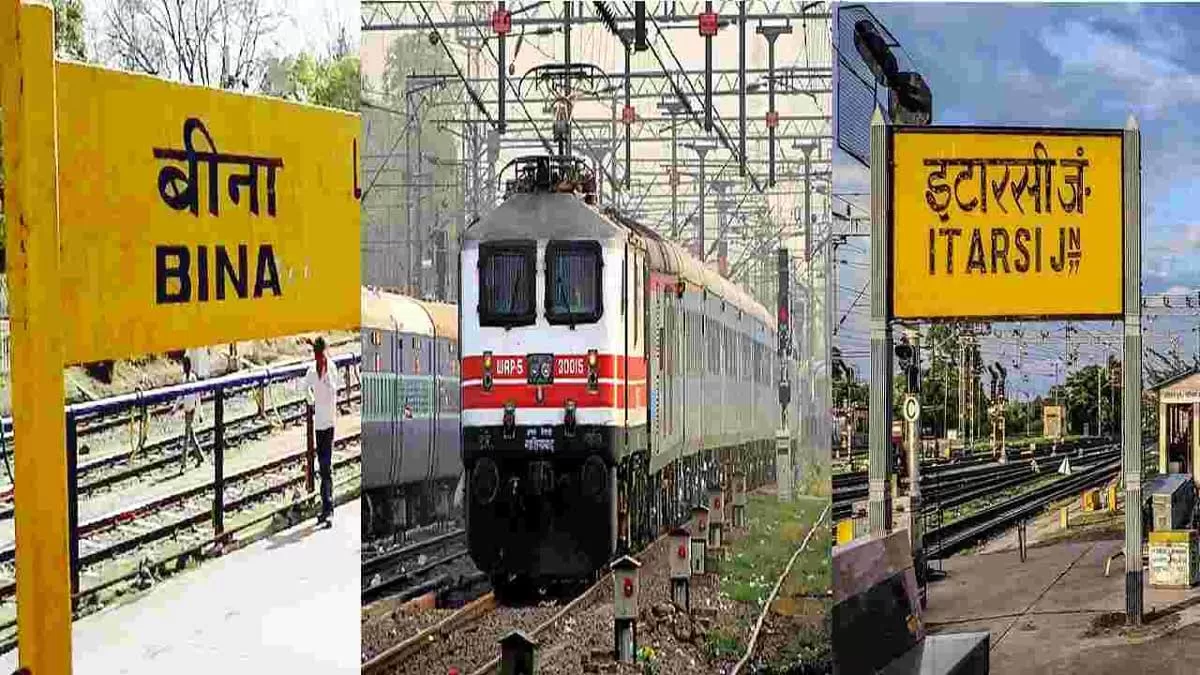
1. Bina–Itarsi Fourth Railway Line (236.97 km)
This proposal aims to add a fourth railway line along the Bina–Itarsi section, passing through key stations such as Bhopal, Rani Kamalapati, and Vidisha. Covering 32 stations, the project is expected to reduce travel time by around 46 minutes and improve sectional speeds by 10 km/h, significantly enhancing freight logistics.

2. Kasara–Manmad Multi-Tracking (Third and Fourth Lines, 2×130.8 km)
This initiative involves dual tracking across two segments: Kasara–Igatpuri in the Northeastern Ghats and Igatpuri–Manmad in the Deccan Plateau. The project targets a ruling gradient of 1 in 100, eliminating the need for banking locomotives, and increasing energy and operational efficiency. The realigned route merges with the mainline at Lahavit station, reducing delays and enhancing throughput.

3. Bhusawal–Wardha Third and Fourth Lines (314 km)
Covering five districts in Maharashtra — Jalgaon, Buldhana, Akola, Amravati, and Wardha — this project proposes additional tracks, station upgrades, and signalling modernisation. Located along the Mumbai–Howrah high-density corridor (HDN-2), the development is vital for easing freight congestion and strengthening the Central Railway zone.

The meeting was chaired by Shri Pankaj Kumar, Joint Secretary at the Department for Promotion of Industry and Internal Trade (DPIIT). The projects reviewed are aligned with India’s broader infrastructure strategy to enable faster, integrated, and sustainable economic growth.

The 92nd meeting of the Network Planning Group (NPG) was held in New Delhi to review major infrastructure proposals in the road and railway sectors. The session focused on promoting multimodal connectivity and improving logistics efficiency under the PM GatiShakti National Master Plan (PMGS NMP).The NPG evaluated four key proposals — one from the Ministry of Road Transport and Highways (MoRTH) and three from the Ministry of Railways (MoR). These projects were assessed for their integration with PM GatiShakti’s core tenets, including seamless multimodal infrastructure, last-mile connectivity, and a comprehensive development strategy. The initiatives are expected to improve freight movement, reduce transit time, and generate wide-ranging socio-economic benefits.Six/Four-Lane Access-Controlled Highway – Rishikesh BypassMoRTH, through the National Highways Authority of India (NHAI), has proposed the construction of a bypass around Rishikesh to ease traffic congestion and improve flow on NH-34. The route connects major religious and industrial hubs such as Haridwar, Dehradun, BHEL, SIDCUL, and critical border areas like Mana, Nelang, and Niti. The project includes a combination of a 6/4-lane elevated corridor and an additional 4-lane road to accommodate future traffic growth and enhance capacity.Rail Sector Proposals:1. Bina–Itarsi Fourth Railway Line (236.97 km)This proposal aims to add a fourth railway line along the Bina–Itarsi section, passing through key stations such as Bhopal, Rani Kamalapati, and Vidisha. Covering 32 stations, the project is expected to reduce travel time by around 46 minutes and improve sectional speeds by 10 km/h, significantly enhancing freight logistics.2. Kasara–Manmad Multi-Tracking (Third and Fourth Lines, 2×130.8 km)This initiative involves dual tracking across two segments: Kasara–Igatpuri in the Northeastern Ghats and Igatpuri–Manmad in the Deccan Plateau. The project targets a ruling gradient of 1 in 100, eliminating the need for banking locomotives, and increasing energy and operational efficiency. The realigned route merges with the mainline at Lahavit station, reducing delays and enhancing throughput.3. Bhusawal–Wardha Third and Fourth Lines (314 km)Covering five districts in Maharashtra — Jalgaon, Buldhana, Akola, Amravati, and Wardha — this project proposes additional tracks, station upgrades, and signalling modernisation. Located along the Mumbai–Howrah high-density corridor (HDN-2), the development is vital for easing freight congestion and strengthening the Central Railway zone.The meeting was chaired by Shri Pankaj Kumar, Joint Secretary at the Department for Promotion of Industry and Internal Trade (DPIIT). The projects reviewed are aligned with India’s broader infrastructure strategy to enable faster, integrated, and sustainable economic growth.

Next Story
Infrastructure Transport

MMRDA advances 250 m on Orange Gate–Marine Drive tunnel

The Mumbai Metropolitan Region Development Authority (MMRDA) has completed 250 m of underground tunnelling for the Orange Gate–Marine Drive Urban Road Tunnel using India’s largest slurry shield tunnel boring machine (TBM) deployed for an urban road project.The project involves twin tunnels extending over 7 km beneath critical transport corridors, including Central Railway, Western Railway and Metro Line 3. The work requires high-precision engineering to navigate densely developed urban infrastructure.Once completed, the tunnel is expected to reduce travel time between Orange Gate and Marin..

Next Story
Infrastructure Urban

Hindustan Zinc Pays Rs 188.46 Billion in FY26

Hindustan Zinc contributed Rs 188.46 billion to the public exchequer in FY 2025-26, according to its 9th Tax Transparency Report. The contribution, equivalent to 46 per cent of the company’s revenue, included direct and indirect taxes, government royalties, dividends to the Government of India, withholding taxes and other statutory levies.The company’s five-year cumulative contribution to the exchequer stood at Rs 915.72 billion. In FY26, Hindustan Zinc reported revenue of Rs 408.44 billion, EBITDA of Rs 221.62 billion and profit after tax of Rs 138.32 billion. It also achieved its highest..

Next Story
Infrastructure Urban

World of Concrete India 2026 Opens in Mumbai

Informa Markets in India will host the 12th edition of World of Concrete India 2026 from 3–5 June 2026 at the Bombay Exhibition Centre, Mumbai. The specialised B2B exhibition will bring together manufacturers, suppliers, contractors, developers, architects, consultants, infrastructure companies, project leaders and government stakeholders.The event is expected to feature over 350 brands and more than 18,000 trade professionals. It will cover concrete and cement, dry mortar, precast technologies, formwork, construction chemicals, industrial and commercial flooring, scaffolding, safety solutio..

Advertisement

Subscribe to Our Newsletter

Get daily newsletters around different themes from Construction world.

STAY CONNECTED

Advertisement

Advertisement

Advertisement