Panel Urges Railways To Expand Private Participation
RAILWAYS & METRO RAIL

Panel Urges Railways To Expand Private Participation

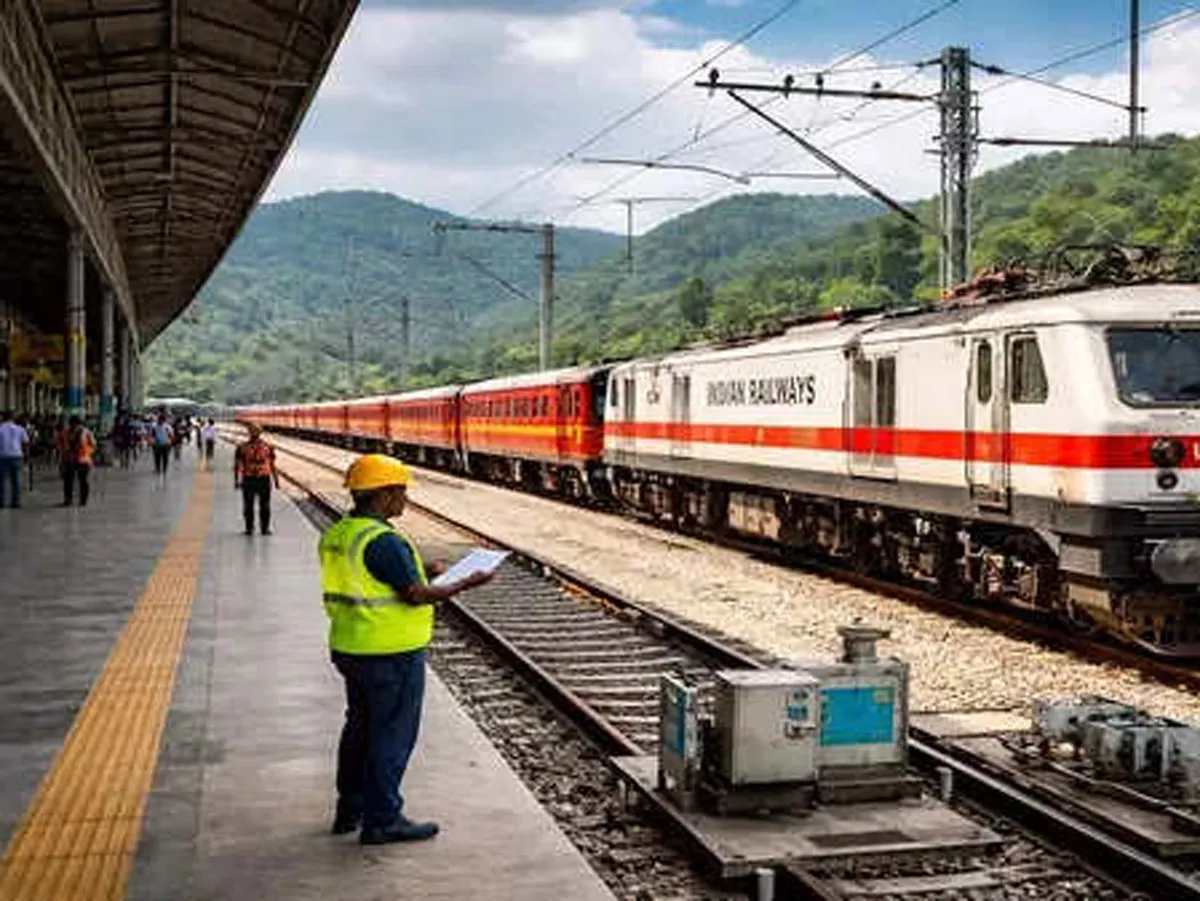
A government panel has urged Indian Railways to open more of its operations to private participation, cautioning that traditional assumptions about traffic growth—particularly coal freight—may no longer hold in a rapidly evolving energy landscape.

The Public Investment Board (PIB), the inter-ministerial body responsible for evaluating major publicly funded projects, has recommended that Indian Railways actively involve private companies across multiple segments. These include the construction of new tracks, enhancement of port connectivity and procurement of trains, wagons and locomotives from non-government players.

The recommendation comes amid the Union government’s sustained push to attract private capital into infrastructure. However, despite repeated policy signals over the past decade, Indian Railways has largely avoided public-private partnership (PPP) models, unlike sectors such as roads and power, where private participation has been more extensive.

During its annual budget appraisal, the PIB highlighted the need to involve private firms in multi-tracking projects by leveraging existing government budgetary support. The objective is not to reduce public spending but to amplify its impact by combining it with private investment and technical expertise.

The board also proposed alternative models for procuring rolling stock, including wet leasing, the hybrid annuity model and structured PPP arrangements. Under wet leasing, private companies would supply trains along with operating crew, while the hybrid annuity model—already used in highway projects—entails the government paying 60 per cent of project costs during construction, with the remaining 40 per cent paid in instalments over time.

Officials acknowledged that PPPs in the railway sector have been more challenging to implement than in other infrastructure segments due to operational complexity, safety considerations and long payback periods. Within this context, the hybrid annuity model is viewed as a relatively viable approach.

To facilitate implementation, the PIB has advised Indian Railways to consult NITI Aayog and prepare a Model Concession Agreement in coordination with the Department of Economic Affairs. Such a framework is expected to provide clarity on risk-sharing and returns, two factors that have historically constrained private investor interest.

Beyond funding considerations, the PIB raised a strategic concern over Indian Railways’ dependence on coal freight for revenue. With India committed to achieving net-zero emissions by 2070, coal demand from thermal power plants is expected to decline gradually, potentially disrupting long-term traffic projections that underpin railway expansion plans. The panel has therefore recommended closer coordination with the Ministry of Power to develop realistic long-term forecasts for coal demand and revise network augmentation plans accordingly.

The PIB also emphasised the need for a more integrated approach to transport planning, suggesting that last-mile connectivity should generally be addressed through road infrastructure rather than rail, to ensure optimal allocation of resources across transport modes.

A government panel has urged Indian Railways to open more of its operations to private participation, cautioning that traditional assumptions about traffic growth—particularly coal freight—may no longer hold in a rapidly evolving energy landscape. The Public Investment Board (PIB), the inter-ministerial body responsible for evaluating major publicly funded projects, has recommended that Indian Railways actively involve private companies across multiple segments. These include the construction of new tracks, enhancement of port connectivity and procurement of trains, wagons and locomotives from non-government players. The recommendation comes amid the Union government’s sustained push to attract private capital into infrastructure. However, despite repeated policy signals over the past decade, Indian Railways has largely avoided public-private partnership (PPP) models, unlike sectors such as roads and power, where private participation has been more extensive. During its annual budget appraisal, the PIB highlighted the need to involve private firms in multi-tracking projects by leveraging existing government budgetary support. The objective is not to reduce public spending but to amplify its impact by combining it with private investment and technical expertise. The board also proposed alternative models for procuring rolling stock, including wet leasing, the hybrid annuity model and structured PPP arrangements. Under wet leasing, private companies would supply trains along with operating crew, while the hybrid annuity model—already used in highway projects—entails the government paying 60 per cent of project costs during construction, with the remaining 40 per cent paid in instalments over time. Officials acknowledged that PPPs in the railway sector have been more challenging to implement than in other infrastructure segments due to operational complexity, safety considerations and long payback periods. Within this context, the hybrid annuity model is viewed as a relatively viable approach. To facilitate implementation, the PIB has advised Indian Railways to consult NITI Aayog and prepare a Model Concession Agreement in coordination with the Department of Economic Affairs. Such a framework is expected to provide clarity on risk-sharing and returns, two factors that have historically constrained private investor interest. Beyond funding considerations, the PIB raised a strategic concern over Indian Railways’ dependence on coal freight for revenue. With India committed to achieving net-zero emissions by 2070, coal demand from thermal power plants is expected to decline gradually, potentially disrupting long-term traffic projections that underpin railway expansion plans. The panel has therefore recommended closer coordination with the Ministry of Power to develop realistic long-term forecasts for coal demand and revise network augmentation plans accordingly. The PIB also emphasised the need for a more integrated approach to transport planning, suggesting that last-mile connectivity should generally be addressed through road infrastructure rather than rail, to ensure optimal allocation of resources across transport modes.

Next Story
Real Estate

A Paradigm Shift

The Indian real-estate and construction sector, which employs a significant number of organised and unorganised workers in the country, has embarked on a paradigm shift in its regulatory framework from an employment law perspective. With the four Labour Codes – the Code on Wages, 2019 (Wage Code); the Industrial Relations Code, 2020 (IR Code); the Code on Social Security, 2020 (SS Code) and the Occupational Safety, Health and Working Conditions Code, 2020 (OSH Code) – coming into effect in India from November 21, 2025, the industry is shifting away from a fragmented, contractor- driven com..

Next Story
Technology

We offer end-to-end traceability at scale

mjunction has evolved from an e-auction pioneer into a multi-vertical digital commerce platform with deep expertise in complex steel and coal supply chains. Its end-to-end, AI-led architecture focuses on price discovery, traceability, compliance and scalability, enabling transparent procurement, efficient logistics and data-driven decision-making across geographies. Vinaya Varma, MD, shares more about the company in conversation with CW.From a technology standpoint, what are the core USPs of mjunction today that differentiate it in steel and coal supply chains?mjunction has evolved b..

Next Story
Infrastructure Urban

Henkel, Rotary Recycle PoP Ganesha Idols Under Project HARMONY

Henkel India, in partnership with the Rotary Club of Navi Mumbai – Joy of Giving and with support from the Navi Mumbai Municipal Corporation (NMMC), has advanced circular sustainability through Project HARMONY by recycling Plaster of Paris (PoP) Ganesha idols into community learning assets. The initiative highlights an integrated approach to environmental restoration and social impact.As part of the project, materials collected after Ganesh Visarjan 2025 at Nerul were responsibly diverted from land and water bodies and processed at an authorised recycling facility, with on-ground execution s..

Advertisement

Subscribe to Our Newsletter

Get daily newsletters around different themes from Construction world.

STAY CONNECTED

Advertisement

Advertisement

Advertisement

Advertisement

Open In App