Heightened scrutiny over train accidents has pushed rail safety to the centre of the government’s spending plans, with the Centre weighing its largest-ever allocation for the sector. The proposed outlay for safety-related works could exceed Rs 1.3 trillion in FY27, according to people familiar with the matter.
The allocation, about 12 per cent higher than the current year’s budget, is expected to be directed towards upkeep of rolling stock and core infrastructure such as track renewals, along with accelerated deployment of Kavach, India’s indigenous automatic train protection system. Safety-related works are likely to account for nearly half of total railway capital expenditure in FY27, as overall capex is projected to rise to around Rs 2.76 trillion from Rs 2.52 trillion this year.
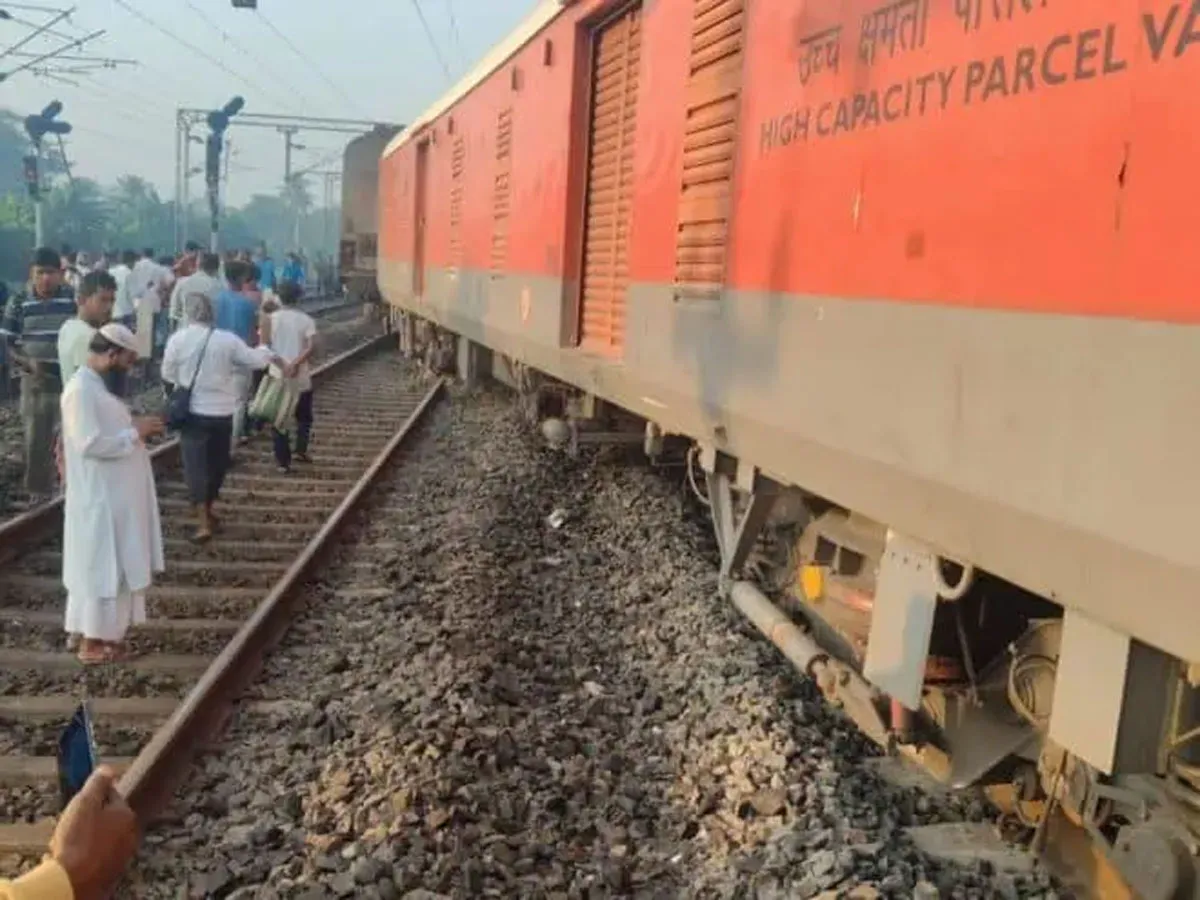
Rail safety has emerged as a major political and public priority despite a sharp decline in accident rates over the past decade. Recent incidents have kept the issue in focus, including the deadliest accident this year near Bilaspur, where a MEMU passenger train overshot a red signal and collided with a stationary freight train, killing 11 people and injuring more than 20.
Indian Railways recorded 31 accidents in FY25 and 10 consequential accidents in the current financial year up to November. Consequential accidents include collisions, fires and derailments resulting in loss of life or property. Between FY15 and FY24, 678 such accidents led to 748 fatalities.
Officials point to significant improvements in operational safety indicators. Accidents per million train kilometres declined from 0.11 in FY15 to 0.03 in FY24, a 73 per cent improvement. To sustain this trend, the government has extended the Rashtriya Rail Sanraksha Kosh, under which more than Rs 1.08 trillion has already been spent on upgrading critical assets.
The safety budget for FY26 stands at Rs 1.16 trillion, representing a modest 2 per cent increase over FY25’s Rs 1.14 trillion. In FY24, spending on safety works was Rs 1.01 trillion, compared with Rs 0.87 trillion in FY23. Over the longer term, safety-related expenditure has risen 2.5 times, from about Rs 0.70 trillion during FY05–FY14 to Rs 1.78 trillion in FY15–FY24. Track renewal spending increased 2.33 times over the same period, from Rs 0.47 trillion to Rs 1.09 trillion.
Kavach has been designated as India’s national automatic train protection system, designed to apply brakes automatically if a loco pilot fails to respond, including during poor visibility. So far, Kavach has been deployed across 1,465 route kilometres and 121 locomotives. Kavach 4.0 is being rolled out over 15,512 route kilometres, but overall operational coverage remains just over 2 per cent of the roughly 67,000-kilometre rail network.
Experts caution that higher spending alone will not guarantee safer operations. Shubhranshu, a railway professional and former chief of Rail Wheel Plant, Bela, said organisational discipline, maintenance standards, training and accountability play a larger role than capital outlays. He noted that more than Rs 1 trillion each is already committed over the coming years for Kavach, track renewals, upgrades and new rolling stock.
Much of the anticipated increase in safety spending is expected to go towards maintenance of tracks, locomotives and coaches, signalling upgrades, replacement of mechanical signalling with electronic interlocking, interlocking of unmanned level crossings, full track circuiting, deployment of high-strength rails, GPS-based fog safety devices and faster Kavach rollout. For FY26, railways have earmarked Rs 22.8 billion for track renewals, Rs 58.9 billion for rolling stock and maintenance, Rs 8.6 billion for traffic facilities and Rs 6.15 billion for electrification.
The growing focus on safety has also created opportunities for global mobility firms such as Siemens and Alstom across locomotives and signalling projects. Former Indian Railways general manager Sudhanshu Mani said the decline in accidents and fatalities has been driven by long-term measures such as elimination of unmanned level crossings, improved track quality and the introduction of LHB coaches, but added that achieving a zero-failure regime would require faster deployment of fail-safe signalling and greater use of artificial intelligence to detect near-misses.
Signalling upgrades have accelerated, with electronic interlocking stations increasing 3.5 times to 2,964 during FY15–FY24, and automatic block signalling expanding from 1,486 kilometres to 2,497 kilometres. Production of safer LHB coaches rose nearly 16-fold to 36,933 units, while complete track circuiting has been implemented at 6,609 stations.
Industry experts said the railways’ growing emphasis on technology-led solutions, including Kavach, electronic interlocking and advanced train communication systems, has contributed to the sustained reduction in accidents and reflects a structural shift towards safer operations.