+
Railway Infrastructure Push Accelerates Jammu and Kashmir Connectivity
RAILWAYS & METRO RAIL

Railway Infrastructure Push Accelerates Jammu and Kashmir Connectivity

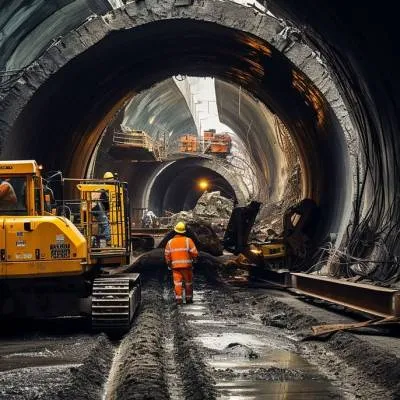
The central government has stepped up railway infrastructure development in Jammu and Kashmir, aiming to strengthen connectivity across the region. New track projects and station upgrades are being prioritised to link remote areas with principal urban centres. Authorities view the initiative as essential to improving mobility, reducing travel times and supporting local economies. Transport planners indicate phased commissioning will progressively bring services to underserved valleys and will be coordinated with local authorities to address last mile challenges.

Investment in rail is expected to facilitate greater access to markets for agricultural and artisanal producers and to enhance tourism potential in scenic districts. Enhanced freight capacity should allow easier movement of supplies and commodities, while passenger services will be calibrated to meet seasonal and local demand. Planners plan to synchronise rail works with road and air connectivity projects to maximise impact. Stakeholders anticipate improved logistics will reduce costs for small traders and enhance supply chain resilience within and beyond the region.

Officials emphasise community engagement and employment generation during construction, with training schemes to enable local labour participation. Environmental assessments are being integrated into project design to mitigate ecological effects and preserve fragile landscapes where necessary. The strategy aims to balance development with sustainability and to ensure benefits reach a broad cross section of residents. Community feedback mechanisms are expected to inform adjustments during delivery and to uphold local priorities including access to services and cultural heritage safeguards.

Prioritising rail connectivity in Jammu and Kashmir is presented as a long-term endeavour that could foster economic diversification and social cohesion. The emphasis on reliable links is expected to open new opportunities for investment and public service delivery across remote municipalities. Continued monitoring and phased implementation are likely to shape the pace of outcomes as projects advance. Timely coordination across agencies is cited as crucial to translating infrastructure investment into measurable improvements in livelihoods and to ensure continuity of operations during adverse weather conditions.

The central government has stepped up railway infrastructure development in Jammu and Kashmir, aiming to strengthen connectivity across the region. New track projects and station upgrades are being prioritised to link remote areas with principal urban centres. Authorities view the initiative as essential to improving mobility, reducing travel times and supporting local economies. Transport planners indicate phased commissioning will progressively bring services to underserved valleys and will be coordinated with local authorities to address last mile challenges. Investment in rail is expected to facilitate greater access to markets for agricultural and artisanal producers and to enhance tourism potential in scenic districts. Enhanced freight capacity should allow easier movement of supplies and commodities, while passenger services will be calibrated to meet seasonal and local demand. Planners plan to synchronise rail works with road and air connectivity projects to maximise impact. Stakeholders anticipate improved logistics will reduce costs for small traders and enhance supply chain resilience within and beyond the region. Officials emphasise community engagement and employment generation during construction, with training schemes to enable local labour participation. Environmental assessments are being integrated into project design to mitigate ecological effects and preserve fragile landscapes where necessary. The strategy aims to balance development with sustainability and to ensure benefits reach a broad cross section of residents. Community feedback mechanisms are expected to inform adjustments during delivery and to uphold local priorities including access to services and cultural heritage safeguards. Prioritising rail connectivity in Jammu and Kashmir is presented as a long-term endeavour that could foster economic diversification and social cohesion. The emphasis on reliable links is expected to open new opportunities for investment and public service delivery across remote municipalities. Continued monitoring and phased implementation are likely to shape the pace of outcomes as projects advance. Timely coordination across agencies is cited as crucial to translating infrastructure investment into measurable improvements in livelihoods and to ensure continuity of operations during adverse weather conditions.

Next Story
Infrastructure Transport

Second Mountain Tunnel Breakthrough in Palghar Advances High Speed Rail

The Mumbai-Ahmedabad high speed rail (MAHSR) project reached a milestone with the breakthrough of a mountain tunnel in Palghar, Maharashtra. Mountain tunnel MT-six measures 454 metres long and 14.4 metres wide and will accommodate up and down tracks. The breakthrough follows MT-five near Saphale on second January 2026 and the MT-six excavation was completed from both ends using the New Austrian Tunnelling Method. The ministry reported that the tunnelling was completed within 12 months. The New Austrian Tunnelling Method is favoured for its flexibility in complex geology and irregular tunnel s..

Next Story
Infrastructure Transport

Modi Government Pushes Atmanirbhar Container Drive With BCSL MoU

The Union Government advanced a plan to create an integrated, domestically anchored container ecosystem with the signing of a Memorandum of Understanding to establish the Bharat Container Shipping Line (BCSL). The MoU was signed by key agencies including the Shipping Corporation of India and Container Corporation of India alongside major port authorities and Sagarmala Finance Corporation Limited under the Ministry of Ports, Shipping and Waterways, in the presence of senior ministers. The initiative aligns with the Container Manufacturing Assistance Scheme announced in the Union Budget 2026–2..

Next Story
Infrastructure Urban

Ministry Reports Gains In Mobility For Marginalised Communities

The Ministry of Social Justice and Empowerment is implementing skill development, education and rehabilitation schemes to promote socio-economic mobility and sustainable livelihoods for marginalised and disadvantaged communities across the country. Programmes target Scheduled Castes, Other Backward Classes, Economically Weaker Sections, De-notified Tribes and Safai Karamcharis through specialised implementing corporations and empanelled training institutes. Pradhan Mantri Dakshata Aur Kushalta Sampann Hitgrahi Yojana, or PM-DAKSH, provided skill training and placement support through the Nati..

Advertisement

Subscribe to Our Newsletter

Get daily newsletters around different themes from Construction world.

STAY CONNECTED

Advertisement

Advertisement

Advertisement

Open In App