+
Railways Sets Record with Highest-ever Freight Interchanges on DFC
RAILWAYS & METRO RAIL

Railways Sets Record with Highest-ever Freight Interchanges on DFC

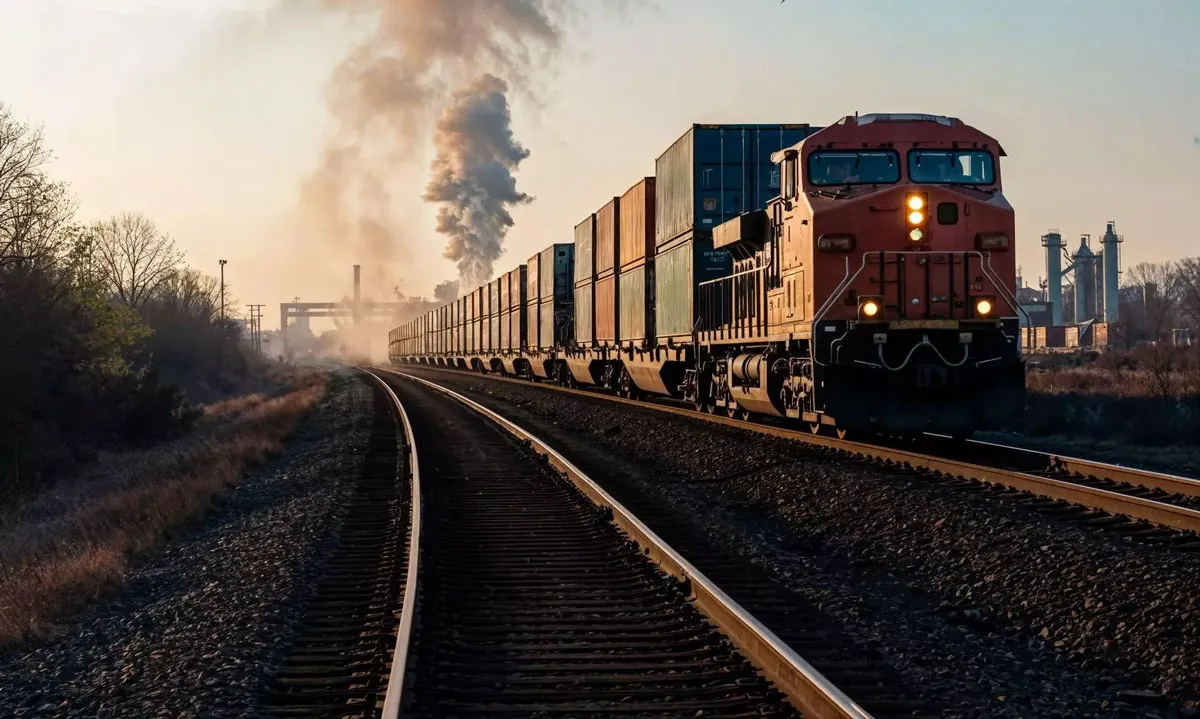
Indian Railways has set a new benchmark in freight transportation, reinforcing its role as a fast, reliable and cost-effective logistics backbone for the country. The Dedicated Freight Corridor (DFC) network has achieved its highest-ever freight interchange, reflecting the growing efficiency of India’s modern rail freight infrastructure.

On January 5, 2026, the Dedicated Freight Corridor Corporation of India (DFCCIL) handled a record 892 interchange trains in a single day between the DFC network and five zones of Indian Railways. This marked the highest interchange achieved since the commissioning of the corridors, surpassing the previous record of 865 trains recorded a day earlier on January 4, 2026. The milestone highlights the DFC’s ability to manage high-density freight operations seamlessly across regions.

The improved operational performance is easing congestion on conventional rail lines, enabling smoother passenger train services and reducing delays. At the same time, industries are benefiting from faster and more predictable movement of goods, helping lower logistics costs and supporting economic growth.

According to officials, the achievement reflects DFCCIL’s strengthened planning framework, robust traffic management systems and coordinated operations. Efficient regulation of train speeds, maintenance of safe headway and close coordination between adjoining stations allowed trains to pass through stations in minimal time while maintaining safety and fuel efficiency, even on heavily loaded sections.

The performance was supported by modern scheduling tools, real-time traffic monitoring, automated signalling systems, digital control rooms and strict safety protocols. High-power locomotives hauling longer and heavier freight trains at higher average speeds also played a critical role, along with disciplined coordination among loco pilots, assistant loco pilots and train managers.

The record underlines a broader transformation in India’s logistics ecosystem, enabling faster and safer transport of coal, cement, containers and agricultural commodities. Recent high-volume interchange days further reflect this sustained trend, positioning the DFC network as a key driver of efficient freight movement and national economic growth.

Indian Railways has set a new benchmark in freight transportation, reinforcing its role as a fast, reliable and cost-effective logistics backbone for the country. The Dedicated Freight Corridor (DFC) network has achieved its highest-ever freight interchange, reflecting the growing efficiency of India’s modern rail freight infrastructure.On January 5, 2026, the Dedicated Freight Corridor Corporation of India (DFCCIL) handled a record 892 interchange trains in a single day between the DFC network and five zones of Indian Railways. This marked the highest interchange achieved since the commissioning of the corridors, surpassing the previous record of 865 trains recorded a day earlier on January 4, 2026. The milestone highlights the DFC’s ability to manage high-density freight operations seamlessly across regions.The improved operational performance is easing congestion on conventional rail lines, enabling smoother passenger train services and reducing delays. At the same time, industries are benefiting from faster and more predictable movement of goods, helping lower logistics costs and supporting economic growth.According to officials, the achievement reflects DFCCIL’s strengthened planning framework, robust traffic management systems and coordinated operations. Efficient regulation of train speeds, maintenance of safe headway and close coordination between adjoining stations allowed trains to pass through stations in minimal time while maintaining safety and fuel efficiency, even on heavily loaded sections.The performance was supported by modern scheduling tools, real-time traffic monitoring, automated signalling systems, digital control rooms and strict safety protocols. High-power locomotives hauling longer and heavier freight trains at higher average speeds also played a critical role, along with disciplined coordination among loco pilots, assistant loco pilots and train managers.The record underlines a broader transformation in India’s logistics ecosystem, enabling faster and safer transport of coal, cement, containers and agricultural commodities. Recent high-volume interchange days further reflect this sustained trend, positioning the DFC network as a key driver of efficient freight movement and national economic growth.

Next Story
Infrastructure Transport

Second Mountain Tunnel Breakthrough in Palghar Advances High Speed Rail

The Mumbai-Ahmedabad high speed rail (MAHSR) project reached a milestone with the breakthrough of a mountain tunnel in Palghar, Maharashtra. Mountain tunnel MT-six measures 454 metres long and 14.4 metres wide and will accommodate up and down tracks. The breakthrough follows MT-five near Saphale on second January 2026 and the MT-six excavation was completed from both ends using the New Austrian Tunnelling Method. The ministry reported that the tunnelling was completed within 12 months. The New Austrian Tunnelling Method is favoured for its flexibility in complex geology and irregular tunnel s..

Next Story
Infrastructure Transport

Modi Government Pushes Atmanirbhar Container Drive With BCSL MoU

The Union Government advanced a plan to create an integrated, domestically anchored container ecosystem with the signing of a Memorandum of Understanding to establish the Bharat Container Shipping Line (BCSL). The MoU was signed by key agencies including the Shipping Corporation of India and Container Corporation of India alongside major port authorities and Sagarmala Finance Corporation Limited under the Ministry of Ports, Shipping and Waterways, in the presence of senior ministers. The initiative aligns with the Container Manufacturing Assistance Scheme announced in the Union Budget 2026–2..

Next Story
Infrastructure Urban

Ministry Reports Gains In Mobility For Marginalised Communities

The Ministry of Social Justice and Empowerment is implementing skill development, education and rehabilitation schemes to promote socio-economic mobility and sustainable livelihoods for marginalised and disadvantaged communities across the country. Programmes target Scheduled Castes, Other Backward Classes, Economically Weaker Sections, De-notified Tribes and Safai Karamcharis through specialised implementing corporations and empanelled training institutes. Pradhan Mantri Dakshata Aur Kushalta Sampann Hitgrahi Yojana, or PM-DAKSH, provided skill training and placement support through the Nati..

Advertisement

Subscribe to Our Newsletter

Get daily newsletters around different themes from Construction world.

STAY CONNECTED

Advertisement

Advertisement

Advertisement

Open In App