+
Rs 92 Billion Scheme For Development Of Water Metro Systems
RAILWAYS & METRO RAIL

Rs 92 Billion Scheme For Development Of Water Metro Systems

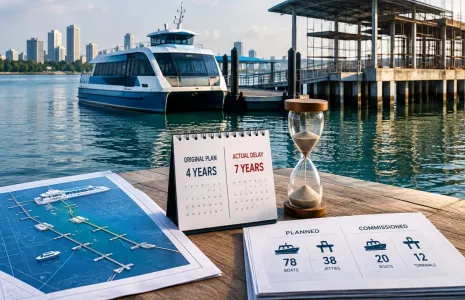
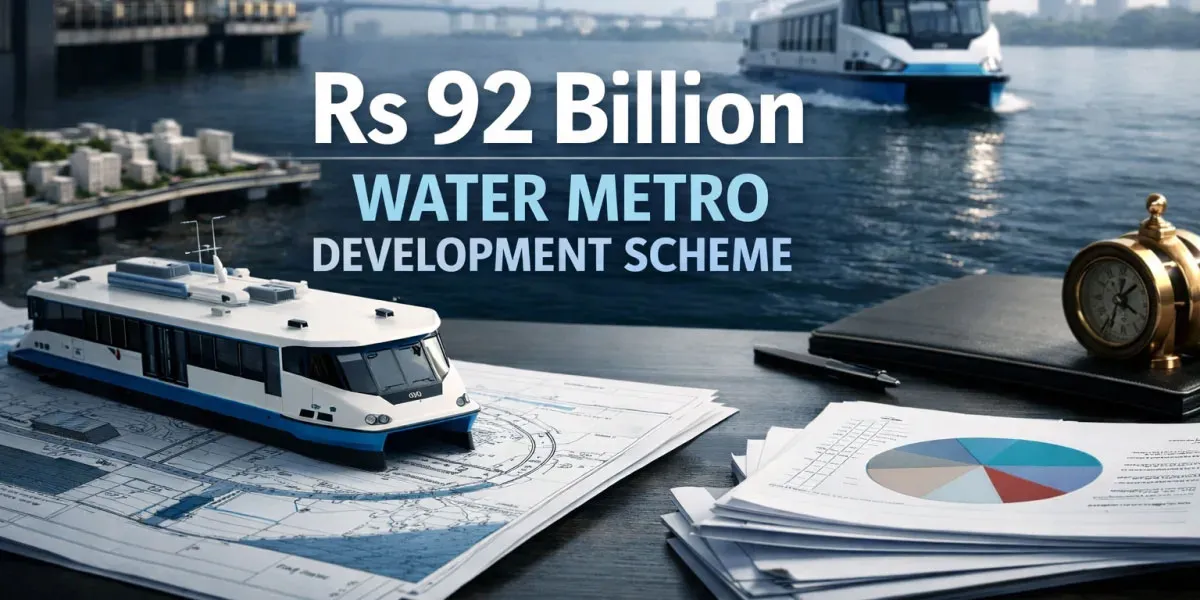
The Ministry of Ports, Shipping and Waterways is planning a Rs 92 billion (bn) scheme to develop water metro systems across the country following a Budget push to promote sustainable transport. Draft guidelines from the ministry indicate the scheme will provide government support for water metro projects implemented through fully government-funded and public-private partnership (PPP) modes. The plan is framed as part of wider efforts to expand multimodal urban mobility and to offer alternatives to road and rail congestion.

The draft guidance states the scheme will run until 2036-2037 and sets out eligibility and operational criteria for prospective projects. It emphasises support for projects that can demonstrate viability under scheduled services and that can be developed under either full public funding or under PPP arrangements. The guidelines also outline that projects will be assessed on technical preparedness and long term sustainability.

The scheme will target regions with inherent geographic suitability, including the presence of navigable waterways and the availability of continuous or semi-continuous navigable circuits capable of supporting scheduled services. Attention will be paid to hydrological conditions that allow safe and reliable operations and to the manageability of seasonal variations that could affect service regularity. Project selection will therefore favour areas where natural and infrastructural conditions reduce operational risk.

Officials expect the initiative to encourage investment in vessels, terminals and navigation infrastructure while promoting integration with existing urban transport networks. The approach is intended to stimulate local economies, reduce travel times and offer lower carbon alternatives to short distance surface transport. Implementation will require coordination with state authorities and port agencies to align permits, safety standards and financing arrangements.

Further procedural steps are expected before final approval and rollout, with the ministry inviting stakeholders to refine operational and financing models. The scheme is presented as a medium term instrument to expand smart urban waterborne mobility across suitable regions.

The Ministry of Ports, Shipping and Waterways is planning a Rs 92 billion (bn) scheme to develop water metro systems across the country following a Budget push to promote sustainable transport. Draft guidelines from the ministry indicate the scheme will provide government support for water metro projects implemented through fully government-funded and public-private partnership (PPP) modes. The plan is framed as part of wider efforts to expand multimodal urban mobility and to offer alternatives to road and rail congestion. The draft guidance states the scheme will run until 2036-2037 and sets out eligibility and operational criteria for prospective projects. It emphasises support for projects that can demonstrate viability under scheduled services and that can be developed under either full public funding or under PPP arrangements. The guidelines also outline that projects will be assessed on technical preparedness and long term sustainability. The scheme will target regions with inherent geographic suitability, including the presence of navigable waterways and the availability of continuous or semi-continuous navigable circuits capable of supporting scheduled services. Attention will be paid to hydrological conditions that allow safe and reliable operations and to the manageability of seasonal variations that could affect service regularity. Project selection will therefore favour areas where natural and infrastructural conditions reduce operational risk. Officials expect the initiative to encourage investment in vessels, terminals and navigation infrastructure while promoting integration with existing urban transport networks. The approach is intended to stimulate local economies, reduce travel times and offer lower carbon alternatives to short distance surface transport. Implementation will require coordination with state authorities and port agencies to align permits, safety standards and financing arrangements. Further procedural steps are expected before final approval and rollout, with the ministry inviting stakeholders to refine operational and financing models. The scheme is presented as a medium term instrument to expand smart urban waterborne mobility across suitable regions.

Next Story
Building Material

NITI Aayog Unveils Cement Decarbonisation Roadmap

NITI Aayog has released a sector-specific decarbonisation roadmap for cement as part of three green transition reports covering cement, aluminium and MSMEs. The report projects cement production rising to around 2,100 million tonnes by 2070 from 391 million tonnes in 2023, while targeting a reduction in carbon intensity to 0.09–0.13 tCO₂e per tonne. It recommends clinker substitution, refuse-derived fuels, CCUS adoption and carbon trading mechanisms to enable deep decarbonisation. ..

Next Story
Technology

Genesys Launches Advanced GeoRadar System

Genesys International Corporation has launched an advanced Ground Penetrating Radar (GPR) solution from IDS GeoRadar for underground utility mapping in India. The system uses patented Equalised Scrambling Technology (EST) and Wide/Multi-Array Antenna Technology to deliver high-resolution three-dimensional imaging of subsurface infrastructure. The technology enables the detection and mapping of buried assets such as water pipelines, sewer networks, telecom cables and power lines. By providing detailed subsurface insights, the system aims to help urban authorities and infrastructure developers ..

Next Story
Infrastructure Urban

Hindustan Zinc Partners Virginia Tech to Boost Silver Recovery

Hindustan Zinc Limited recently signed a Memorandum of Understanding (MoU) with Virginia Tech to advance research aimed at improving silver recovery across its lead–zinc (Pb–Zn) concentrators. The collaboration will focus on refining flotation techniques and optimising reagent usage to improve concentrate quality and operational efficiency at processing plants.Virginia Tech, based in Blacksburg, Virginia, is globally recognised for its expertise in mining engineering, mineral processing and applied metallurgical research. Through this partnership, Hindustan Zinc will leverage global resear..

Advertisement

Subscribe to Our Newsletter

Get daily newsletters around different themes from Construction world.

STAY CONNECTED

Advertisement

Advertisement

Advertisement

Open In App