Thiruvananthapuram Metro DPR Delayed Over Norms
RAILWAYS & METRO RAIL

Thiruvananthapuram Metro DPR Delayed Over Norms

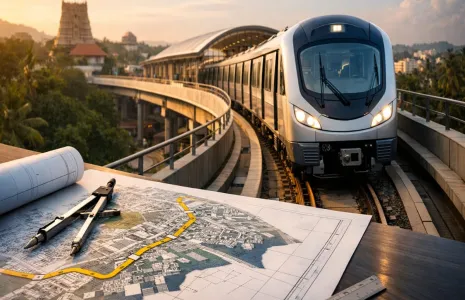
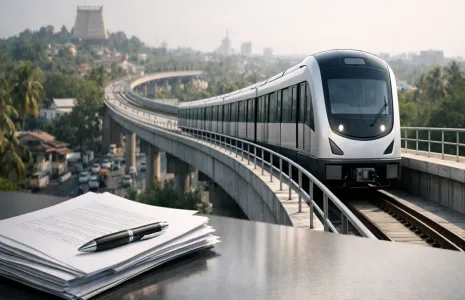
Plans for the Thiruvananthapuram Metro Rail have faced another setback, with uncertainty over national population eligibility norms delaying submission of the revised Detailed Project Report (DPR). Kochi Metro Rail Ltd (KMRL), the implementing agency, said it cannot proceed until there is clarity on the population criteria prescribed under the National Metro Rail Policy, 2017.

The Kerala government had earlier approved a 31-km alignment from Pappanamcode to Enchakkal, covering 27 stations. The proposed corridor is designed to link key activity centres, including Technopark, the Medical College, Kazhakkoottam, Akkulam, Thampanoor bus terminal, the railway station, the Secretariat and the international airport. However, the revised DPR being prepared by Delhi Metro Rail Corporation has been put on hold.

KMRL managing director Loknath Behera said the DPR cannot be formally submitted without clear guidance on population requirements to ensure compliance with central norms. He noted that adherence to the national policy is essential to avoid the proposal being rejected at a later stage.

Under the National Metro Rail Policy, 2017, conventional metro systems are generally intended for cities with an urban population of around 2 million or more. Mr Behera pointed out that an earlier alignment from Neyyattinkara to Attingal met these benchmarks more comfortably than the current proposal.

Concerns have intensified following recent Union government decisions. In November 2025, DPRs for the Coimbatore and Madurai Metro projects were returned for failing to meet population and ridership criteria, with the Centre advising consideration of alternative mass transit systems such as BRTS.

While Thiruvananthapuram had a population of about 1.68 million as per the 2011 Census and lower estimates for the core urban area, planners argue that the wider metropolitan region is projected to exceed 2.3 million, and excluding this catchment weakens the metro’s case.

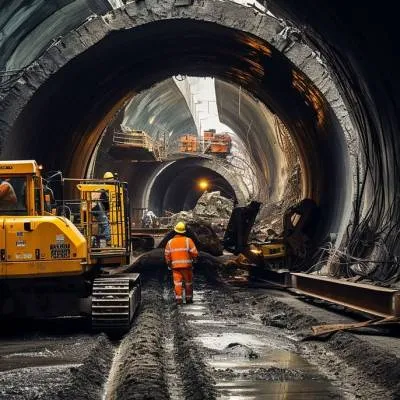
Despite the uncertainty, the state government remains optimistic, with preparatory infrastructure works already underway along key stretches of the proposed corridor.

Plans for the Thiruvananthapuram Metro Rail have faced another setback, with uncertainty over national population eligibility norms delaying submission of the revised Detailed Project Report (DPR). Kochi Metro Rail Ltd (KMRL), the implementing agency, said it cannot proceed until there is clarity on the population criteria prescribed under the National Metro Rail Policy, 2017. The Kerala government had earlier approved a 31-km alignment from Pappanamcode to Enchakkal, covering 27 stations. The proposed corridor is designed to link key activity centres, including Technopark, the Medical College, Kazhakkoottam, Akkulam, Thampanoor bus terminal, the railway station, the Secretariat and the international airport. However, the revised DPR being prepared by Delhi Metro Rail Corporation has been put on hold. KMRL managing director Loknath Behera said the DPR cannot be formally submitted without clear guidance on population requirements to ensure compliance with central norms. He noted that adherence to the national policy is essential to avoid the proposal being rejected at a later stage. Under the National Metro Rail Policy, 2017, conventional metro systems are generally intended for cities with an urban population of around 2 million or more. Mr Behera pointed out that an earlier alignment from Neyyattinkara to Attingal met these benchmarks more comfortably than the current proposal. Concerns have intensified following recent Union government decisions. In November 2025, DPRs for the Coimbatore and Madurai Metro projects were returned for failing to meet population and ridership criteria, with the Centre advising consideration of alternative mass transit systems such as BRTS. While Thiruvananthapuram had a population of about 1.68 million as per the 2011 Census and lower estimates for the core urban area, planners argue that the wider metropolitan region is projected to exceed 2.3 million, and excluding this catchment weakens the metro’s case. Despite the uncertainty, the state government remains optimistic, with preparatory infrastructure works already underway along key stretches of the proposed corridor.

Next Story
Infrastructure Urban

Mount Invests Rs 250 Cr, Adds PUF & PEB Plants, 400+ Jobs

TUMKUR, Karnataka, January 8, 2025 - Mount Roofing & Structures Private Limited, one of India's  fastest-growing manufacturers in PUF and a leading solutions provider across Pre-Engineered Building  (PEB) and Polycarbonate sheets, simultaneously inaugurated its second fully automated continuous  Sandwich Panel manufacturing line and a new PEB manufacturing plant at its integrated campus in  Tumkur." The milestone expansion, part of a total investment of INR 250 crores, marks a significant  advancement in the company's commitment to engineered performance, manu..

Next Story
Infrastructure Urban

Titan Intech Strengthens UltraLED Push With Global LED Veteran

Titan Intech has announced the induction of global LED industry veteran Su Piow Ko to its Board of Directors, marking a strategic step in strengthening its UltraLED Displays roadmap and building globally competitive LED display solutions from India.The appointment aligns with Titan Intech’s ambition to position India as a hub for advanced, high-quality LED display manufacturing. With an increased focus on UltraLED Displays, the company aims to enhance technical governance, raise manufacturing standards and expand its presence across global markets.Su Piow Ko brings over three decades of inte..

Next Story
Infrastructure Urban

Dun & Bradstreet Flags New Growth Engines in India 2026 Outlook

Dun & Bradstreet has released its India 2026: D&B’s Perspective report, projecting a stable macroeconomic environment underpinned by fresh opportunities for productivity-led and inclusive growth. The report outlines how India’s next growth phase will be driven by digitised logistics, trusted data ecosystems, clean energy and rising city vitality.According to the outlook, India’s GDP growth is expected to reach around 6.6 per cent by FY2027, supported by resilient consumer demand and sustained public investment. Manufacturing is seen entering a new phase, moving beyond scale towar..

Advertisement

Subscribe to Our Newsletter

Get daily newsletters around different themes from Construction world.

STAY CONNECTED

Advertisement

Advertisement

Advertisement

Advertisement

Open In App