Vadodara Bullet Train Station to Link Rail and City Transport
RAILWAYS & METRO RAIL

Vadodara Bullet Train Station to Link Rail and City Transport

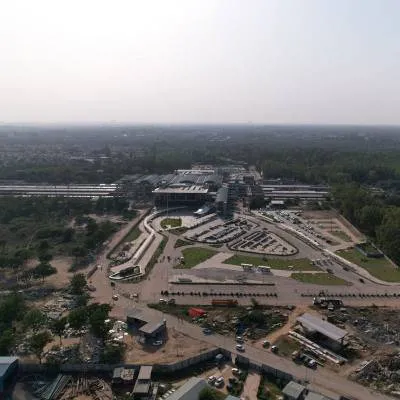
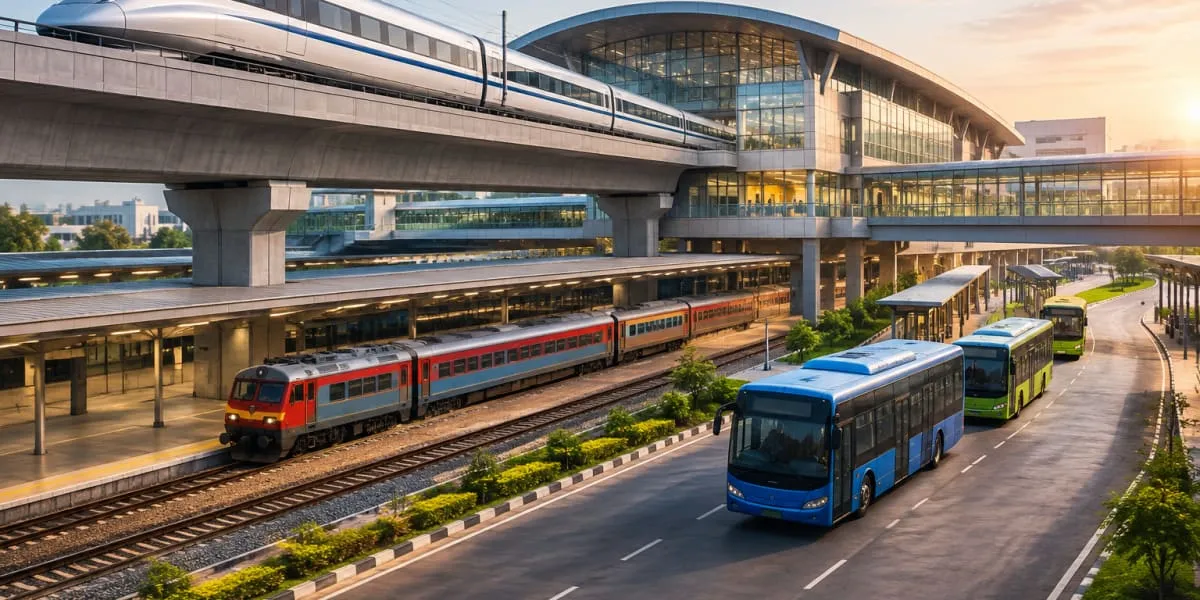
Vadodara’s upcoming bullet train station is being developed as an interchange connecting India’s high-speed rail network with existing railway, bus and road transport services. Located above Platform 7 of Vadodara railway station, the facility is intended to simplify transfers between bullet trains, Indian Railways services and public transport.

The station will be integrated with the Western Railway station, the city’s central and interstate bus depot and nearby road-based facilities. This arrangement is expected to support passengers travelling along the Mumbai-Ahmedabad High-Speed Rail (MAHSR) corridor, including those travelling to Ahmedabad, Surat and Mumbai.

A key part of the design is a network of three Foot Over Bridges (FOBs). The 534-metre FOB will connect the bullet train station with Vadodara railway station and the GSRTC Central Bus Depot, and will include travelators to assist passengers changing between rail and bus services. A second 90-metre FOB will link the station with the Alkapuri side of the city across the existing railway tracks.

The third FOB, measuring 51 metres, will connect the bullet train station with its parking area and station plaza. Lifts and escalators are planned to improve accessibility and movement between the different levels. The station complex will also include waiting areas, restrooms, retail spaces and dedicated pick-up and drop-off zones, with separate parking provisions for cars, buses and autos.

A station plaza with landscaping, passenger waiting areas and clear wayfinding is planned as part of the development. The National High-Speed Rail Corporation (NHSRCL) said the architecture draws inspiration from the Banyan Tree, reflecting Vadodara’s association with the Vad tree, while open passenger areas will provide natural light and views of the sky. The station could improve access to educational institutions, examinations, internships, employment, research and business opportunities, particularly for students and young professionals. NHSRCL also identified Vadodara’s universities and research institutions as beneficiaries of improved connections to major cities.

Vadodara’s upcoming bullet train station is being developed as an interchange connecting India’s high-speed rail network with existing railway, bus and road transport services. Located above Platform 7 of Vadodara railway station, the facility is intended to simplify transfers between bullet trains, Indian Railways services and public transport. The station will be integrated with the Western Railway station, the city’s central and interstate bus depot and nearby road-based facilities. This arrangement is expected to support passengers travelling along the Mumbai-Ahmedabad High-Speed Rail (MAHSR) corridor, including those travelling to Ahmedabad, Surat and Mumbai. A key part of the design is a network of three Foot Over Bridges (FOBs). The 534-metre FOB will connect the bullet train station with Vadodara railway station and the GSRTC Central Bus Depot, and will include travelators to assist passengers changing between rail and bus services. A second 90-metre FOB will link the station with the Alkapuri side of the city across the existing railway tracks. The third FOB, measuring 51 metres, will connect the bullet train station with its parking area and station plaza. Lifts and escalators are planned to improve accessibility and movement between the different levels. The station complex will also include waiting areas, restrooms, retail spaces and dedicated pick-up and drop-off zones, with separate parking provisions for cars, buses and autos. A station plaza with landscaping, passenger waiting areas and clear wayfinding is planned as part of the development. The National High-Speed Rail Corporation (NHSRCL) said the architecture draws inspiration from the Banyan Tree, reflecting Vadodara’s association with the Vad tree, while open passenger areas will provide natural light and views of the sky. The station could improve access to educational institutions, examinations, internships, employment, research and business opportunities, particularly for students and young professionals. NHSRCL also identified Vadodara’s universities and research institutions as beneficiaries of improved connections to major cities.

Related Stories

Gold Stories

Next Story
Infrastructure Urban

Bajaj Auto to Raise Monthly Electric 2W Capacity to 80,000 by March

Bajaj Auto plans to raise monthly production capacity for electric two-wheelers to around 80,000 units by the end of March, as demand for its Chetak electric scooter continues to exceed available output. The company currently has capacity for around 60,000 electric two-wheelers a month. Joint Managing Director Rakesh Sharma said production had returned to the existing full capacity after a supply chain disruption affected output. The issue had reduced recent production to around 40,000 units, resulting in a shortfall of 20,000 vehicles despite strong demand. The company expects to remove produ..

Next Story
Infrastructure Transport

India’s Domestic Air Passenger Traffic Falls 6.5% in September

India’s domestic air passenger traffic declined 6.49 per cent month on month to 11.8 mn in September, according to data released by the Directorate General of Civil Aviation (DGCA). IndiGo retained its leading position, carrying nearly two-thirds of domestic passengers, while the Air India Group remained the second-largest operator. IndiGo held a 65.4 per cent market share and transported 7.73 mn passengers during the month. The Air India Group accounted for 26.8 per cent of the market, carrying 3.165 mn passengers, based on data from the aviation regulator. Akasa Air ranked third with a 5.6..

Next Story
Infrastructure Urban

DPIIT Advances Trust-Based Governance Across India

The Department for Promotion of Industry and Internal Trade (DPIIT), under the Ministry of Commerce and Industry, is shifting India’s regulatory approach from permission-based administration to trust-based governance. The reforms seek to reduce business compliance, support startups, attract investment and simplify approvals across the country. According to an official statement, 47,957 compliance requirements have been reduced across Central Ministries and States and Union Territories. Of these, 22,290 have been digitised, 16,141 simplified, 5,255 decriminalised and 4,271 eliminated. The Jan..

Advertisement

Subscribe to Our Newsletter

Get daily newsletters around different themes from Construction world.

STAY CONNECTED

Advertisement

SPECIAL OFFER
QR Code