Wagon Makers Face Order Uncertainty After First Phase
RAILWAYS & METRO RAIL

Wagon Makers Face Order Uncertainty After First Phase

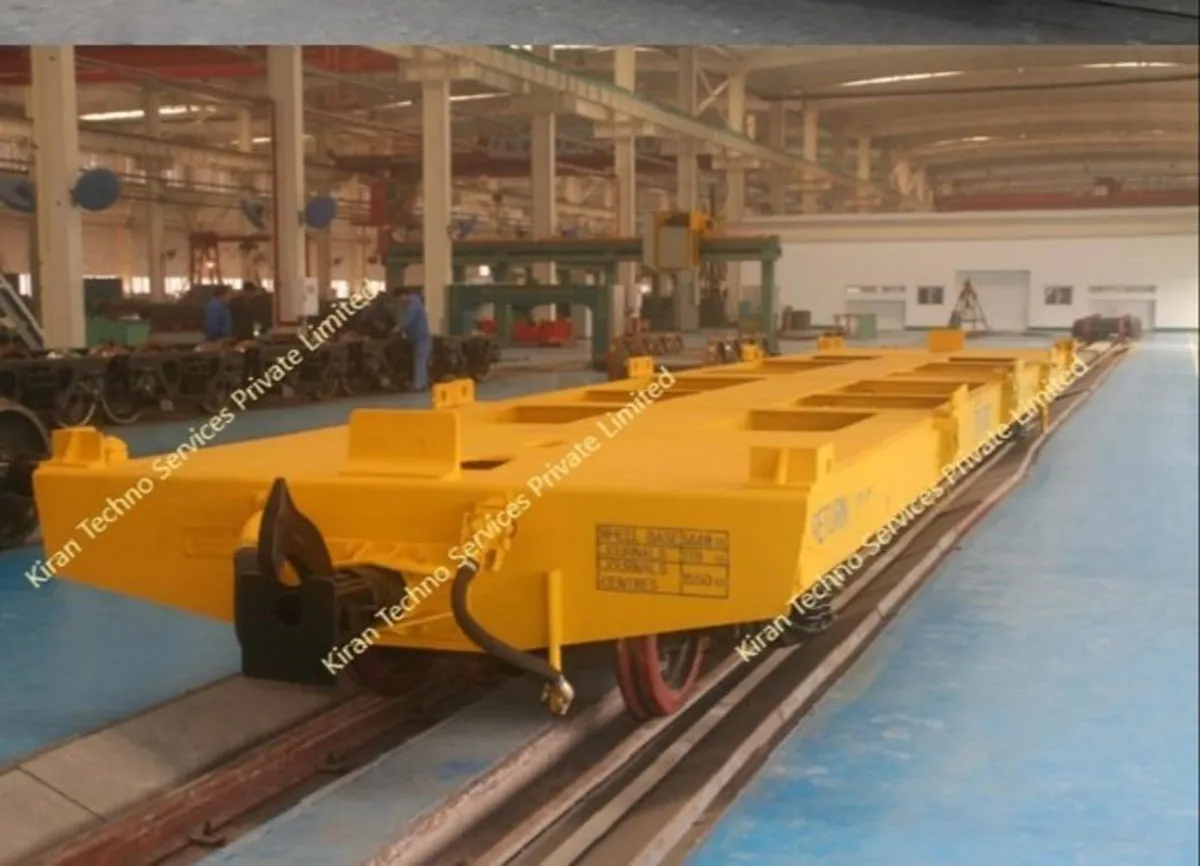
Private wagon manufacturers, who significantly expanded production capacity over the past three years in line with the railway ministry’s freight expansion roadmap, are facing uncertainty due to the absence of fresh procurement orders after the completion of the first phase.

Railway ministry officials said the assessment of wagon requirements is an ongoing process and that new orders will be placed based on evolving demand. They also highlighted strong freight performance in FY25, when Indian Railways emerged as the world’s second-largest freight carrier, recording freight loading of 1,617 million tonnes.

Under the National Rail Plan formulated in 2022, the ministry projected a doubling of wagon strength from 300,000 to 600,000 by 2030 to enhance freight capacity and revenues. As part of the plan, the ministry placed an initial major order for 117,229 wagons to be manufactured over three years starting in 2022.

Both private and public sector manufacturers delivered 37,650 wagons each in FY23 and FY24, followed by 41,929 wagons in FY25, marking an all-time high and an 11 per cent year-on-year increase in production. A senior railway official said most manufacturers completed deliveries by the end of 2025, except for a few smaller players that missed timelines.

According to the National Rail Plan, a second procurement order for more than 200,000 wagons, to be manufactured over five years until 2030, was expected to be placed in FY26 with defined annual targets. Officials said manufacturers had scaled up capacity based on the ministry’s ambitious freight expansion strategy and delivered more than 100,000 wagons over three years up to FY25, but are now concerned about the lack of clarity on the next order cycle.

The plan aims to increase railways’ share in freight transportation from 27 per cent to 45 per cent by 2030, which would require a substantial expansion of wagon availability. Projections indicate that the ministry was expected to procure 40,000–46,000 wagons annually between FY26 and FY30 from private and public manufacturers.

Industry experts stressed that enhancing freight capacity is critical for Indian Railways, as freight operations generate the surplus used to cross-subsidise passenger services. Freight accounts for nearly 65 per cent of the railways’ total earnings, with the remaining 35 per cent derived from passenger services, parcels and non-fare revenue.

The Standing Committee on Railways, in its December 2025 report on freight-related earnings and the development of dedicated freight corridors, praised the induction of around 30,000 wagons annually. The committee said greater private sector participation could significantly improve timely wagon availability and urged Indian Railways to promote private investment through clear and measurable targets for private wagon ownership.

Private wagon manufacturers, who significantly expanded production capacity over the past three years in line with the railway ministry’s freight expansion roadmap, are facing uncertainty due to the absence of fresh procurement orders after the completion of the first phase. Railway ministry officials said the assessment of wagon requirements is an ongoing process and that new orders will be placed based on evolving demand. They also highlighted strong freight performance in FY25, when Indian Railways emerged as the world’s second-largest freight carrier, recording freight loading of 1,617 million tonnes. Under the National Rail Plan formulated in 2022, the ministry projected a doubling of wagon strength from 300,000 to 600,000 by 2030 to enhance freight capacity and revenues. As part of the plan, the ministry placed an initial major order for 117,229 wagons to be manufactured over three years starting in 2022. Both private and public sector manufacturers delivered 37,650 wagons each in FY23 and FY24, followed by 41,929 wagons in FY25, marking an all-time high and an 11 per cent year-on-year increase in production. A senior railway official said most manufacturers completed deliveries by the end of 2025, except for a few smaller players that missed timelines. According to the National Rail Plan, a second procurement order for more than 200,000 wagons, to be manufactured over five years until 2030, was expected to be placed in FY26 with defined annual targets. Officials said manufacturers had scaled up capacity based on the ministry’s ambitious freight expansion strategy and delivered more than 100,000 wagons over three years up to FY25, but are now concerned about the lack of clarity on the next order cycle. The plan aims to increase railways’ share in freight transportation from 27 per cent to 45 per cent by 2030, which would require a substantial expansion of wagon availability. Projections indicate that the ministry was expected to procure 40,000–46,000 wagons annually between FY26 and FY30 from private and public manufacturers. Industry experts stressed that enhancing freight capacity is critical for Indian Railways, as freight operations generate the surplus used to cross-subsidise passenger services. Freight accounts for nearly 65 per cent of the railways’ total earnings, with the remaining 35 per cent derived from passenger services, parcels and non-fare revenue. The Standing Committee on Railways, in its December 2025 report on freight-related earnings and the development of dedicated freight corridors, praised the induction of around 30,000 wagons annually. The committee said greater private sector participation could significantly improve timely wagon availability and urged Indian Railways to promote private investment through clear and measurable targets for private wagon ownership.

Next Story
Infrastructure Energy

Exide Launches AGMi AGM Batteries for Premium Cars

Exide Industries Limited has recently announced the launch of Exide AGMi, an advanced Absorbent Glass Mat (AGM) battery range for the Indian automotive aftermarket, addressing the increasing power requirements of modern, technology-driven passenger vehicles. The Exide AGMi range features spill-proof AGM-VRLA technology, offering enhanced safety, higher cranking power, up to three times longer cycle life compared to conventional batteries, and superior vibration resistance. The portfolio is available in DIN 50, DIN 60, DIN 70, DIN 80 and DIN 95 variants, covering applications from mass-market ..

Next Story
Infrastructure Transport

Blue Dart Q3 FY26 Profit at Rs 700 million on Steady Demand

Blue Dart Express Ltd, South Asia’s express air and integrated transportation and distribution major, recently announced its financial results for the quarter ended December 31, 2025. The company reported a profit after tax of Rs 700 million for the quarter, while revenue from operations stood at Rs 16.16 billion. Performance during the period was supported by stable domestic demand and disciplined cost management across operations. Commenting on the results, Balfour Manuel, Managing Director, said the quarter reflected resilient domestic demand, with growing contributions from Tier 2 and ..

Next Story
Real Estate

HIL Commences Toll Operations at Kaza Fee Plaza on NH-16

Highway Infrastructure Limited (HIL), an integrated infrastructure development and management company, has recently commenced toll operations at the Kaza Fee Plaza on the Chilakaluripet–Vijayawada section of National Highway-16 in Andhra Pradesh, effective 23 January 2026. The project spans from Km 355.0 to Km 437.5 on NH-16, covering an aggregate length of 82.5 km. NH-16 is a critical north–south corridor connecting major economic centres across southern and eastern India and forms a vital part of the national logistics and passenger transport network. This marks HIL’s first toll oper..

Advertisement

Subscribe to Our Newsletter

Get daily newsletters around different themes from Construction world.

STAY CONNECTED

Advertisement

Advertisement

Advertisement

Advertisement

Open In App