+
ABB Wins Cochin Shipyard Order For Electric Tug Systems
PORTS & SHIPPING

ABB Wins Cochin Shipyard Order For Electric Tug Systems

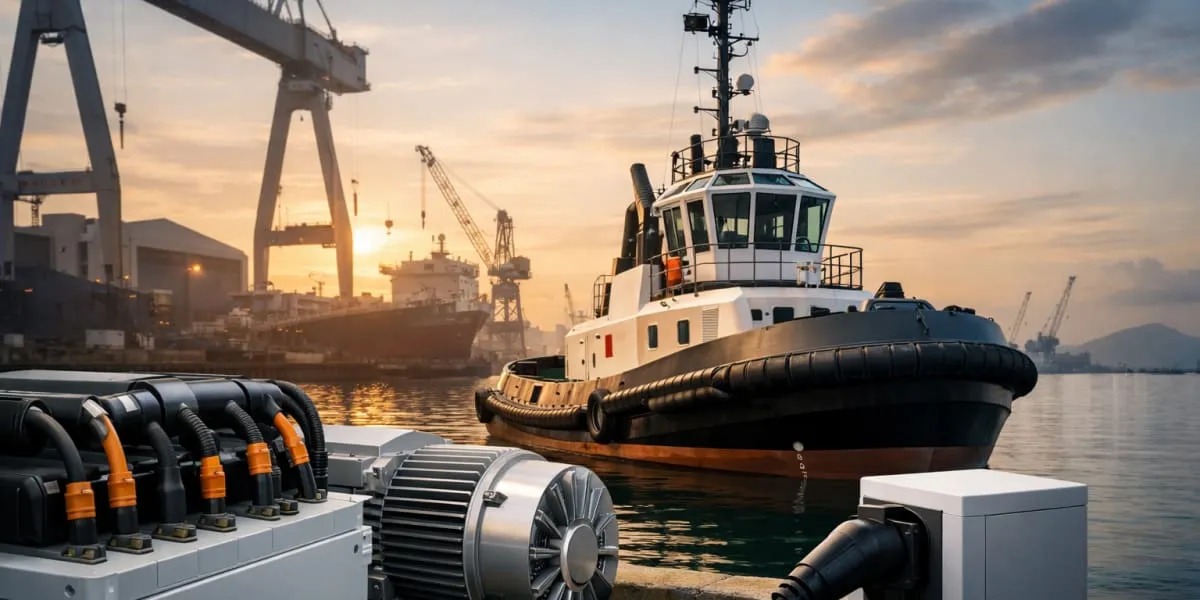
ABB has won an order from Cochin Shipyard to supply electric tug systems, the companies announced. The contract positions ABB as the technology provider for tug electrification at one of India's major shipbuilders. The systems will support Cochin Shipyard's programme to modernise its harbour operations and reduce emissions. The procurement aligns with national efforts to modernise maritime infrastructure and reduce the environmental footprint of port operations.

The electric tug systems will integrate propulsion, power management and energy storage to enable quieter, more efficient operations in port environments. Such systems are designed to reduce fuel consumption and local air pollution compared with conventional diesel tugs and can support operational flexibility for manoeuvring and harbour towing tasks. Electric systems also support predictable power delivery and can simplify maintenance compared with traditional mechanical drivetrains. The move reflects a broader shift in the maritime sector towards electrification and cleaner technologies.

ABB brings experience in marine electrification and automation, offering hardware and software suites for vessel power systems and control. The deal with Cochin Shipyard will draw on that expertise to tailor solutions to local operational requirements and regulatory standards. Integration work will focus on compatibility with existing shipyard workflows and adherence to prevailing safety and technical codes. Suppliers and shipyards are increasingly collaborating to deliver integrated vessel systems that balance performance with environmental considerations.

The order underscores growing demand for low-emission harbour craft and the role of Indian yards in adopting advanced propulsion solutions. Cochin Shipyard is positioned to offer electric tugs to its customers as ports seek to cut emissions and improve air quality. The partnership forms part of wider fleet upgrades across regional ports as operators pursue more sustainable harbour operations. Analysts say the partnership exemplifies industry momentum towards electrification in port operations.

ABB has won an order from Cochin Shipyard to supply electric tug systems, the companies announced. The contract positions ABB as the technology provider for tug electrification at one of India's major shipbuilders. The systems will support Cochin Shipyard's programme to modernise its harbour operations and reduce emissions. The procurement aligns with national efforts to modernise maritime infrastructure and reduce the environmental footprint of port operations. The electric tug systems will integrate propulsion, power management and energy storage to enable quieter, more efficient operations in port environments. Such systems are designed to reduce fuel consumption and local air pollution compared with conventional diesel tugs and can support operational flexibility for manoeuvring and harbour towing tasks. Electric systems also support predictable power delivery and can simplify maintenance compared with traditional mechanical drivetrains. The move reflects a broader shift in the maritime sector towards electrification and cleaner technologies. ABB brings experience in marine electrification and automation, offering hardware and software suites for vessel power systems and control. The deal with Cochin Shipyard will draw on that expertise to tailor solutions to local operational requirements and regulatory standards. Integration work will focus on compatibility with existing shipyard workflows and adherence to prevailing safety and technical codes. Suppliers and shipyards are increasingly collaborating to deliver integrated vessel systems that balance performance with environmental considerations. The order underscores growing demand for low-emission harbour craft and the role of Indian yards in adopting advanced propulsion solutions. Cochin Shipyard is positioned to offer electric tugs to its customers as ports seek to cut emissions and improve air quality. The partnership forms part of wider fleet upgrades across regional ports as operators pursue more sustainable harbour operations. Analysts say the partnership exemplifies industry momentum towards electrification in port operations.

Related Stories

Gold Stories
Next Story
Infrastructure Urban

KONE Opens India's First Digital Experience Centre in Pune

KONE, a global elevator and escalator manufacturer, has inaugurated its first Digital Experience Centre (DEC) in India, located in Pune. The facility aims to showcase how artificial intelligence (AI), connectivity and data-driven technologies can enhance customer experiences and improve building operations.The centre was inaugurated by Jussi Herlin, Executive Vice Chair, KONE Corporation; Philippe Delorme, President and CEO, KONE; and Nandan Nilekani, Co-founder and Chairman of the Board, Infosys.Designed as an interactive customer environment, the facility demonstrates digital solutions cover..

Next Story
Infrastructure Urban

CII GreenCo Launches Circularity Guidelines for Indian Industry

The Confederation of Indian Industry (CII) GreenCo Council has launched the CII GreenCo Circularity Guidelines – Pilot Version at the 17th CII GreenCo Waste & Resource Management Summit 2026 in Chennai. The initiative aims to strengthen resource efficiency, waste reduction and circular economy practices across Indian manufacturing and process industries.The guidelines introduce a structured framework with circularity indices covering raw materials, consumables, packaging and other resource inputs. These indicators will help industries assess existing practices, identify opportunities to ..

Next Story
Infrastructure Energy

Global Electronics Association Launches IPC-1783-CO2E Standard

The Global Electronics Association has introduced IPC-1783-CO2E, a new international standard aimed at improving consistency, transparency and comparability in product carbon footprint reporting across the electronics manufacturing industry.The standard, titled International Standard for Data Collection and Reporting of CO2 Equivalent (CO2e) Emissions for the Electronics Manufacturing Supply Chain, provides industry-specific guidance for collecting, estimating and reporting carbon emissions data.With increasing regulatory requirements and customer expectations, electronics manufacturers face c..

Advertisement

Subscribe to Our Newsletter

Get daily newsletters around different themes from Construction world.

STAY CONNECTED

Advertisement

SPECIAL OFFER
QR Code