

Centre Notifies Rs 447bn Shipbuilding Boost Schemes
PORTS & SHIPPING

Centre Notifies Rs 447bn Shipbuilding Boost Schemes

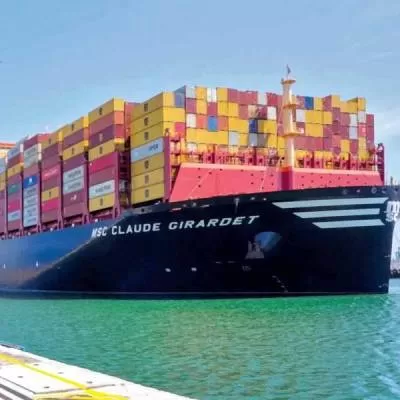
The government on Saturday notified operational guidelines for two major shipbuilding initiatives with a combined outlay of Rs 447 billion, aimed at strengthening India’s domestic shipbuilding capacity and improving global competitiveness.

Under the Shipbuilding Financial Assistance Scheme (SBFAS), which has a total corpus of Rs 247.36 billion, the government will provide financial assistance ranging from 15 per cent to 25 per cent per vessel, depending on the category. The scheme offers graded support for small normal, large normal and specialised vessels, with stage-wise disbursement linked to defined milestones and backed by security instruments. Incentives for series orders have also been included.

Over the next decade, SBFAS is expected to support shipbuilding projects worth around Rs 960 billion, stimulate domestic manufacturing and generate employment across the maritime value chain.

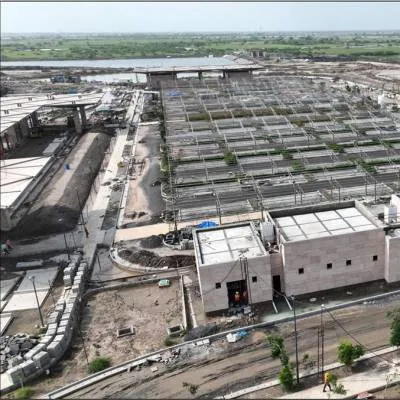
The Shipbuilding Development Scheme (SbDS), with a budgetary outlay of Rs 199.89 billion, focuses on long-term capacity and capability creation. It provides for the development of greenfield shipbuilding clusters, expansion and modernisation of existing brownfield shipyards, and the establishment of an India Ship Technology Centre under the Indian Maritime University to support research, design, innovation and skills development. The approved guidelines lay down a transparent and accountable framework for implementation.

Union Minister of Ports, Shipping and Waterways Sarbananda Sonowal said the initiatives mark a decisive policy reset for India’s shipbuilding sector under Prime Minister Narendra Modi’s leadership. He said the guidelines create a stable and transparent framework to revive domestic shipbuilding, strengthen forward and backward linkages under the ‘Make in India’ initiative, enable large-scale investment and build world-class capacity, positioning India as a major maritime nation on the path to Viksit Bharat and Aatmanirbhar Bharat.

Under SbDS, greenfield shipbuilding clusters will receive 100 per cent capital support for common maritime and internal infrastructure through a 50:50 Centre–State special purpose vehicle. Existing shipyards will be eligible for 25 per cent capital assistance for brownfield expansion of critical infrastructure such as dry docks, shiplifts, fabrication facilities and automation systems. Disbursements will be milestone-based and monitored by independent evaluation agencies.

The scheme also includes a Credit Risk Coverage Framework, offering government-backed insurance for pre-shipment, post-shipment and vendor-default risks to improve project bankability and financial resilience.

With the creation of modern infrastructure and a skilled workforce, India’s commercial shipbuilding capacity is projected to rise to about 4.5 million gross tonnage per annum by 2047, the ministry said. Both SBFAS and SbDS will remain valid until March 31, 2036, with an in-principle extension envisaged up to 2047.

The government on Saturday notified operational guidelines for two major shipbuilding initiatives with a combined outlay of Rs 447 billion, aimed at strengthening India’s domestic shipbuilding capacity and improving global competitiveness. Under the Shipbuilding Financial Assistance Scheme (SBFAS), which has a total corpus of Rs 247.36 billion, the government will provide financial assistance ranging from 15 per cent to 25 per cent per vessel, depending on the category. The scheme offers graded support for small normal, large normal and specialised vessels, with stage-wise disbursement linked to defined milestones and backed by security instruments. Incentives for series orders have also been included. Over the next decade, SBFAS is expected to support shipbuilding projects worth around Rs 960 billion, stimulate domestic manufacturing and generate employment across the maritime value chain. The Shipbuilding Development Scheme (SbDS), with a budgetary outlay of Rs 199.89 billion, focuses on long-term capacity and capability creation. It provides for the development of greenfield shipbuilding clusters, expansion and modernisation of existing brownfield shipyards, and the establishment of an India Ship Technology Centre under the Indian Maritime University to support research, design, innovation and skills development. The approved guidelines lay down a transparent and accountable framework for implementation. Union Minister of Ports, Shipping and Waterways Sarbananda Sonowal said the initiatives mark a decisive policy reset for India’s shipbuilding sector under Prime Minister Narendra Modi’s leadership. He said the guidelines create a stable and transparent framework to revive domestic shipbuilding, strengthen forward and backward linkages under the ‘Make in India’ initiative, enable large-scale investment and build world-class capacity, positioning India as a major maritime nation on the path to Viksit Bharat and Aatmanirbhar Bharat. Under SbDS, greenfield shipbuilding clusters will receive 100 per cent capital support for common maritime and internal infrastructure through a 50:50 Centre–State special purpose vehicle. Existing shipyards will be eligible for 25 per cent capital assistance for brownfield expansion of critical infrastructure such as dry docks, shiplifts, fabrication facilities and automation systems. Disbursements will be milestone-based and monitored by independent evaluation agencies. The scheme also includes a Credit Risk Coverage Framework, offering government-backed insurance for pre-shipment, post-shipment and vendor-default risks to improve project bankability and financial resilience. With the creation of modern infrastructure and a skilled workforce, India’s commercial shipbuilding capacity is projected to rise to about 4.5 million gross tonnage per annum by 2047, the ministry said. Both SBFAS and SbDS will remain valid until March 31, 2036, with an in-principle extension envisaged up to 2047.

Next Story
Real Estate

A Paradigm Shift

The Indian real-estate and construction sector, which employs a significant number of organised and unorganised workers in the country, has embarked on a paradigm shift in its regulatory framework from an employment law perspective. With the four Labour Codes – the Code on Wages, 2019 (Wage Code); the Industrial Relations Code, 2020 (IR Code); the Code on Social Security, 2020 (SS Code) and the Occupational Safety, Health and Working Conditions Code, 2020 (OSH Code) – coming into effect in India from November 21, 2025, the industry is shifting away from a fragmented, contractor- driven com..

Next Story
Technology

We offer end-to-end traceability at scale

mjunction has evolved from an e-auction pioneer into a multi-vertical digital commerce platform with deep expertise in complex steel and coal supply chains. Its end-to-end, AI-led architecture focuses on price discovery, traceability, compliance and scalability, enabling transparent procurement, efficient logistics and data-driven decision-making across geographies. Vinaya Varma, MD, shares more about the company in conversation with CW.From a technology standpoint, what are the core USPs of mjunction today that differentiate it in steel and coal supply chains?mjunction has evolved b..

Next Story
Infrastructure Urban

Henkel, Rotary Recycle PoP Ganesha Idols Under Project HARMONY

Henkel India, in partnership with the Rotary Club of Navi Mumbai – Joy of Giving and with support from the Navi Mumbai Municipal Corporation (NMMC), has advanced circular sustainability through Project HARMONY by recycling Plaster of Paris (PoP) Ganesha idols into community learning assets. The initiative highlights an integrated approach to environmental restoration and social impact.As part of the project, materials collected after Ganesh Visarjan 2025 at Nerul were responsibly diverted from land and water bodies and processed at an authorised recycling facility, with on-ground execution s..

Advertisement

Subscribe to Our Newsletter

Get daily newsletters around different themes from Construction world.

STAY CONNECTED

Advertisement

Advertisement

Advertisement

Advertisement

Open In App