Deendayal Port Invites Bids To Privatise Two Cargo Berths
PORTS & SHIPPING

Deendayal Port Invites Bids To Privatise Two Cargo Berths

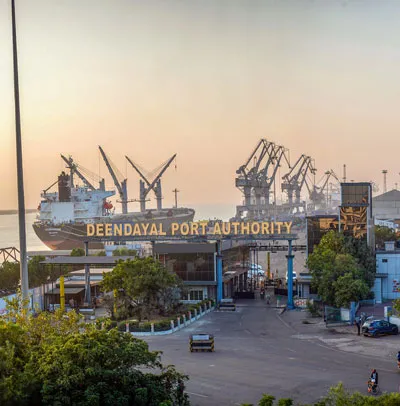
Deendayal Port Authority has invited bids to privatise berths 15 and 16 at Kandla port for handling multipurpose clean cargo and containers under a public-private partnership model for a 30-year concession period. The move forms part of the Centre’s asset monetisation programme.

The two berths are currently operated by the port authority after it took over the facility from a private operator whose concession was terminated due to non-performance. The recently constructed berths will now be further developed with private investment of about Rs 7.33 billion.

The port authority plans to privatise the two berths as a single project, citing rising demand for multipurpose clean cargo and the need to attract higher container traffic. In FY25, Deendayal Port handled 150.15 million tonnes of cargo, including containers, liquid cargo, bulk, breakbulk and project cargo. Container volumes stood at around 475,215 twenty-foot equivalent units, handled through a terminal operated by J M Baxi Ports & Logistics Ltd.

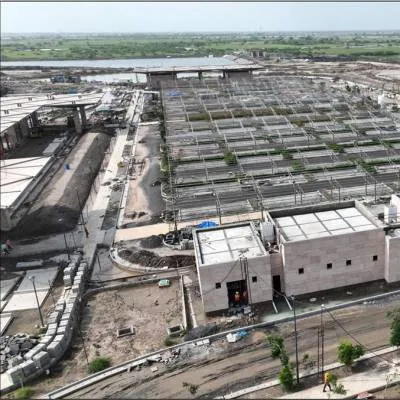
According to tender documents, the project aims to develop a modern, mechanised cargo-handling facility to improve operational efficiency, reduce vessel turnaround time and increase throughput. The two berths will have a combined quay length of 600 metres, allowing them to accommodate two vessels of 300 metres each. The facility will be supported by a 43.3-hectare backup area for stack yards, a rail yard and allied infrastructure.

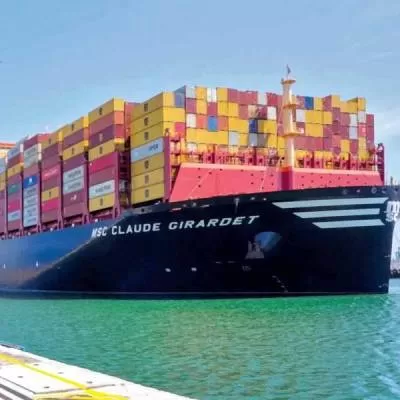
The berths will have a total handling capacity of 14.0 million tonnes per year, including 5.08 million tonnes of multipurpose clean cargo and up to 0.6 million TEUs of container traffic. They are designed to handle vessels of up to 75,000 deadweight tonnes for multipurpose cargo and container ships of up to 6,000 TEUs, with a required draft of 14.5 metres.

The concession will be awarded to a single operator responsible for handling clean cargo such as iron and steel products, foodgrains, sugar, rice, salt, silica clay and project cargo, as well as containers. The winning bidder will be selected based on the highest royalty quoted per tonne of cargo or per TEU payable to the port authority.

The successful bidder will be required to execute the project in a single phase, including the installation of cargo-handling equipment and development of backup areas and allied facilities, within 18 months of the award of the concession.

Deendayal Port Authority has invited bids to privatise berths 15 and 16 at Kandla port for handling multipurpose clean cargo and containers under a public-private partnership model for a 30-year concession period. The move forms part of the Centre’s asset monetisation programme. The two berths are currently operated by the port authority after it took over the facility from a private operator whose concession was terminated due to non-performance. The recently constructed berths will now be further developed with private investment of about Rs 7.33 billion. The port authority plans to privatise the two berths as a single project, citing rising demand for multipurpose clean cargo and the need to attract higher container traffic. In FY25, Deendayal Port handled 150.15 million tonnes of cargo, including containers, liquid cargo, bulk, breakbulk and project cargo. Container volumes stood at around 475,215 twenty-foot equivalent units, handled through a terminal operated by J M Baxi Ports & Logistics Ltd. According to tender documents, the project aims to develop a modern, mechanised cargo-handling facility to improve operational efficiency, reduce vessel turnaround time and increase throughput. The two berths will have a combined quay length of 600 metres, allowing them to accommodate two vessels of 300 metres each. The facility will be supported by a 43.3-hectare backup area for stack yards, a rail yard and allied infrastructure. The berths will have a total handling capacity of 14.0 million tonnes per year, including 5.08 million tonnes of multipurpose clean cargo and up to 0.6 million TEUs of container traffic. They are designed to handle vessels of up to 75,000 deadweight tonnes for multipurpose cargo and container ships of up to 6,000 TEUs, with a required draft of 14.5 metres. The concession will be awarded to a single operator responsible for handling clean cargo such as iron and steel products, foodgrains, sugar, rice, salt, silica clay and project cargo, as well as containers. The winning bidder will be selected based on the highest royalty quoted per tonne of cargo or per TEU payable to the port authority. The successful bidder will be required to execute the project in a single phase, including the installation of cargo-handling equipment and development of backup areas and allied facilities, within 18 months of the award of the concession.

Next Story
Infrastructure Transport

MMRDA: Engineering Mumbai’s Underground Future

Somewhere beneath Mumbai’s restless surface, a second city is being built into existence.In the late afternoon, as the day leaned towards evening, Dr Sanjay Mukherjee, Metropolitan Commissioner (MMRDA), led us into a realm that very few ever enter—the active heart of one of Mumbai’s most ambitious underground road projects. While the city surges forward in familiar chaos above the ground, another Mumbai is taking shape below: quietly, methodically, irrevocably. The metal lift doors clo..

Next Story
Building Material

Steel: Shielded or Strengthened?

Going forward, domestic steel mills are targeting capacity expansion of nearly 40 per cent through till FY31, adding 80-85 mt, translating into an investment pipeline of $ 45-50 billion. So, Jhunjhunwala points out that continuing the safeguard duty will be vital to prevent a surge in imports and protect domestic prices from external shocks. While in FY26, the industry operating profit per tonne is expected to hold at around $ 108, similar to last year, the industry’s earnings must meaningfully improve from hereon to sustain large-scale investments. Else, domestic mills could..

Next Story
Infrastructure Transport

Metro Moves: From Expansion to System Integration

India’s metro rail programme has entered a new phase—one where the focus is no longer only on adding kilometres, but on building integrated, reliable and financially sustainable urban transit systems. With more than 1,000 km of metro lines already operational and daily ridership exceeding 10 million, the challenge now lies in execution quality, underground risk management, multimodal integration, viable funding structures, and large-scale digital adoption. These themes framed deliber..

Advertisement

Subscribe to Our Newsletter

Get daily newsletters around different themes from Construction world.

STAY CONNECTED

Advertisement

Advertisement

Advertisement

Advertisement

Open In App