+
Government Advances Bharat Container Shipping Line With MoUs
PORTS & SHIPPING

Government Advances Bharat Container Shipping Line With MoUs

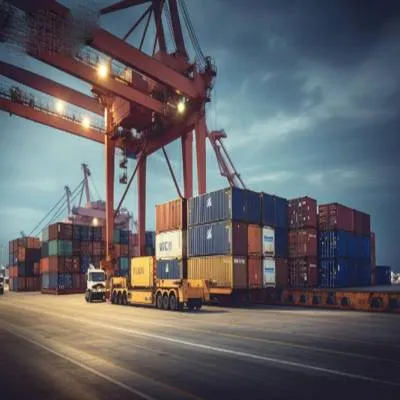
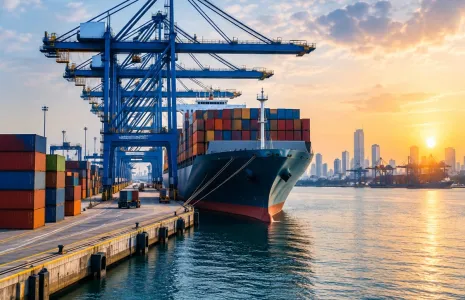
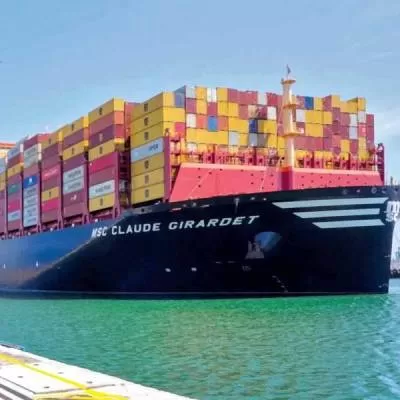
The Union Government advanced plans for a domestically anchored container ecosystem with a memorandum of understanding to establish the Bharat Container Shipping Line (BCSL) under the Ministry of Ports, Shipping and Waterways (MoPSW). The signing was attended by Union ministers Sarbananda Sonowal and Ashwini Vaishnaw, with Union Minister of State Shantanu Thakur present. The step formed part of a coordinated push across shipping, ports and rail linked logistics.

The memorandum was signed by the Shipping Corporation of India (SCI), the Container Corporation of India (CONCOR), the Jawaharlal Nehru Port Authority, the V.O. Chidambaranar Port Authority (VOCPA), the Chennai Port Authority and the Sagarmala Finance Corporation Limited (SMFCL) under MoPSW. The initiative aligns with the Container Manufacturing Assistance Scheme (CMAS) announced in the Union Budget 2026-27 and is intended to anchor container trade in Indian hands. A separate tripartite memorandum will finance the Outer Harbour project at VOCPA, Tuticorin, between VOCPA, the Indian Railway Finance Corporation Limited (IRFC) and SMFCL.

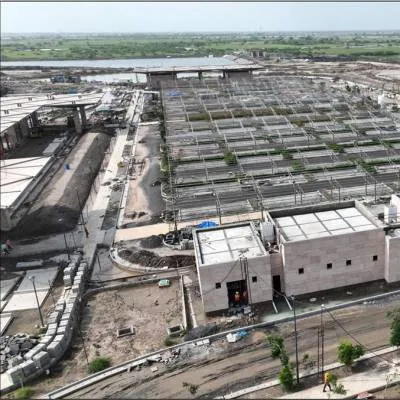
The agreement provides joint funding of up to Rs 150 bn for eligible projects to expand port capacity under the Sagarmala Programme and the PM Gati Shakti National Master Plan. The financing framework focuses on debt funding for breakwater construction and allied onshore and offshore facilities, delivered primarily through a Hybrid Annuity Model (HAM). Officials characterised the measures as strategic steps to build national container shipping capability, enhance port infrastructure and advance the Atmanirbhar Bharat agenda and Maritime Amrit Kaal 2047.

Ministers said the measures are expected to strengthen multimodal connectivity, support resilient supply chains and enhance India’s commercial presence in global maritime trade. The partnership with CONCOR and other stakeholders is anticipated to mobilise investments around Rs 150 bn and to complement prior initiatives in shipbuilding, ship recycling and maritime finance. India, as the fourth largest economy, is projected to reach a GDP of about USD seven point three tn by 2030, a trajectory likely to increase export import volumes and containerised cargo, and the new arrangements aim to reduce exposure to volatile freight rates and global supply shocks.

The Union Government advanced plans for a domestically anchored container ecosystem with a memorandum of understanding to establish the Bharat Container Shipping Line (BCSL) under the Ministry of Ports, Shipping and Waterways (MoPSW). The signing was attended by Union ministers Sarbananda Sonowal and Ashwini Vaishnaw, with Union Minister of State Shantanu Thakur present. The step formed part of a coordinated push across shipping, ports and rail linked logistics. The memorandum was signed by the Shipping Corporation of India (SCI), the Container Corporation of India (CONCOR), the Jawaharlal Nehru Port Authority, the V.O. Chidambaranar Port Authority (VOCPA), the Chennai Port Authority and the Sagarmala Finance Corporation Limited (SMFCL) under MoPSW. The initiative aligns with the Container Manufacturing Assistance Scheme (CMAS) announced in the Union Budget 2026-27 and is intended to anchor container trade in Indian hands. A separate tripartite memorandum will finance the Outer Harbour project at VOCPA, Tuticorin, between VOCPA, the Indian Railway Finance Corporation Limited (IRFC) and SMFCL. The agreement provides joint funding of up to Rs 150 bn for eligible projects to expand port capacity under the Sagarmala Programme and the PM Gati Shakti National Master Plan. The financing framework focuses on debt funding for breakwater construction and allied onshore and offshore facilities, delivered primarily through a Hybrid Annuity Model (HAM). Officials characterised the measures as strategic steps to build national container shipping capability, enhance port infrastructure and advance the Atmanirbhar Bharat agenda and Maritime Amrit Kaal 2047. Ministers said the measures are expected to strengthen multimodal connectivity, support resilient supply chains and enhance India’s commercial presence in global maritime trade. The partnership with CONCOR and other stakeholders is anticipated to mobilise investments around Rs 150 bn and to complement prior initiatives in shipbuilding, ship recycling and maritime finance. India, as the fourth largest economy, is projected to reach a GDP of about USD seven point three tn by 2030, a trajectory likely to increase export import volumes and containerised cargo, and the new arrangements aim to reduce exposure to volatile freight rates and global supply shocks.

Related Stories

Gold Stories

Next Story
Infrastructure Urban

Infrastructure Opportunity Outlook by IMPACCT.Info

India’s infrastructure pipeline is witnessing dynamic activity across stages — from immediate bidding to future planning. IMPACCT segments these into three categories: Immediate, 3–6 Month, and Future Opportunities, enabling businesses to identify, prepare, and participate in high-value tenders and projects across sectors.To read full article Click Here ..

Next Story
Real Estate

Glass, Reframed!

Glass façades, quintessential aesthetic building envelopes globally, have been widely adopted in India as well. But when the focus is high-performance building systems that deliver energy efficiency, comfort and architectural identity, glass isn’t the only preference. Combination solutions, involving glass and some other material, improve façade outcomes. Some combinations come at comparable prices, some at a higher price. Here is a selection of performance-oriented solutions...To read the full story Click Here ..

Next Story
Infrastructure Urban

Beyond Building Faster

India’s cities are expanding at an unprecedented pace, bringing new infrastructure and development opportunities while also intensifying challenges around mobility, public spaces, liveability and supporting infrastructure. The question, therefore, is not simply whether India can build faster, but whether it can build cities that work better.At a CW webinar, Are We Designing Better Cities – or Just Building Faster?, moderator Ar. Samir Shaikh, Founding Principal, AR&UD Studio, brought together perspectives from design, development, master planning and technology...To read the full artic..

Advertisement

Subscribe to Our Newsletter

Get daily newsletters around different themes from Construction world.

STAY CONNECTED

Advertisement

SPECIAL OFFER
QR Code