

India, FAO to Develop Blue Port Infrastructure
PORTS & SHIPPING

India, FAO to Develop Blue Port Infrastructure

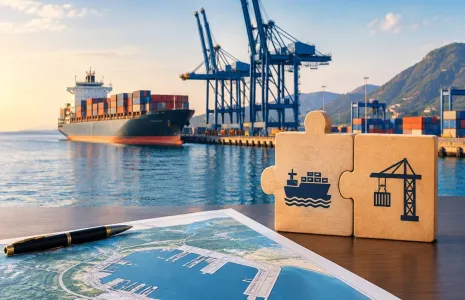
The Department of Fisheries (DoF), under the Ministry of Fisheries, Animal Husbandry and Dairying, has entered into a technical cooperation programme (TCP) agreement with the Food and Agriculture Organization (FAO) of the United Nations to develop modern Blue Port infrastructure in India.
As part of the Blue Ports framework, the government will combine advanced technology with sustainable practices. Three fishing harbours—Vanakbara in Diu, Karaikal in Puducherry, and Jakhau in Gujarat—have been cleared for development with a combined investment of Rs 3.7 billion.
The model will incorporate digital and satellite-based systems along with rainwater harvesting, energy-efficient lighting, electric-powered equipment, waste management, and marine debris removal.
Abhilaksh Likhi, Secretary of the Department of Fisheries, described fishing ports as gateways to economic growth, ecological sustainability, and social inclusion. He emphasised the government’s vision of building healthy, resilient, and inclusive fisheries systems to reinforce food and nutritional security.
Likhi also underlined the role of emerging technologies such as 5G, artificial intelligence, automation, and digital platforms in enhancing port operations. Existing schemes such as the Pradhan Mantri Matsya Sampada Yojana (PMMSY) and the Fisheries and Aquaculture Infrastructure Development Fund are already contributing to sectoral modernisation.
As part of the FAO partnership, pilot upgrades will be launched at Vanakbara and Jakhau, focusing on investment planning, operational efficiency, and capacity building. Training and support will be provided to both public and private stakeholders to strengthen technical capabilities and promote best practices. 

The Department of Fisheries (DoF), under the Ministry of Fisheries, Animal Husbandry and Dairying, has entered into a technical cooperation programme (TCP) agreement with the Food and Agriculture Organization (FAO) of the United Nations to develop modern Blue Port infrastructure in India.As part of the Blue Ports framework, the government will combine advanced technology with sustainable practices. Three fishing harbours—Vanakbara in Diu, Karaikal in Puducherry, and Jakhau in Gujarat—have been cleared for development with a combined investment of Rs 3.7 billion.The model will incorporate digital and satellite-based systems along with rainwater harvesting, energy-efficient lighting, electric-powered equipment, waste management, and marine debris removal.Abhilaksh Likhi, Secretary of the Department of Fisheries, described fishing ports as gateways to economic growth, ecological sustainability, and social inclusion. He emphasised the government’s vision of building healthy, resilient, and inclusive fisheries systems to reinforce food and nutritional security.Likhi also underlined the role of emerging technologies such as 5G, artificial intelligence, automation, and digital platforms in enhancing port operations. Existing schemes such as the Pradhan Mantri Matsya Sampada Yojana (PMMSY) and the Fisheries and Aquaculture Infrastructure Development Fund are already contributing to sectoral modernisation.As part of the FAO partnership, pilot upgrades will be launched at Vanakbara and Jakhau, focusing on investment planning, operational efficiency, and capacity building. Training and support will be provided to both public and private stakeholders to strengthen technical capabilities and promote best practices. 

Next Story
Infrastructure Urban

ABB to Invest Rs 6.25 Billion to Expand India Manufacturing

ABB recently announced plans to invest approximately Rs 6.25 billion ($75 million) in India during 2026 to expand its manufacturing footprint and research and development capabilities. The investment follows more than $35 million spent in 2025 and reflects the company’s continued focus on strengthening its ‘local-for-local’ strategy in the country.The investment will support ABB’s Electrification, Motion and Automation businesses and expand manufacturing capacity for infrastructure sectors such as renewable energy, metro rail, data centres and industrial applications. Approximately 300..

Next Story
Equipment

Six WOLFF Cranes Handle 60,000 m³ Concrete for German Hospital

Six WOLFF tower cranes are playing a key role in constructing a new hospital complex in Memmingen, Germany, supporting large-scale material handling for the project. The facility is being built on a 7.7-hectare site and will feature six floors, around 480 beds and a gross floor area exceeding 75,000 sq m.Building shell works began recently in February 2025. One WOLFF 6531.12 Cross crane supported early site preparation before being dismantled in autumn 2025, while five remaining cranes continue operations. Over an average deployment period of 16 months, the cranes are expected to move approxim..

Next Story
Equipment

REC Funds Rs 115.6 Million CSR Support for Bihar Eye Hospital

REC recently committed Rs 115.6 million under its Corporate Social Responsibility (CSR) programme for the procurement of clinical and non-clinical equipment at Sankara Eye Hospital in Saharsa, Bihar. The initiative aims to strengthen healthcare infrastructure and improve access to specialised eye care services in the region.A Memorandum of Agreement (MoA) was recently signed between Pradeep Fellows, Executive Director (CSR), REC Limited, and Wg Cdr V. Shankar (Retd), Trustee and Executive Director of Sankara Eye Hospital, at the REC office in the SCOPE Complex, New Delhi.The support is expecte..

Advertisement

Subscribe to Our Newsletter

Get daily newsletters around different themes from Construction world.

STAY CONNECTED

Advertisement

Advertisement

Advertisement