India Extends Interim Approval for Russian Marine Insurers
PORTS & SHIPPING

India Extends Interim Approval for Russian Marine Insurers

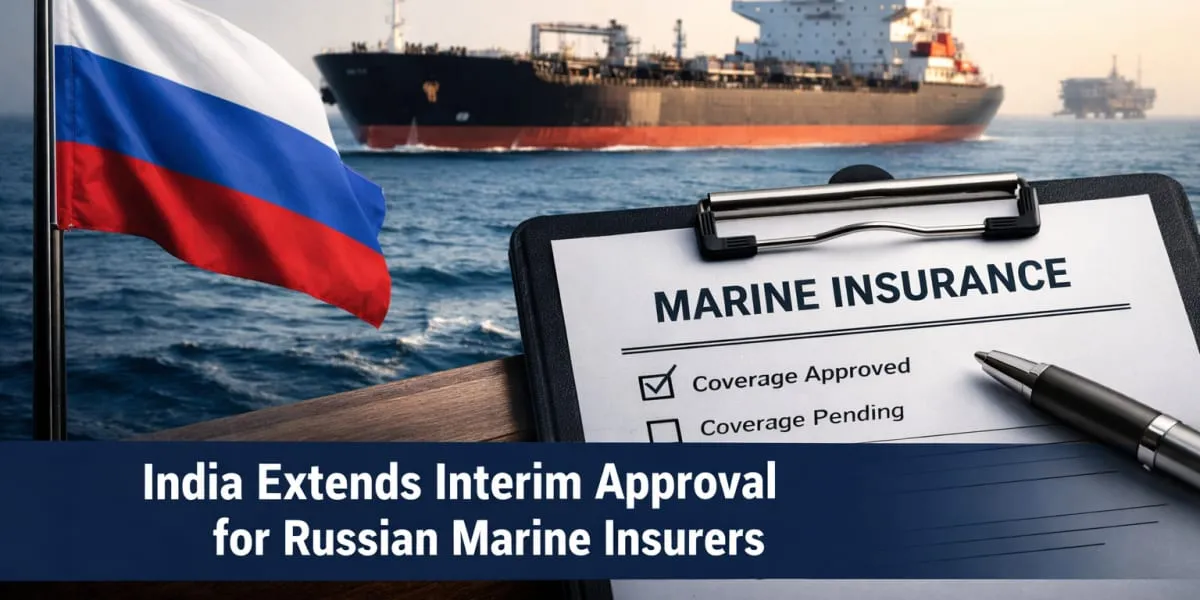
India has extended interim approval for Russian marine insurers to continue providing cover for vessels transporting Russian crude, a move intended to prevent disruption to supplies as global oil trade patterns change. The government emphasised that the extension is temporary and is aimed at ensuring continuity of logistics while longer term arrangements are explored. Officials said that the measure reflects a pragmatic response to market developments and aims to protect the interests of refiners, shippers and downstream supply chains.

Market participants have shifted procurement strategies in response to geopolitical constraints, increasing demand for alternative sources and flexible shipping arrangements. Insurers and brokers have been working to adapt policy wordings and risk assessments to accommodate changing routes and cargo profiles without undermining regulatory compliance. The extension permits stakeholders to maintain operational continuity while regulators and industry groups consult on permanent frameworks.

The interim approval is being administered under existing insurance regulations and requires that providers demonstrate adequate capital and adherence to international sanctions regimes where applicable. Regulators have signalled that oversight will remain stringent and that approvals may be withdrawn if compliance standards are not met. Industry observers noted that domestic reinsurers and shipping companies will play a key role in managing risk as commercial flows adjust.

Analysts expect the extension to moderate immediate disruptions to refining operations and to give time for contractual and insurance markets to recalibrate, although some increase in freight costs and premiums is likely. The decision is also seen as part of a broader approach to safeguard energy security while engaging with international partners on risk mitigation. Officials indicated that further policy refinements will follow consultations with industry and that any transition to permanent arrangements will balance commercial realities with legal and diplomatic obligations.

India has extended interim approval for Russian marine insurers to continue providing cover for vessels transporting Russian crude, a move intended to prevent disruption to supplies as global oil trade patterns change. The government emphasised that the extension is temporary and is aimed at ensuring continuity of logistics while longer term arrangements are explored. Officials said that the measure reflects a pragmatic response to market developments and aims to protect the interests of refiners, shippers and downstream supply chains. Market participants have shifted procurement strategies in response to geopolitical constraints, increasing demand for alternative sources and flexible shipping arrangements. Insurers and brokers have been working to adapt policy wordings and risk assessments to accommodate changing routes and cargo profiles without undermining regulatory compliance. The extension permits stakeholders to maintain operational continuity while regulators and industry groups consult on permanent frameworks. The interim approval is being administered under existing insurance regulations and requires that providers demonstrate adequate capital and adherence to international sanctions regimes where applicable. Regulators have signalled that oversight will remain stringent and that approvals may be withdrawn if compliance standards are not met. Industry observers noted that domestic reinsurers and shipping companies will play a key role in managing risk as commercial flows adjust. Analysts expect the extension to moderate immediate disruptions to refining operations and to give time for contractual and insurance markets to recalibrate, although some increase in freight costs and premiums is likely. The decision is also seen as part of a broader approach to safeguard energy security while engaging with international partners on risk mitigation. Officials indicated that further policy refinements will follow consultations with industry and that any transition to permanent arrangements will balance commercial realities with legal and diplomatic obligations.

Next Story
Infrastructure Urban

MIDC and Ramky Unit Sign Concession for Life Sciences Park

Maharashtra Industrial Development Corporation has signed a concession agreement with Maha Integrated Life Sciences City Limited (MILeS City), a wholly owned subsidiary of Ramky Infrastructure Limited (RIL), to develop a high-tech pharmaceutical park at Dighi Port Industrial Area in Raigad. The project will follow a public-private partnership under a DBFOT model and has an estimated cost of Rs 30 billion (Rs 30 bn). The concession will run for 95 years, including a five-year construction phase, with MILeS City responsible for development and management. The development will occupy approximatel..

Next Story
Real Estate

BuzzWorks Leases Hyderabad Office to MyComplianceOffice

Brigade Group’s managed workspace provider BuzzWorks has leased 550 seats at Mindspace Business Park in Hyderabad to Dublin based MyComplianceOffice, in what is the company’s largest office in India. With this signing, BuzzWorks' total leased office space in Hyderabad stands at zero point one one million (mn) square feet. The new premises will house core functions including product engineering, product management, customer success and global operations. Artificial intelligence enabled compliance technology initiatives will also be part of the local delivery model. BuzzWorks will provide wo..

Next Story
Infrastructure Transport

Jindal Stainless Flags Operational Strain From Middle East Crisis

Jindal Stainless warned that the Middle East war crisis has affected its operations because of dependence on industrial gases such as propane and LPG and on natural gas. The scrap-based production route used by the stainless steel maker does not generate blast furnace or coke oven gases internally, unlike the conventional steel industry. Several plant processes have been adversely impacted and production is being run at rationalised capacity. Disruptions in global shipping routes have resulted in vessel diversions, longer transit times and cargo delays, adding pressure to supply chains and to ..

Advertisement

Subscribe to Our Newsletter

Get daily newsletters around different themes from Construction world.

STAY CONNECTED

Advertisement

Advertisement

Advertisement