India Plans State-Backed Bharat Container Line
PORTS & SHIPPING

India Plans State-Backed Bharat Container Line

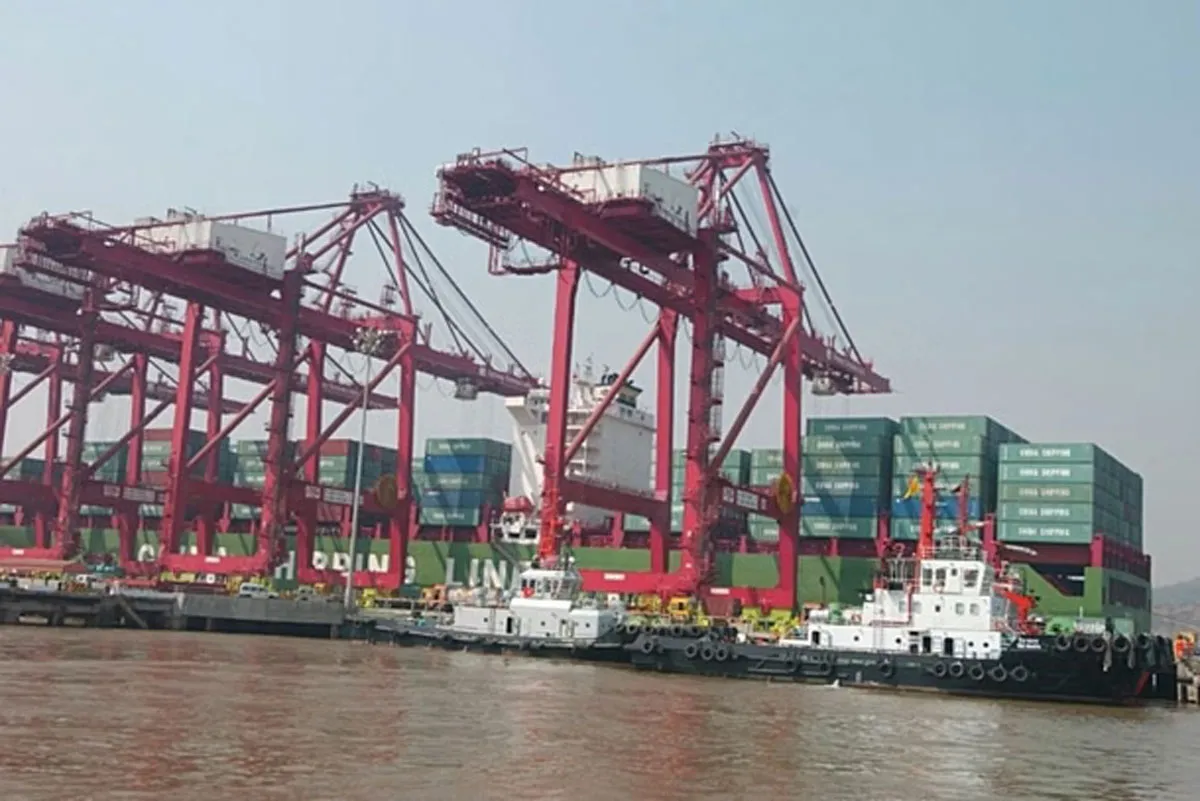
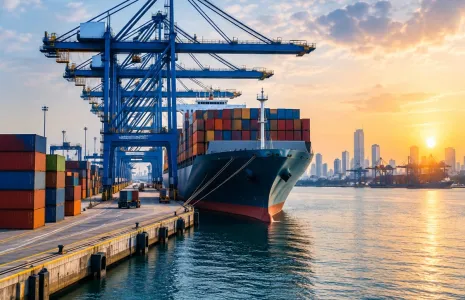
A group of state-owned shipping and port entities is set to establish a new container shipping line under the Atmanirbhar Bharat initiative, aimed at reducing India’s dependence on foreign carriers for export and import cargo.

According to a report by The Economic Times, the proposed venture, to be named Bharat Container Line, will bring together key public sector players across India’s maritime ecosystem. Shipping Corporation of India and Container Corporation of India, both Navratna companies, are expected to hold 30 per cent equity each in the joint venture.

Sagarmala Finance Corporation Ltd, a recently established non-banking financial company focused on the maritime sector, is set to acquire a 20 per cent stake. The remaining equity will be held by major port authorities, with Jawaharlal Nehru Port Authority owning 10 per cent, while Chennai Port Authority and VOC Port Authority will share the remaining 10 per cent equally.

Sources indicated that the joint venture partners are likely to sign a memorandum of understanding in the coming days, formally initiating the process.

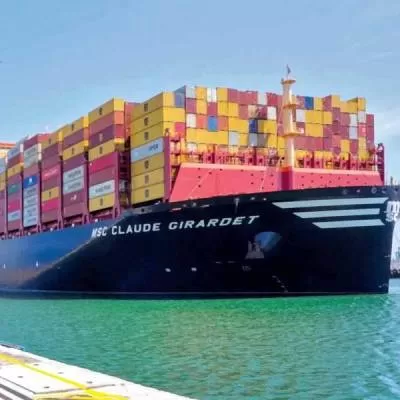
Currently, India’s container trade is dominated by foreign shipping lines, which handle nearly 99 per cent of the country’s export-import container volumes. Global carriers such as MSC, CMA CGM, Maersk, Hapag-Lloyd, Evergreen, Wan Hai, Yang Ming and COSCO account for the bulk of container shipments.

By contrast, Shipping Corporation of India, the country’s only mainline container ship operator, owns just three container vessels. Exporters have repeatedly highlighted this imbalance, warning that the absence of a strong national container carrier exposes Indian trade to volatility in global freight rates and capacity constraints.

The proposed Bharat Container Line is expected to strengthen India’s maritime capabilities, improve supply chain resilience and enhance the country’s strategic autonomy in global shipping.

A group of state-owned shipping and port entities is set to establish a new container shipping line under the Atmanirbhar Bharat initiative, aimed at reducing India’s dependence on foreign carriers for export and import cargo. According to a report by The Economic Times, the proposed venture, to be named Bharat Container Line, will bring together key public sector players across India’s maritime ecosystem. Shipping Corporation of India and Container Corporation of India, both Navratna companies, are expected to hold 30 per cent equity each in the joint venture. Sagarmala Finance Corporation Ltd, a recently established non-banking financial company focused on the maritime sector, is set to acquire a 20 per cent stake. The remaining equity will be held by major port authorities, with Jawaharlal Nehru Port Authority owning 10 per cent, while Chennai Port Authority and VOC Port Authority will share the remaining 10 per cent equally. Sources indicated that the joint venture partners are likely to sign a memorandum of understanding in the coming days, formally initiating the process. Currently, India’s container trade is dominated by foreign shipping lines, which handle nearly 99 per cent of the country’s export-import container volumes. Global carriers such as MSC, CMA CGM, Maersk, Hapag-Lloyd, Evergreen, Wan Hai, Yang Ming and COSCO account for the bulk of container shipments. By contrast, Shipping Corporation of India, the country’s only mainline container ship operator, owns just three container vessels. Exporters have repeatedly highlighted this imbalance, warning that the absence of a strong national container carrier exposes Indian trade to volatility in global freight rates and capacity constraints. The proposed Bharat Container Line is expected to strengthen India’s maritime capabilities, improve supply chain resilience and enhance the country’s strategic autonomy in global shipping.

Next Story
Infrastructure Transport

MMRDA: Engineering Mumbai’s Underground Future

Somewhere beneath Mumbai’s restless surface, a second city is being built into existence.In the late afternoon, as the day leaned towards evening, Dr Sanjay Mukherjee, Metropolitan Commissioner (MMRDA), led us into a realm that very few ever enter—the active heart of one of Mumbai’s most ambitious underground road projects. While the city surges forward in familiar chaos above the ground, another Mumbai is taking shape below: quietly, methodically, irrevocably. The metal lift doors clo..

Next Story
Building Material

Steel: Shielded or Strengthened?

Going forward, domestic steel mills are targeting capacity expansion of nearly 40 per cent through till FY31, adding 80-85 mt, translating into an investment pipeline of $ 45-50 billion. So, Jhunjhunwala points out that continuing the safeguard duty will be vital to prevent a surge in imports and protect domestic prices from external shocks. While in FY26, the industry operating profit per tonne is expected to hold at around $ 108, similar to last year, the industry’s earnings must meaningfully improve from hereon to sustain large-scale investments. Else, domestic mills could..

Next Story
Infrastructure Transport

Metro Moves: From Expansion to System Integration

India’s metro rail programme has entered a new phase—one where the focus is no longer only on adding kilometres, but on building integrated, reliable and financially sustainable urban transit systems. With more than 1,000 km of metro lines already operational and daily ridership exceeding 10 million, the challenge now lies in execution quality, underground risk management, multimodal integration, viable funding structures, and large-scale digital adoption. These themes framed deliber..

Advertisement

Subscribe to Our Newsletter

Get daily newsletters around different themes from Construction world.

STAY CONNECTED

Advertisement

Advertisement

Advertisement

Advertisement

Open In App