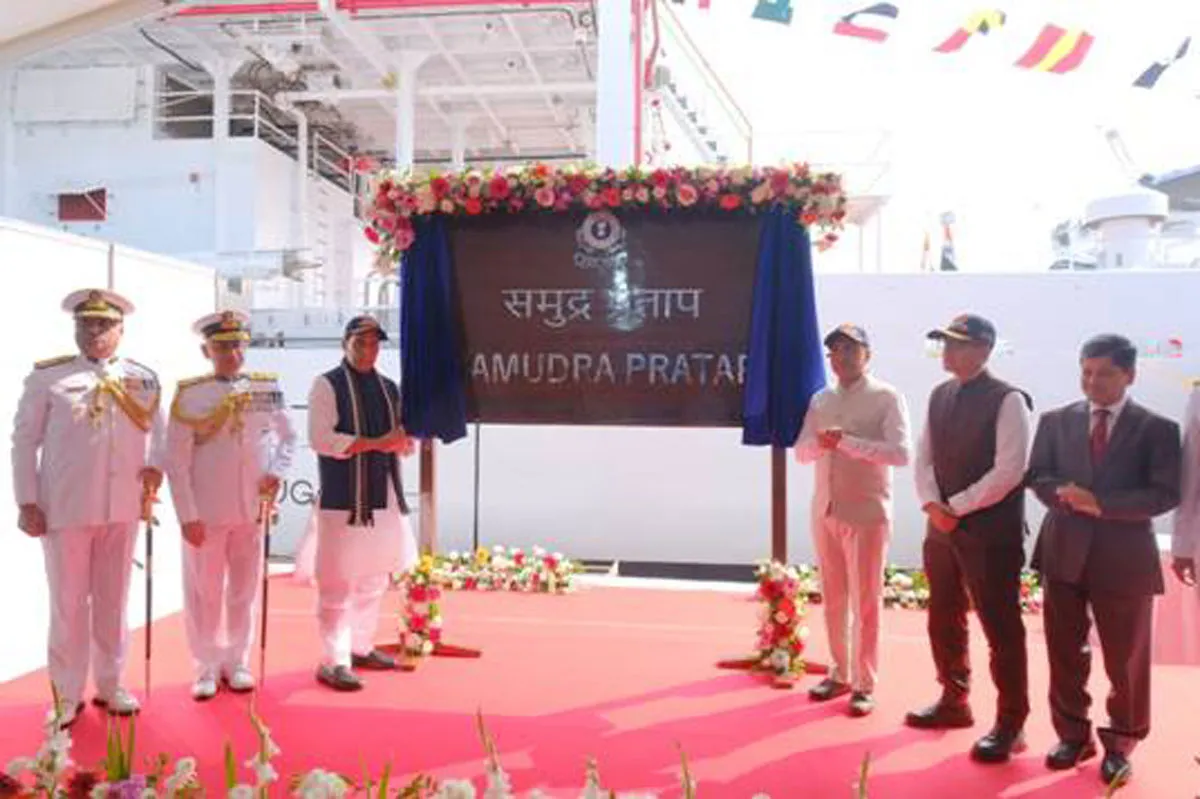
Rajnath Singh Commissions ICGS Samudra Pratap, First of Its Kind
PORTS & SHIPPING

Rajnath Singh Commissions ICGS Samudra Pratap, First of Its Kind

Rajnath Singh, Defence Minister, commissioned Indian Coast Guard Ship (ICGS) Samudra Pratap, the first of two pollution control vessels built by Goa Shipyard (GSL), marking a significant milestone in India’s push for self-reliance in defence shipbuilding. The commissioning ceremony was held in Goa on January 5, 2026.

With more than 60 per cent indigenous content, Samudra Pratap is India’s first indigenously designed pollution control vessel and the largest ship in the Indian Coast Guard fleet so far. Its induction is expected to substantially enhance the Coast Guard’s capabilities in marine pollution response, firefighting, maritime safety and environmental protection, while also enabling extended surveillance and response operations across India’s maritime zones.

Describing the vessel as a reflection of India’s mature defence industrial ecosystem, Singh, said consistent efforts are underway to raise indigenous content in warships to nearly 90 per cent. “ICGS Samudra Pratap has been specially designed for pollution control, but its role is not limited to this alone. As multiple capabilities have been integrated into a single platform, the ship will prove to be effective in coastal patrol, and strengthen maritime safety,” he said.

The ship is equipped with advanced pollution detection systems, specialised pollution response boats and modern firefighting equipment. It also features a helicopter hangar and aviation support facilities, enabling greater operational reach, including in rough sea conditions.

The Raksha Mantri highlighted marine environmental protection as both a strategic necessity and a moral responsibility, particularly in the context of climate change. “Through its quick detection, precise station-keeping, and efficient recovery systems, ICGS Samudra Pratap will further strengthen capabilities,” he said, adding that timely control of pollution incidents is critical for safeguarding marine biodiversity and sustaining the blue economy.

He further noted that the commissioning aligns with India’s broader maritime vision and reinforces the country’s role as a responsible maritime power in the Indo-Pacific region.

Rajnath Singh, Defence Minister, commissioned Indian Coast Guard Ship (ICGS) Samudra Pratap, the first of two pollution control vessels built by Goa Shipyard (GSL), marking a significant milestone in India’s push for self-reliance in defence shipbuilding. The commissioning ceremony was held in Goa on January 5, 2026.With more than 60 per cent indigenous content, Samudra Pratap is India’s first indigenously designed pollution control vessel and the largest ship in the Indian Coast Guard fleet so far. Its induction is expected to substantially enhance the Coast Guard’s capabilities in marine pollution response, firefighting, maritime safety and environmental protection, while also enabling extended surveillance and response operations across India’s maritime zones.Describing the vessel as a reflection of India’s mature defence industrial ecosystem, Singh, said consistent efforts are underway to raise indigenous content in warships to nearly 90 per cent. “ICGS Samudra Pratap has been specially designed for pollution control, but its role is not limited to this alone. As multiple capabilities have been integrated into a single platform, the ship will prove to be effective in coastal patrol, and strengthen maritime safety,” he said.The ship is equipped with advanced pollution detection systems, specialised pollution response boats and modern firefighting equipment. It also features a helicopter hangar and aviation support facilities, enabling greater operational reach, including in rough sea conditions.The Raksha Mantri highlighted marine environmental protection as both a strategic necessity and a moral responsibility, particularly in the context of climate change. “Through its quick detection, precise station-keeping, and efficient recovery systems, ICGS Samudra Pratap will further strengthen capabilities,” he said, adding that timely control of pollution incidents is critical for safeguarding marine biodiversity and sustaining the blue economy.He further noted that the commissioning aligns with India’s broader maritime vision and reinforces the country’s role as a responsible maritime power in the Indo-Pacific region.

Next Story
Infrastructure Urban

Runaya–ECKART JV Launches India’s First Gas-Atomised Al Unit

Runaya Metsource and Germany-based ECKART have announced the launch of their joint venture facility, Runaya Eckart Aluminium Powders Private Limited (REL), in Jharsuguda, Odisha, marking the establishment of India’s first plant for manufacturing green, spherical gas-atomised aluminium powders.The facility will produce high-precision aluminium powders for advanced applications across aviation, aerospace, space exploration, solar technology, process catalyst industries and effect pigments. These fine spherical powders, which were previously fully imported into India, represent a significant mi..

Next Story
Infrastructure Urban

Tamil Nadu Extends 100% EV Road Tax Exemption Till 2027

The Tamil Nadu government has extended the 100% road tax exemption for battery-operated electric vehicles for another two years, reinforcing its efforts to sustain momentum in EV adoption across the state.According to a government order issued on December 29, the tax exemption has been extended for all categories of battery-operated vehicles, including both transport and non-transport vehicles, from January 1, 2026, to December 31, 2027. The move ensures continuity of fiscal incentives as electric vehicle penetration continues to rise in the state.The decision follows sustained representations..

Next Story
Infrastructure Energy

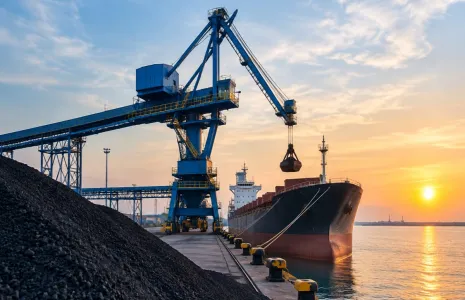
Coal India Arm BCCL Targets 54 MT Output, Rs 200 Bn by FY30

Bharat Coking Coal (BCCL), a subsidiary of Coal India, plans to scale up its coking coal production to 54 million tonnes by FY 2029–30, with the bulk of incremental supplies earmarked for the steel sector. The expansion is expected to drive the company’s revenue close to Rs 200 billion by the end of the decade, senior officials said.The production push aligns with India’s broader objective of achieving a national coking coal output target of 140 million tonnes to reduce dependence on imports. BCCL currently produces around 40.5 million tonnes of coking coal and contributes nearly 58.5 pe..

Advertisement

Subscribe to Our Newsletter

Get daily newsletters around different themes from Construction world.

STAY CONNECTED

Advertisement

Advertisement

Advertisement

Advertisement

Open In App