Vizhinjam Port Set to Become Global Transshipment Hub
PORTS & SHIPPING

Vizhinjam Port Set to Become Global Transshipment Hub

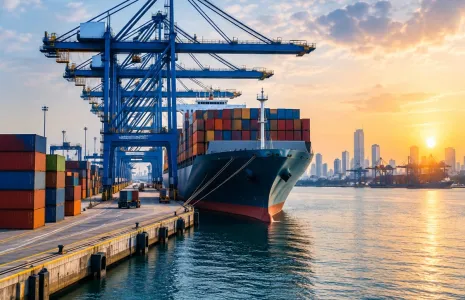
Kerala Chief Minister Pinarayi Vijayan said Vizhinjam seaport is poised to emerge as a major international transshipment hub once the second phase of its development is completed, strengthening its position on the global maritime trade map.

Speaking after inaugurating the second phase of the port’s development and the road linking it to the National Highway, Vijayan said the project signals Kerala’s transformation into a key logistics powerhouse. He added that the state is reducing its dependence on external logistics networks and strengthening its role in India’s supply chain ecosystem.

The Chief Minister said that, with the completion of the road connectivity, goods movement via road will soon become more efficient. He noted that the next stage of the port’s development integrates phases two, three and four into a single programme, with the entire project expected to be completed by 2028, significantly ahead of the original schedule. As a result, the state government is expected to start receiving its share of port revenues from 2035.

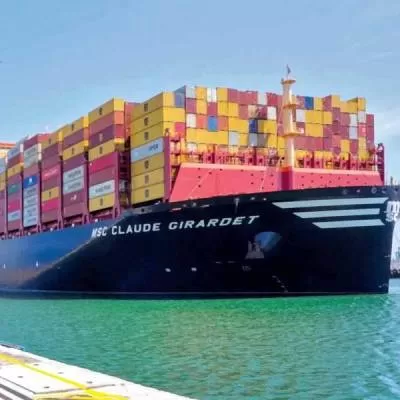
Once fully developed, Vizhinjam port will be capable of handling next-generation container ships with capacities of up to 28,840 twenty-foot equivalent units and accommodating up to five mothership vessels simultaneously. Vijayan said the port has recorded rapid growth since the arrival of its first mothership vessel in July 2024 and its dedication to the nation in May 2025, surpassing its initial capacity of 1 million TEU per year within 10 months.

In its first year of operations, the port handled 615 ships and 1.32 million containers, catering to some of the world’s largest and deepest-draft vessels, with an average of more than 50 ships per month. Vijayan said the milestone of handling 1,000 ships is likely to be achieved in the near term.

He said Vizhinjam’s rapid progress has enabled it to outperform several older ports, describing the achievement as a source of pride for the country. He also highlighted that Vizhinjam is the first port in India to appoint women as automated crane operators, reflecting Kerala’s focus on inclusive development.

The Chief Minister said the Centre has recognised Vizhinjam port as an immigration checkpoint, which is expected to strengthen its role as an international container transshipment hub and a major crew-change centre. This recognition is also expected to enable large luxury cruise ships to berth at the port, providing a boost to Kerala’s tourism sector.

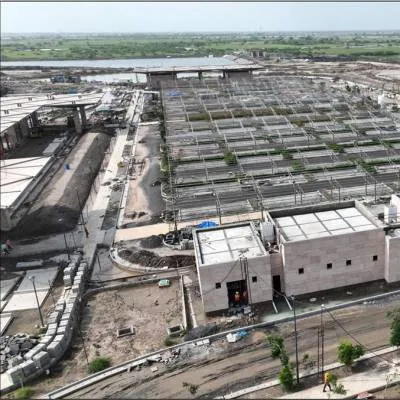
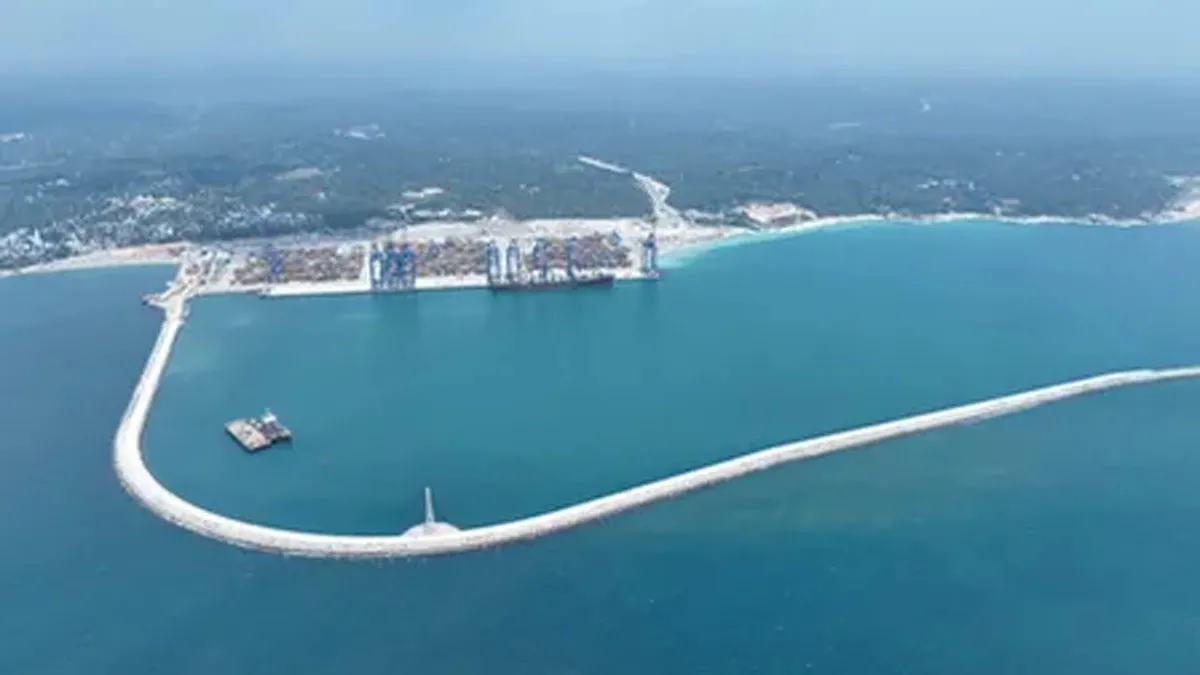
The second phase of development will include expanding the existing 800-metre container berth to 2,000 metres and extending the current 2.96 km breakwater to 3.88 km. These upgrades are expected to give Vizhinjam the longest container berth in India and the deepest breakwater in the country. Vijayan added that no land acquisition will be required for the second phase, as the expansion will be carried out through land reclamation from the sea.

Kerala Chief Minister Pinarayi Vijayan said Vizhinjam seaport is poised to emerge as a major international transshipment hub once the second phase of its development is completed, strengthening its position on the global maritime trade map. Speaking after inaugurating the second phase of the port’s development and the road linking it to the National Highway, Vijayan said the project signals Kerala’s transformation into a key logistics powerhouse. He added that the state is reducing its dependence on external logistics networks and strengthening its role in India’s supply chain ecosystem. The Chief Minister said that, with the completion of the road connectivity, goods movement via road will soon become more efficient. He noted that the next stage of the port’s development integrates phases two, three and four into a single programme, with the entire project expected to be completed by 2028, significantly ahead of the original schedule. As a result, the state government is expected to start receiving its share of port revenues from 2035. Once fully developed, Vizhinjam port will be capable of handling next-generation container ships with capacities of up to 28,840 twenty-foot equivalent units and accommodating up to five mothership vessels simultaneously. Vijayan said the port has recorded rapid growth since the arrival of its first mothership vessel in July 2024 and its dedication to the nation in May 2025, surpassing its initial capacity of 1 million TEU per year within 10 months. In its first year of operations, the port handled 615 ships and 1.32 million containers, catering to some of the world’s largest and deepest-draft vessels, with an average of more than 50 ships per month. Vijayan said the milestone of handling 1,000 ships is likely to be achieved in the near term. He said Vizhinjam’s rapid progress has enabled it to outperform several older ports, describing the achievement as a source of pride for the country. He also highlighted that Vizhinjam is the first port in India to appoint women as automated crane operators, reflecting Kerala’s focus on inclusive development. The Chief Minister said the Centre has recognised Vizhinjam port as an immigration checkpoint, which is expected to strengthen its role as an international container transshipment hub and a major crew-change centre. This recognition is also expected to enable large luxury cruise ships to berth at the port, providing a boost to Kerala’s tourism sector. The second phase of development will include expanding the existing 800-metre container berth to 2,000 metres and extending the current 2.96 km breakwater to 3.88 km. These upgrades are expected to give Vizhinjam the longest container berth in India and the deepest breakwater in the country. Vijayan added that no land acquisition will be required for the second phase, as the expansion will be carried out through land reclamation from the sea.

Next Story
Infrastructure Transport

MMRDA: Engineering Mumbai’s Underground Future

Somewhere beneath Mumbai’s restless surface, a second city is being built into existence.In the late afternoon, as the day leaned towards evening, Dr Sanjay Mukherjee, Metropolitan Commissioner (MMRDA), led us into a realm that very few ever enter—the active heart of one of Mumbai’s most ambitious underground road projects. While the city surges forward in familiar chaos above the ground, another Mumbai is taking shape below: quietly, methodically, irrevocably. The metal lift doors clo..

Next Story
Building Material

Steel: Shielded or Strengthened?

Going forward, domestic steel mills are targeting capacity expansion of nearly 40 per cent through till FY31, adding 80-85 mt, translating into an investment pipeline of $ 45-50 billion. So, Jhunjhunwala points out that continuing the safeguard duty will be vital to prevent a surge in imports and protect domestic prices from external shocks. While in FY26, the industry operating profit per tonne is expected to hold at around $ 108, similar to last year, the industry’s earnings must meaningfully improve from hereon to sustain large-scale investments. Else, domestic mills could..

Next Story
Infrastructure Transport

Metro Moves: From Expansion to System Integration

India’s metro rail programme has entered a new phase—one where the focus is no longer only on adding kilometres, but on building integrated, reliable and financially sustainable urban transit systems. With more than 1,000 km of metro lines already operational and daily ridership exceeding 10 million, the challenge now lies in execution quality, underground risk management, multimodal integration, viable funding structures, and large-scale digital adoption. These themes framed deliber..

Advertisement

Subscribe to Our Newsletter

Get daily newsletters around different themes from Construction world.

STAY CONNECTED

Advertisement

Advertisement

Advertisement

Advertisement

Open In App