


+
India, Germany In Talks On $8 Billion Submarine Deal
DEFENSE

India, Germany In Talks On $8 Billion Submarine Deal

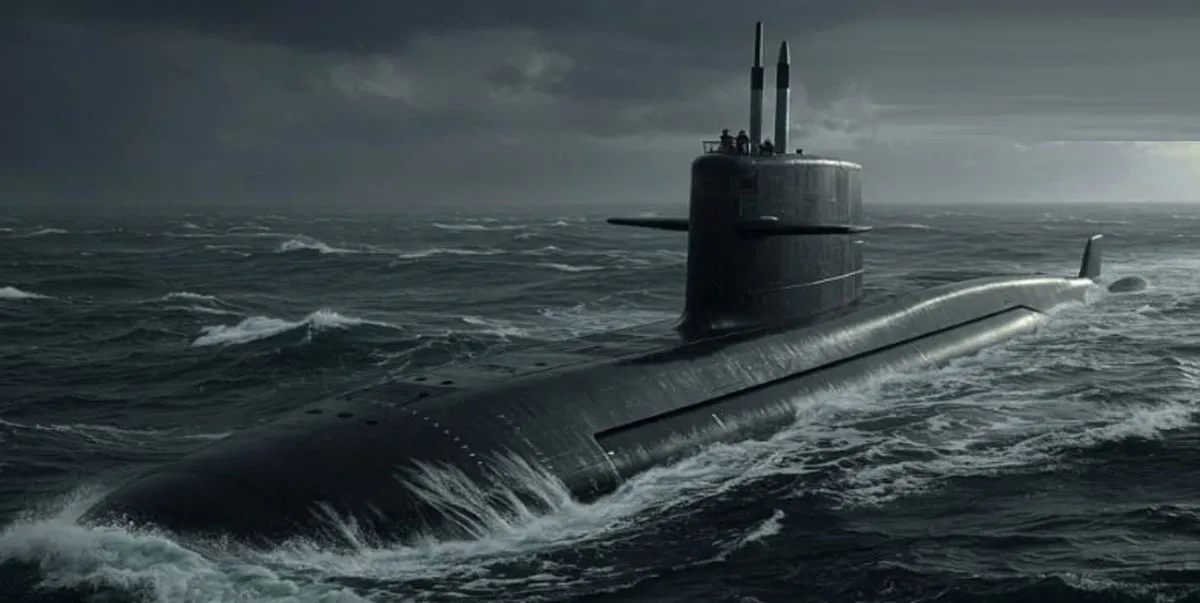
Germany and India are in advanced discussions over a submarine manufacturing agreement valued at $8 billion or more, a deal that could emerge as India’s largest defence contract to date, according to Bloomberg. The talks are taking place ahead of German Chancellor Friedrich Merz’s first official visit to India next week.

Under the proposed arrangement, Germany’s Thyssenkrupp Marine Systems GmbH is expected to partner with Mazagon Dock Shipbuilders Ltd. to manufacture the submarines in India. The collaboration would mark a significant step in India’s defence manufacturing ambitions, with production carried out domestically.

The proposed agreement is also expected to include the transfer of submarine construction technology, a feature India has not previously secured in comparable defence deals. Such a transfer would strengthen indigenous capabilities in complex naval platforms and support long-term self-reliance objectives.

The submarines under discussion would be equipped with air-independent propulsion systems, which allow vessels to remain submerged for extended periods compared with conventional diesel-electric submarines. This capability is considered particularly relevant for prolonged deployments and patrols across the Indian Ocean region.

At present, the Indian Navy operates around 12 ageing Russian-origin submarines alongside six French-built Scorpène-class submarines. The addition of new-generation vessels with advanced propulsion technology would represent a significant upgrade to the fleet.

The negotiations are taking place against the backdrop of India’s defence policy shift since 2020, under which imports of several major defence platforms have been restricted to encourage local manufacturing by foreign suppliers. Despite these measures, India remains the world’s second-largest importer of defence equipment, with Russia continuing to be its biggest supplier, according to the Stockholm International Peace Research Institute.

If finalised, the submarine deal would signal a shift in India’s naval procurement strategy, combining domestic manufacturing with advanced foreign technology while gradually diversifying its long-term defence sourcing.

Germany and India are in advanced discussions over a submarine manufacturing agreement valued at $8 billion or more, a deal that could emerge as India’s largest defence contract to date, according to Bloomberg. The talks are taking place ahead of German Chancellor Friedrich Merz’s first official visit to India next week. Under the proposed arrangement, Germany’s Thyssenkrupp Marine Systems GmbH is expected to partner with Mazagon Dock Shipbuilders Ltd. to manufacture the submarines in India. The collaboration would mark a significant step in India’s defence manufacturing ambitions, with production carried out domestically. The proposed agreement is also expected to include the transfer of submarine construction technology, a feature India has not previously secured in comparable defence deals. Such a transfer would strengthen indigenous capabilities in complex naval platforms and support long-term self-reliance objectives. The submarines under discussion would be equipped with air-independent propulsion systems, which allow vessels to remain submerged for extended periods compared with conventional diesel-electric submarines. This capability is considered particularly relevant for prolonged deployments and patrols across the Indian Ocean region. At present, the Indian Navy operates around 12 ageing Russian-origin submarines alongside six French-built Scorpène-class submarines. The addition of new-generation vessels with advanced propulsion technology would represent a significant upgrade to the fleet. The negotiations are taking place against the backdrop of India’s defence policy shift since 2020, under which imports of several major defence platforms have been restricted to encourage local manufacturing by foreign suppliers. Despite these measures, India remains the world’s second-largest importer of defence equipment, with Russia continuing to be its biggest supplier, according to the Stockholm International Peace Research Institute. If finalised, the submarine deal would signal a shift in India’s naval procurement strategy, combining domestic manufacturing with advanced foreign technology while gradually diversifying its long-term defence sourcing.

Next Story
Infrastructure Transport

Second Mountain Tunnel Breakthrough in Palghar Advances High Speed Rail

The Mumbai-Ahmedabad high speed rail (MAHSR) project reached a milestone with the breakthrough of a mountain tunnel in Palghar, Maharashtra. Mountain tunnel MT-six measures 454 metres long and 14.4 metres wide and will accommodate up and down tracks. The breakthrough follows MT-five near Saphale on second January 2026 and the MT-six excavation was completed from both ends using the New Austrian Tunnelling Method. The ministry reported that the tunnelling was completed within 12 months. The New Austrian Tunnelling Method is favoured for its flexibility in complex geology and irregular tunnel s..

Next Story
Infrastructure Transport

Modi Government Pushes Atmanirbhar Container Drive With BCSL MoU

The Union Government advanced a plan to create an integrated, domestically anchored container ecosystem with the signing of a Memorandum of Understanding to establish the Bharat Container Shipping Line (BCSL). The MoU was signed by key agencies including the Shipping Corporation of India and Container Corporation of India alongside major port authorities and Sagarmala Finance Corporation Limited under the Ministry of Ports, Shipping and Waterways, in the presence of senior ministers. The initiative aligns with the Container Manufacturing Assistance Scheme announced in the Union Budget 2026–2..

Next Story
Infrastructure Urban

Ministry Reports Gains In Mobility For Marginalised Communities

The Ministry of Social Justice and Empowerment is implementing skill development, education and rehabilitation schemes to promote socio-economic mobility and sustainable livelihoods for marginalised and disadvantaged communities across the country. Programmes target Scheduled Castes, Other Backward Classes, Economically Weaker Sections, De-notified Tribes and Safai Karamcharis through specialised implementing corporations and empanelled training institutes. Pradhan Mantri Dakshata Aur Kushalta Sampann Hitgrahi Yojana, or PM-DAKSH, provided skill training and placement support through the Nati..

Advertisement

Subscribe to Our Newsletter

Get daily newsletters around different themes from Construction world.

STAY CONNECTED

Advertisement

Advertisement

Advertisement

Open In App












