






Indian Army Awards Rs 2.93 Billion Rocket Systems Contract
DEFENSE

Indian Army Awards Rs 2.93 Billion Rocket Systems Contract

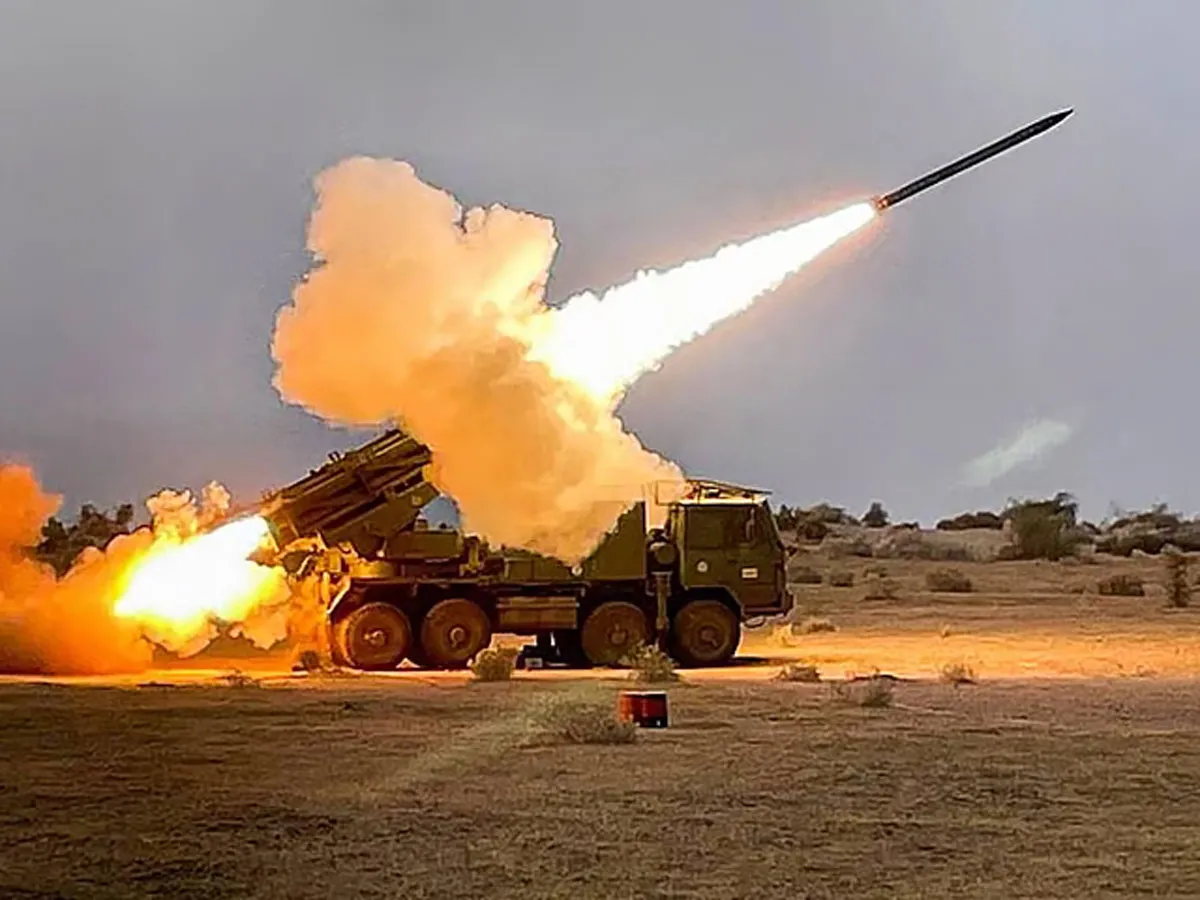
The Indian Army has signed a Rs 2.93 billion contract with indigenous defence manufacturer Nibe to procure equipment and ammunition for its universal rocket launcher systems, as part of its long-term plan to strengthen deep and rapid strike capabilities.

In a regulatory filing to the Bombay Stock Exchange and the National Stock Exchange, Nibe said it has entered into a supply contract with the Ministry of Defence for the manufacture and supply of ground equipment, accessories, electronic system packages and ammunition. The systems are designed for a Universal Rocket Launcher System capable of integrating multiple rocket types, including long-range variants with strike ranges of 150 km and 300 km. The contract value is inclusive of all applicable taxes and duties.

Nibe said the order reflects its role as a domestic defence manufacturer focused on developing critical systems and components to support India’s self-reliance in defence production.

According to sources, the order relates to the Israeli Precise and Universal Launching System (PULS) and is being executed under the Emergency Procurement route. Deliveries will be completed in tranches over a 12-month period.

The Emergency Procurement framework was introduced after the May 2020 standoff with the Chinese PLA to enable faster acquisition of equipment in situations of urgent operational necessity. The provision allows authorities to fast-track procurement, repairs and essential services required for preparedness during war-like situations, natural calamities and other emergencies. Financial approval powers for Emergency Procurement (Capital) up to Rs 3 billion rest with the Vice Chiefs of Staff of the Army, Navy and Air Force.

The procurement from Nibe aligns with the Indian Army’s broader effort to strengthen its rocket forces. In June 2025, reports highlighted plans to raise two additional regiments of the Pinaka Multi Barrel Rocket Launcher system. In artillery terms, a regiment comprises three batteries, with each battery operating six launchers.

India’s rocket artillery forms part of the Regiment of Artillery, raised in 1827, which is the second-largest arm of the Indian Army after the infantry. Often referred to as the “God of War”, the artillery plays a critical role in delivering deep and sustained firepower to counter enemy forces.

The Indian Army has signed a Rs 2.93 billion contract with indigenous defence manufacturer Nibe to procure equipment and ammunition for its universal rocket launcher systems, as part of its long-term plan to strengthen deep and rapid strike capabilities. In a regulatory filing to the Bombay Stock Exchange and the National Stock Exchange, Nibe said it has entered into a supply contract with the Ministry of Defence for the manufacture and supply of ground equipment, accessories, electronic system packages and ammunition. The systems are designed for a Universal Rocket Launcher System capable of integrating multiple rocket types, including long-range variants with strike ranges of 150 km and 300 km. The contract value is inclusive of all applicable taxes and duties. Nibe said the order reflects its role as a domestic defence manufacturer focused on developing critical systems and components to support India’s self-reliance in defence production. According to sources, the order relates to the Israeli Precise and Universal Launching System (PULS) and is being executed under the Emergency Procurement route. Deliveries will be completed in tranches over a 12-month period. The Emergency Procurement framework was introduced after the May 2020 standoff with the Chinese PLA to enable faster acquisition of equipment in situations of urgent operational necessity. The provision allows authorities to fast-track procurement, repairs and essential services required for preparedness during war-like situations, natural calamities and other emergencies. Financial approval powers for Emergency Procurement (Capital) up to Rs 3 billion rest with the Vice Chiefs of Staff of the Army, Navy and Air Force. The procurement from Nibe aligns with the Indian Army’s broader effort to strengthen its rocket forces. In June 2025, reports highlighted plans to raise two additional regiments of the Pinaka Multi Barrel Rocket Launcher system. In artillery terms, a regiment comprises three batteries, with each battery operating six launchers. India’s rocket artillery forms part of the Regiment of Artillery, raised in 1827, which is the second-largest arm of the Indian Army after the infantry. Often referred to as the “God of War”, the artillery plays a critical role in delivering deep and sustained firepower to counter enemy forces.

Next Story
Equipment

Going Higher

The year 2026 got off to a sorry start for the elevator industry with a 31-year-old security guard crushed to death when a lift collapsed on him in a Mulund East (Mumbai) housing society, and two boys, aged 11, grievously injured by falling into a lift duct when the third floor lift door in their Goregaon (Mumbai) building gave way. Faulty door-lock wiring and poor maintenance by the vendor are most probably behind these tragic accidents.No month goes by without a fatal elevator accident in some city across India. CW asks why?Regulatory gaps For starters, “regulations should be lif..

Next Story
Infrastructure Transport

Amrit Kaal or Asphault Illusion

Massive spending, inflated metrics, systemic delays and deep-rooted corruption now threaten the credibility of India’s highway expansion, observes  LT GEN RAJEEV CHAUDHRY (Retd), former DG Border Roads.India is spending more on national highways than ever before. With Rs 2.72 lakh crore earmarked for FY 2025–26 and ambitious targets under the Amrit Kaal vision, the narrative is one of speed, scale and transformation. Yet, beneath the headline numbers lies an uncomfortable reality: highways that crack under monsoons, projects that spiral into delays and arbitration, and a system where ..

Next Story
Infrastructure Transport

Executing 37,000 Crore Road Projects With Speed And Accountability

With Rs.37,000 crore worth of road projects under execution across Maharashtra, Maharashtra State Infrastructure Development Corporation (MSIDC) is driving one of the state’s largest infrastructure programmes. Dr Brijesh Dixit, Managing Director, discusses the institutional reforms, execution frameworks, financing strategies and technology adoption enabling timely, high-quality delivery, in conversation with PRATAP PADODE, Editor-in-Chief, CW.With over Rs.37,000 crore worth of road projects underway across districts – many under tight timelines – what institutional and executio..

Advertisement

Subscribe to Our Newsletter

Get daily newsletters around different themes from Construction world.

STAY CONNECTED

Advertisement

Advertisement

Advertisement

Advertisement

Open In App











