Häfele Opens Advanced Logistics Centre in Nagold
WAREHOUSING & LOGISTICS

Häfele Opens Advanced Logistics Centre in Nagold

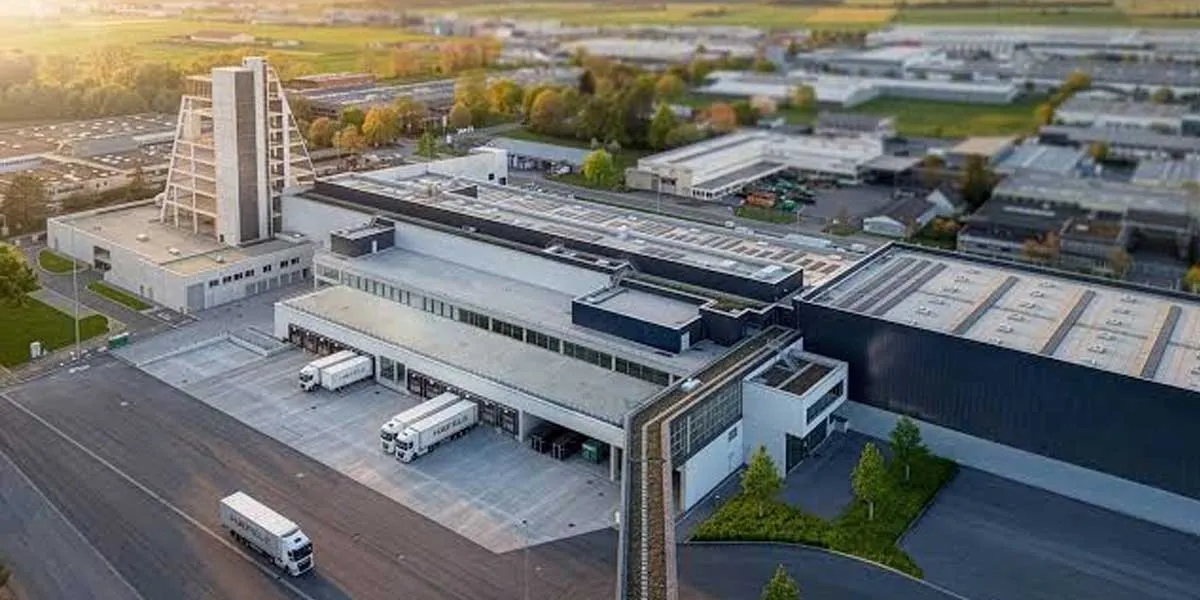
Häfele has opened a state-of-the-art distribution centre at its headquarters in Nagold, Germany, to expand dispatch capacity, improve operational efficiency and support its long-term growth strategy.

The facility forms part of a wider development combining advanced logistics infrastructure with spaces for innovation, events and collaboration. Häfele described the project as the largest investment in the company’s history and reaffirmed its commitment to Nagold as a key business location.

The distribution centre introduces a goods-to-person operating model, under which products are automatically transported to employees at individual workstations. The system is designed to improve workplace ergonomics while increasing productivity and processing efficiency.

Customers are expected to benefit from shorter lead times and greater order flexibility. The upgraded processes will allow requests received later in the day to be processed and dispatched on the same day, including during periods of fluctuating demand and high order volumes.

The Nagold facility will operate as part of Häfele’s wider European logistics network, which includes its Lehrte location and other regional sites. The network is intended to provide faster, more flexible and reliable supply-chain services.

Sustainability has been integrated into the design and operation of the building. Its energy system combines one of Germany’s largest ice energy storage installations with heat pumps and photovoltaic panels installed on the roof and façade. The complex has been designed to meet its heating and cooling energy requirements independently.

Around 28,000 tonnes of demolition material were reused during construction, while recycled concrete accounts for 30 per cent of the tower structure. The building has been developed to the KfW-40 energy-efficiency standard and is targeting DGNB Gold and QNG-PLUS certifications.

Häfele has also introduced automated packaging processes to reduce filler material, parcel height and transportation volumes. The initiative is expected to improve resource efficiency and support customer demand for more sustainable packaging.

The logistics centre forms a key part of Häfele’s Strategy 2030, under which the company aims to combine smart products, digital technologies and collaborative partnerships to develop integrated spatial solutions. The additional capacity and digital processes are expected to strengthen its competitiveness and support the company’s development during its second century of operations.

Häfele has opened a state-of-the-art distribution centre at its headquarters in Nagold, Germany, to expand dispatch capacity, improve operational efficiency and support its long-term growth strategy.The facility forms part of a wider development combining advanced logistics infrastructure with spaces for innovation, events and collaboration. Häfele described the project as the largest investment in the company’s history and reaffirmed its commitment to Nagold as a key business location.The distribution centre introduces a goods-to-person operating model, under which products are automatically transported to employees at individual workstations. The system is designed to improve workplace ergonomics while increasing productivity and processing efficiency.Customers are expected to benefit from shorter lead times and greater order flexibility. The upgraded processes will allow requests received later in the day to be processed and dispatched on the same day, including during periods of fluctuating demand and high order volumes.The Nagold facility will operate as part of Häfele’s wider European logistics network, which includes its Lehrte location and other regional sites. The network is intended to provide faster, more flexible and reliable supply-chain services.Sustainability has been integrated into the design and operation of the building. Its energy system combines one of Germany’s largest ice energy storage installations with heat pumps and photovoltaic panels installed on the roof and façade. The complex has been designed to meet its heating and cooling energy requirements independently.Around 28,000 tonnes of demolition material were reused during construction, while recycled concrete accounts for 30 per cent of the tower structure. The building has been developed to the KfW-40 energy-efficiency standard and is targeting DGNB Gold and QNG-PLUS certifications.Häfele has also introduced automated packaging processes to reduce filler material, parcel height and transportation volumes. The initiative is expected to improve resource efficiency and support customer demand for more sustainable packaging.The logistics centre forms a key part of Häfele’s Strategy 2030, under which the company aims to combine smart products, digital technologies and collaborative partnerships to develop integrated spatial solutions. The additional capacity and digital processes are expected to strengthen its competitiveness and support the company’s development during its second century of operations.

Related Stories

Gold Stories
Next Story
Infrastructure Urban

Bajaj Auto to Raise Monthly Electric 2W Capacity to 80,000 by March

Bajaj Auto plans to raise monthly production capacity for electric two-wheelers to around 80,000 units by the end of March, as demand for its Chetak electric scooter continues to exceed available output. The company currently has capacity for around 60,000 electric two-wheelers a month. Joint Managing Director Rakesh Sharma said production had returned to the existing full capacity after a supply chain disruption affected output. The issue had reduced recent production to around 40,000 units, resulting in a shortfall of 20,000 vehicles despite strong demand. The company expects to remove produ..

Next Story
Infrastructure Transport

India’s Domestic Air Passenger Traffic Falls 6.5% in September

India’s domestic air passenger traffic declined 6.49 per cent month on month to 11.8 mn in September, according to data released by the Directorate General of Civil Aviation (DGCA). IndiGo retained its leading position, carrying nearly two-thirds of domestic passengers, while the Air India Group remained the second-largest operator. IndiGo held a 65.4 per cent market share and transported 7.73 mn passengers during the month. The Air India Group accounted for 26.8 per cent of the market, carrying 3.165 mn passengers, based on data from the aviation regulator. Akasa Air ranked third with a 5.6..

Next Story
Infrastructure Urban

DPIIT Advances Trust-Based Governance Across India

The Department for Promotion of Industry and Internal Trade (DPIIT), under the Ministry of Commerce and Industry, is shifting India’s regulatory approach from permission-based administration to trust-based governance. The reforms seek to reduce business compliance, support startups, attract investment and simplify approvals across the country. According to an official statement, 47,957 compliance requirements have been reduced across Central Ministries and States and Union Territories. Of these, 22,290 have been digitised, 16,141 simplified, 5,255 decriminalised and 4,271 eliminated. The Jan..

Advertisement

Subscribe to Our Newsletter

Get daily newsletters around different themes from Construction world.

STAY CONNECTED

Advertisement

SPECIAL OFFER
QR Code