Maersk Showcases Future-Ready Logistics at Code Cargo 2025
WAREHOUSING & LOGISTICS

Maersk Showcases Future-Ready Logistics at Code Cargo 2025

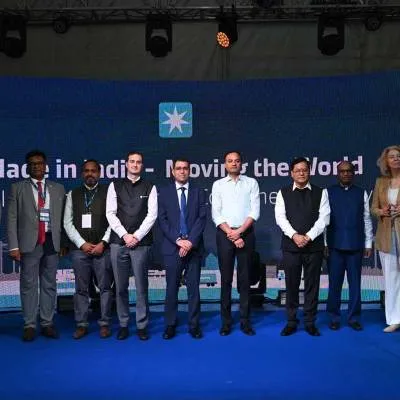
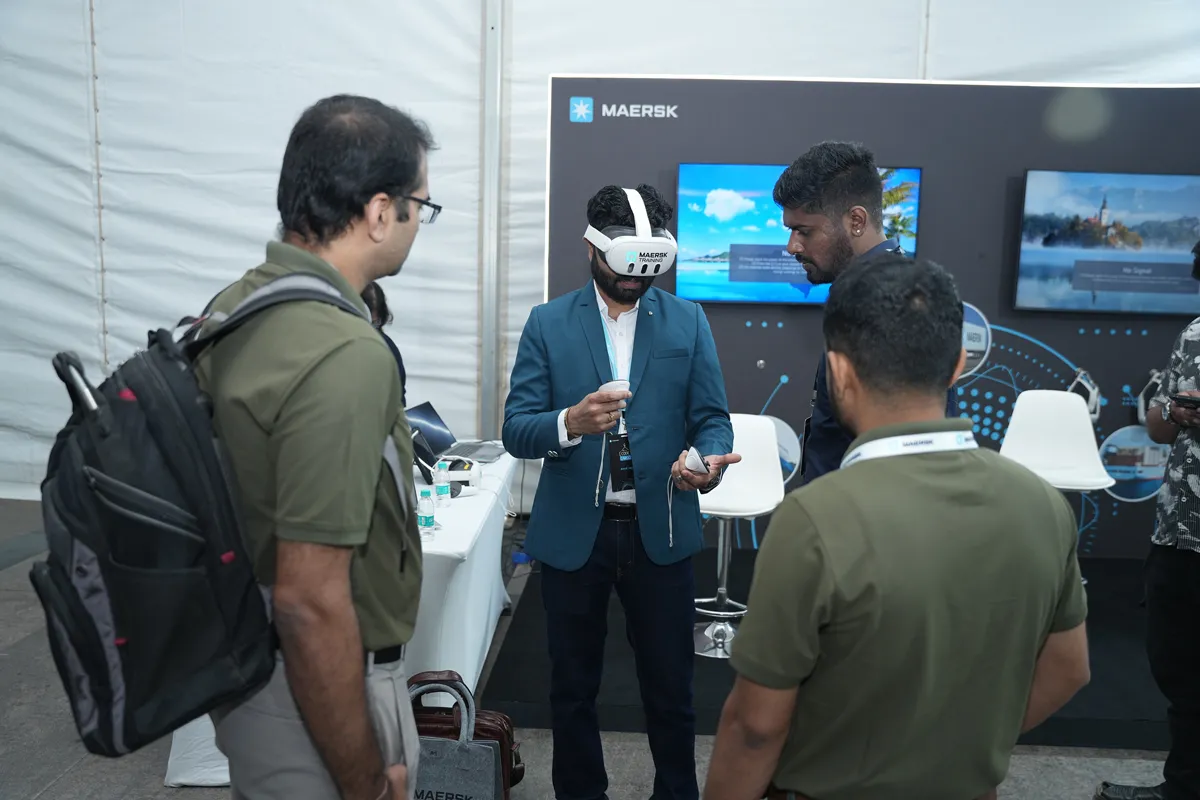
A.P. Moller – Maersk (Maersk), an integrated logistics company, showcased innovations shaping the future of global logistics at its flagship technology event, Code Cargo 2025, held in Bengaluru. The event highlighted Maersk’s use of artificial intelligence (AI), data science, and platform engineering, with India at the centre of its digital transformation journey. 
  
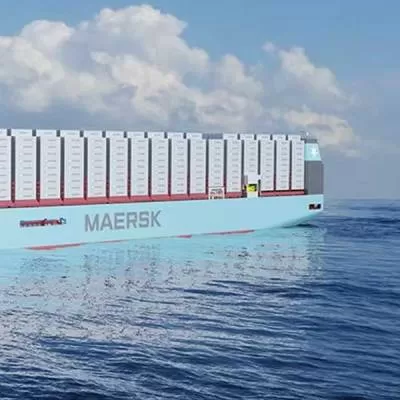
A key highlight was Star Connect, Maersk’s AI-powered fleet energy efficiency platform. Built on edge computing, it processes over 2.5 billion IoT data points in real time, forecasting fuel consumption, wind resistance, and risks such as parametric roll. This enables operators to make rapid course and speed adjustments, improving safety, fuel efficiency, and emissions monitoring, while supporting Maersk’s decarbonisation goals. 
  
“India is not just a growth market for Maersk; it is a vital part of the brain and backbone of our global digital transformation,” said Navneet Kapoor, Executive Vice President and Chief Technology & Information Officer, A.P. Moller – Maersk. 

Maersk employs over 20,000 Indians, including 2,900 technology professionals across Bengaluru, Pune, Mumbai and Chennai. The Bengaluru Technology Centre leads software development, architecture, AI and cybersecurity, and has secured over 10 AI patents. 

“Technology at Maersk is not just about building tools—it’s about building capabilities that can scale globally, simplify logistics for our customers and most importantly, create ways to address uncertainties and disruptions impacting global supply chains,” said Resham Sahi, Senior Vice President – Technology, and Head of Maersk Technology Centre, Bengaluru. 
  
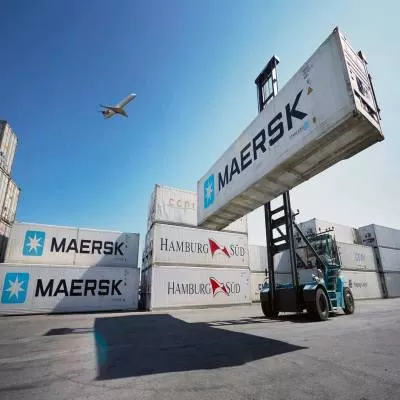
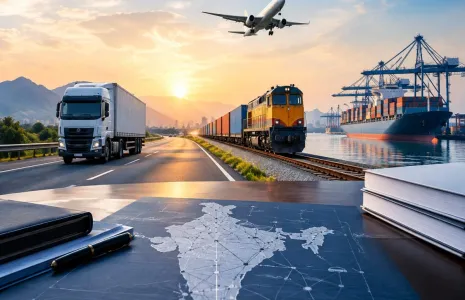
Maersk operates across 15 ports and 26 warehouses covering 350,000 sq m in India, reaching over 80 per cent of pin codes through its distribution network. It handles nearly 1 million containers annually, executes 7,000 weekly rail moves, and provides customs and air freight services. 

With Code Cargo 2025, Maersk reaffirmed that the future of global trade will not just be moved, but also coded, engineered, and optimised in India. 

A.P. Moller – Maersk (Maersk), an integrated logistics company, showcased innovations shaping the future of global logistics at its flagship technology event, Code Cargo 2025, held in Bengaluru. The event highlighted Maersk’s use of artificial intelligence (AI), data science, and platform engineering, with India at the centre of its digital transformation journey.   A key highlight was Star Connect, Maersk’s AI-powered fleet energy efficiency platform. Built on edge computing, it processes over 2.5 billion IoT data points in real time, forecasting fuel consumption, wind resistance, and risks such as parametric roll. This enables operators to make rapid course and speed adjustments, improving safety, fuel efficiency, and emissions monitoring, while supporting Maersk’s decarbonisation goals.   “India is not just a growth market for Maersk; it is a vital part of the brain and backbone of our global digital transformation,” said Navneet Kapoor, Executive Vice President and Chief Technology & Information Officer, A.P. Moller – Maersk. Maersk employs over 20,000 Indians, including 2,900 technology professionals across Bengaluru, Pune, Mumbai and Chennai. The Bengaluru Technology Centre leads software development, architecture, AI and cybersecurity, and has secured over 10 AI patents. “Technology at Maersk is not just about building tools—it’s about building capabilities that can scale globally, simplify logistics for our customers and most importantly, create ways to address uncertainties and disruptions impacting global supply chains,” said Resham Sahi, Senior Vice President – Technology, and Head of Maersk Technology Centre, Bengaluru.   Maersk operates across 15 ports and 26 warehouses covering 350,000 sq m in India, reaching over 80 per cent of pin codes through its distribution network. It handles nearly 1 million containers annually, executes 7,000 weekly rail moves, and provides customs and air freight services. With Code Cargo 2025, Maersk reaffirmed that the future of global trade will not just be moved, but also coded, engineered, and optimised in India. 

Next Story
Infrastructure Urban

Centre Disburses Over Rs 24,610 mn in XV Finance Commission Grants

The Union Government has released XV Finance Commission tied grants during the financial year 2025–26 to rural local bodies in Chhattisgarh, Gujarat, Madhya Pradesh, Punjab and Sikkim and has released withheld portions of tied and untied grants to Himachal Pradesh, Odisha and Tripura. The total disbursal exceeded Rs 24,610 mn, with figures expressed in million (mn) thereafter. The releases cover allocations pertaining to different financial years and aim to strengthen rural local governance. State-wise disbursements included Rs 3,324.6 mn for Punjab, Rs 9,432.7 mn for Madhya Pradesh, Rs 3,47..

Next Story
Infrastructure Urban

Centre Releases Over Rs 15 bn as XV FC Grants to Rural Bodies

The Union Government has released over Rs 15 bn in grants recommended by the Fifteenth Finance Commission (XV FC) to strengthen Panchayati Raj Institutions (PRIs) and Rural Local Bodies (RLBs) in six states. The funds comprise tied and untied grants disbursed in FY 2025–26. Telangana received Rs 2.48 bn as the first instalment of untied grants for FY 2025–26, benefitting 12600 Gram Panchayats (GPs). Uttarakhand received Rs 913.1 mn as the second instalment and an additional Rs 18.4 mn of a withheld first instalment was released to a further 216 GPs. Mizoram is included among beneficiary st..

Next Story
Infrastructure Energy

Government Assures Fuel Supplies And Seafarer Safety Amid West Asia Developments

The Government of India has stepped up coordinated measures to maintain stability in critical sectors as developments in West Asia continue to unfold. It has prioritised uninterrupted energy supplies, safeguarded maritime operations and extended consular assistance to nationals. Central authorities are working with State and Union territory administrations to ensure timely information dissemination and operational continuity. Refineries are reported to be operating at high capacity with adequate inventories of petrol and diesel, and domestic LPG production has been increased to support consump..

Advertisement

Subscribe to Our Newsletter

Get daily newsletters around different themes from Construction world.

STAY CONNECTED

Advertisement

Advertisement

Advertisement