Jal Shakti Minister Reviews Jal Sanchay Progress In Gujarat
WATER & WASTE

Jal Shakti Minister Reviews Jal Sanchay Progress In Gujarat

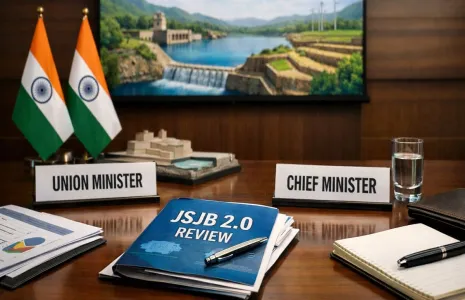
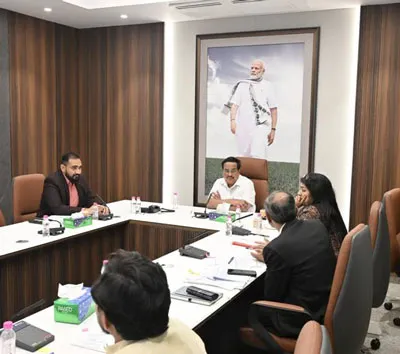
Union Minister of Jal Shakti C. R. Patil recently chaired a video conference to review the progress of Jal Sanchay Jan Bhagidari across districts in Gujarat, along with Chief Minister Bhupendra Patel. The meeting was attended by all District Collectors of the state.

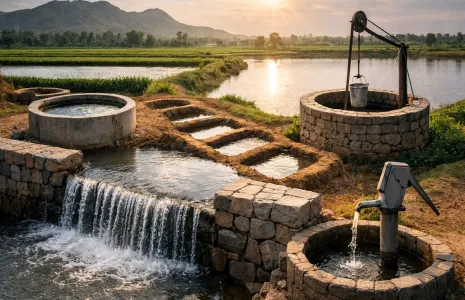
The review was held in the context of Jal Sanchay Jan Bhagidari, launched in September 2024 from Surat in the virtual presence of Prime Minister Narendra Modi, with the objective of turning water conservation into a mass movement through public participation, in line with the vision of ‘catch the rain where it falls, when it falls’.

Senior officials present included V L Kantha Rao, Secretary, Department of Water Resources, River Development and Ganga Rejuvenation, Manoj Kumar Das, Chief Secretary, Government of Gujarat, and officials from the Ministry of Jal Shakti and the Government of Gujarat.

Addressing the meeting, the Chief Minister said the state government is fully committed to implementing Jal Sanchay Jan Bhagidari and has rolled out supportive measures, including a scheme offering 90 per cent financial assistance for recharging old borewells. He also highlighted examples from Banaskantha district, where community participation has led to the creation of innovative recharge structures. MLAs have been advised to allocate Rs 50 lakh per constituency from MLA Local Area Development funds for water conservation works.

District Collectors from Banaskantha, Kutch and Rajkot presented updates on on-ground initiatives undertaken under the programme.

Union Jal Shakti Minister C. R. Patil urged District Collectors to accelerate water conservation activities ahead of the monsoon, stressing effective use of MGNREGA funds, convergence of government schemes, and involvement of CSR initiatives, NGOs and forest departments. He added that the Ministry of Jal Shakti is extending technical support to districts for planning and execution of conservation works.

The Minister emphasised a whole-of-government and whole-of-society approach to ensure Gujarat continues to lead in water conservation through sustained district-level coordination.

Union Minister of Jal Shakti C. R. Patil recently chaired a video conference to review the progress of Jal Sanchay Jan Bhagidari across districts in Gujarat, along with Chief Minister Bhupendra Patel. The meeting was attended by all District Collectors of the state. The review was held in the context of Jal Sanchay Jan Bhagidari, launched in September 2024 from Surat in the virtual presence of Prime Minister Narendra Modi, with the objective of turning water conservation into a mass movement through public participation, in line with the vision of ‘catch the rain where it falls, when it falls’. Senior officials present included V L Kantha Rao, Secretary, Department of Water Resources, River Development and Ganga Rejuvenation, Manoj Kumar Das, Chief Secretary, Government of Gujarat, and officials from the Ministry of Jal Shakti and the Government of Gujarat. Addressing the meeting, the Chief Minister said the state government is fully committed to implementing Jal Sanchay Jan Bhagidari and has rolled out supportive measures, including a scheme offering 90 per cent financial assistance for recharging old borewells. He also highlighted examples from Banaskantha district, where community participation has led to the creation of innovative recharge structures. MLAs have been advised to allocate Rs 50 lakh per constituency from MLA Local Area Development funds for water conservation works. District Collectors from Banaskantha, Kutch and Rajkot presented updates on on-ground initiatives undertaken under the programme. Union Jal Shakti Minister C. R. Patil urged District Collectors to accelerate water conservation activities ahead of the monsoon, stressing effective use of MGNREGA funds, convergence of government schemes, and involvement of CSR initiatives, NGOs and forest departments. He added that the Ministry of Jal Shakti is extending technical support to districts for planning and execution of conservation works. The Minister emphasised a whole-of-government and whole-of-society approach to ensure Gujarat continues to lead in water conservation through sustained district-level coordination.

Next Story
Infrastructure Urban

Public Capex Push In Budget To Boost Tyre Industry: ATMA

The Indian tyre industry is expected to benefit from the government’s renewed emphasis on infrastructure development outlined in the Union Budget 2026–27, according to the Automotive Tyre Manufacturers Association (ATMA).ATMA said the tyre sector is closely linked to the performance of the transport and infrastructure ecosystem, and the sharp rise in public capital expenditure to Rs 1.2 trillion is a significant positive for sustained long-term demand growth.The association noted that the enhanced capex allocation reflects the government’s continued focus on building future-ready infrast..

Next Story
Infrastructure Transport

Underground Rail Line Planned In Siliguri ‘Chicken’s Neck’

Indian Railways is planning to construct underground railway tracks along a critical 40 km stretch of the Siliguri Corridor, popularly known as the Chicken’s Neck, to strengthen connectivity between the North East and the rest of India while enhancing security preparedness. According to the Indian Railways, the underground section is strategically significant due to the corridor’s narrow geography and proximity to international borders. Chetan Kumar Srivastava, General Manager of the Northeast Frontier Railway, said the proposed underground alignment is extremely important from a security..

Next Story
Infrastructure Urban

Agriculture Infrastructure Fund Boosts Post-Harvest Assets

The Agriculture Infrastructure Fund (AIF), a Central Sector Scheme of the Government of India, continues to strengthen post-harvest management infrastructure by enabling access to medium- and long-term debt financing through interest-subvented loans. The scheme focuses on improving agri-logistics, reducing post-harvest losses, promoting modern storage, processing and value-addition facilities, and enhancing farm-gate infrastructure to support efficient agricultural supply chains. Under AIF, banks and financial institutions provide loans with an interest subvention of three per cent per annum,..

Advertisement

Subscribe to Our Newsletter

Get daily newsletters around different themes from Construction world.

STAY CONNECTED

Advertisement

Advertisement

Advertisement

Advertisement

Open In App