+
Jammu And Kashmir Rolls Out Four Bin Waste Segregation Drive
WATER & WASTE

Jammu And Kashmir Rolls Out Four Bin Waste Segregation Drive

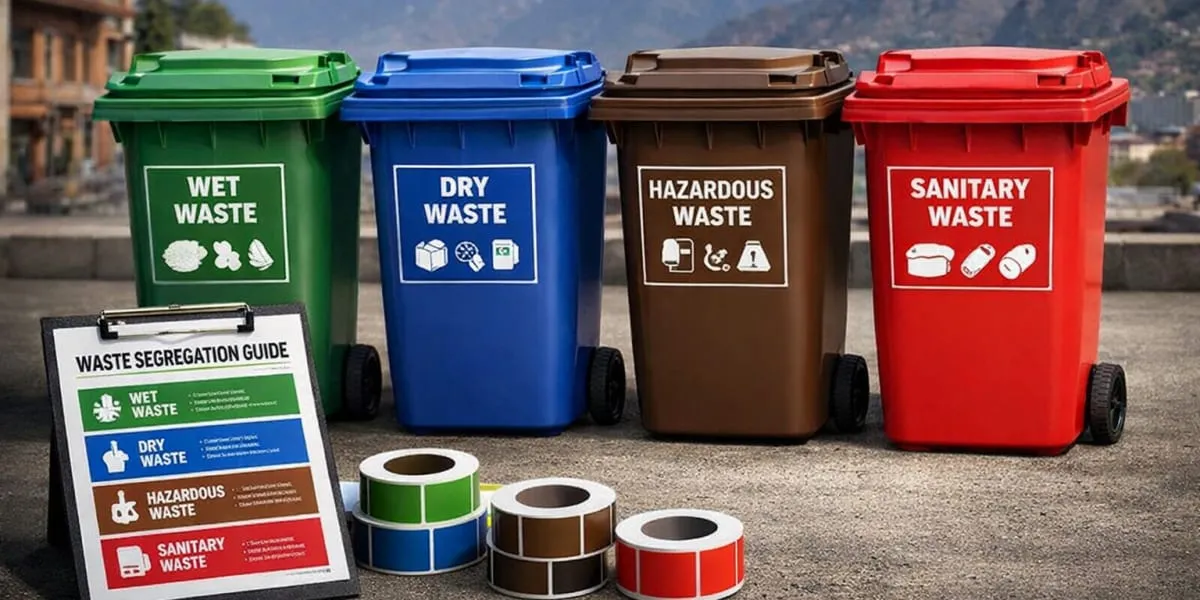
The Jammu and Kashmir Housing and Urban Development Department has launched a Union Territory wide sticker campaign to enforce waste segregation at source through a four bin colour coded system across all urban local bodies (ULBs).

Municipal corporations including Srinagar and Jammu have begun distributing and pasting instructional stickers in residential areas, commercial establishments and high footfall locations under the Swachh Bharat Mission Urban two point zero. The campaign is being implemented as part of routine municipal waste management activities and is intended to increase public awareness and compliance.

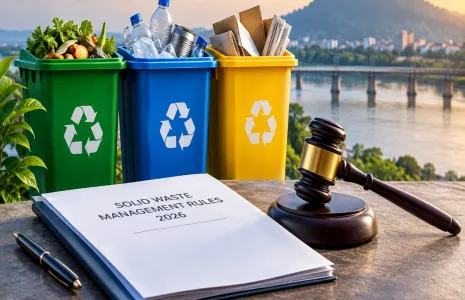
Community mobilisers and Swachhata executives are conducting door to door awareness campaigns in every municipal ward, interacting with residents and placing stickers at collection points to encourage sorting of waste at source. The exercise has been framed to ensure compliance with the Solid Waste Management Rules, 2026 and to standardise segregation practices across the territory.

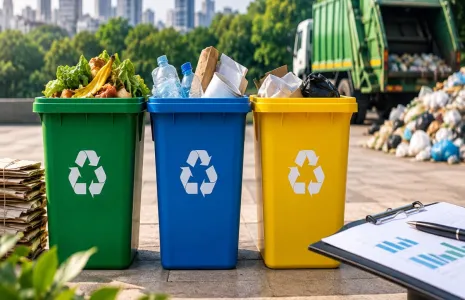
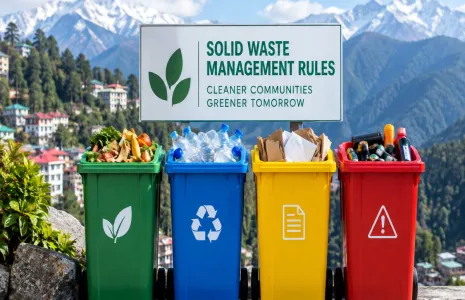
Under the four bin system blue stickers denote dry recyclable waste such as paper, plastic, glass, metal, cardboard and Tetra Paks. Green stickers cover biodegradable wet waste including food leftovers, fruit and vegetable peels, tea leaves, coffee grounds and garden waste. Red stickers are designated for hygiene waste including sanitary pads, nappies, tissues, wet wipes and menstrual cups while black stickers identify household hazardous waste such as used batteries, expired medicines, thermometers, tube lights, bulbs, chemicals and nail polish products.

The department said the initiative is expected to improve waste processing, reduce the burden on dumping sites and ensure safer handling of waste by sanitation workers. It has appealed to residents, shopkeepers and institutions to cooperate with field staff and adopt the four bin system to support cleaner urban neighbourhoods.

The Jammu and Kashmir Housing and Urban Development Department has launched a Union Territory wide sticker campaign to enforce waste segregation at source through a four bin colour coded system across all urban local bodies (ULBs). Municipal corporations including Srinagar and Jammu have begun distributing and pasting instructional stickers in residential areas, commercial establishments and high footfall locations under the Swachh Bharat Mission Urban two point zero. The campaign is being implemented as part of routine municipal waste management activities and is intended to increase public awareness and compliance. Community mobilisers and Swachhata executives are conducting door to door awareness campaigns in every municipal ward, interacting with residents and placing stickers at collection points to encourage sorting of waste at source. The exercise has been framed to ensure compliance with the Solid Waste Management Rules, 2026 and to standardise segregation practices across the territory. Under the four bin system blue stickers denote dry recyclable waste such as paper, plastic, glass, metal, cardboard and Tetra Paks. Green stickers cover biodegradable wet waste including food leftovers, fruit and vegetable peels, tea leaves, coffee grounds and garden waste. Red stickers are designated for hygiene waste including sanitary pads, nappies, tissues, wet wipes and menstrual cups while black stickers identify household hazardous waste such as used batteries, expired medicines, thermometers, tube lights, bulbs, chemicals and nail polish products. The department said the initiative is expected to improve waste processing, reduce the burden on dumping sites and ensure safer handling of waste by sanitation workers. It has appealed to residents, shopkeepers and institutions to cooperate with field staff and adopt the four bin system to support cleaner urban neighbourhoods.

Related Stories

Gold Stories

Next Story
Real Estate

The Energy-Smart Buildings

Passive design is an integral part of energy-efficient architecture. Sophisticated building systems also contribute to this end. But what role do materials play in enhancing a building’s energy-efficiency?“Material selection is one of the earliest opportunities to influence how a building performs,” says Tejbeer Singh, Principal Architect & Founder, Expressionist by Tejbeer Singh. “The objective is not simply to select materials that look appropriate but to understand how they behave within the climate and construction system.”To read the full article Click Here ..

Next Story
Infrastructure Transport

When the Lowest Bid Comes at a Cost

India's infrastructure sector is building at a scale few markets can match. New highways, expressways, metros, bridges and complex engineering projects are transforming the country's landscape. Yet, behind this rapid expansion is a growing concern within the contracting community: Can infrastructure be delivered sustainably when competition pushes prices below commercially viable levels?For Praveen Sethia, Founder & Director, Infra Advisors, who moderated the discussion, the question goes beyond the contractor's commercial interests. Contractors may be one of the two parties to a contract,..

Next Story
Real Estate

Ultra-Luxury Projects Reshape Gurugram’s Housing Market

Gurugram’s luxury housing market has expanded beyond its traditional prime locations, with corridors such as Dwarka Expressway and Golf Course Extension Road emerging as key centres for premium residential development. Larger homes, integrated developments and amenity-led communities are attracting demand from end-users and investors.A 2025 report by Sotheby’s International Realty in collaboration with CRE Matrix identified Gurugram as India’s fastest-growing ultra-luxury housing market. The city overtook Mumbai in total sales value for homes priced above Rs 10 crore, recording nearly Rs..

Advertisement

Subscribe to Our Newsletter

Get daily newsletters around different themes from Construction world.

STAY CONNECTED

Advertisement

SPECIAL OFFER
QR Code