

+
MCD to Cut Community Garbage Bins to 20 Per Cent
WATER & WASTE

MCD to Cut Community Garbage Bins to 20 Per Cent

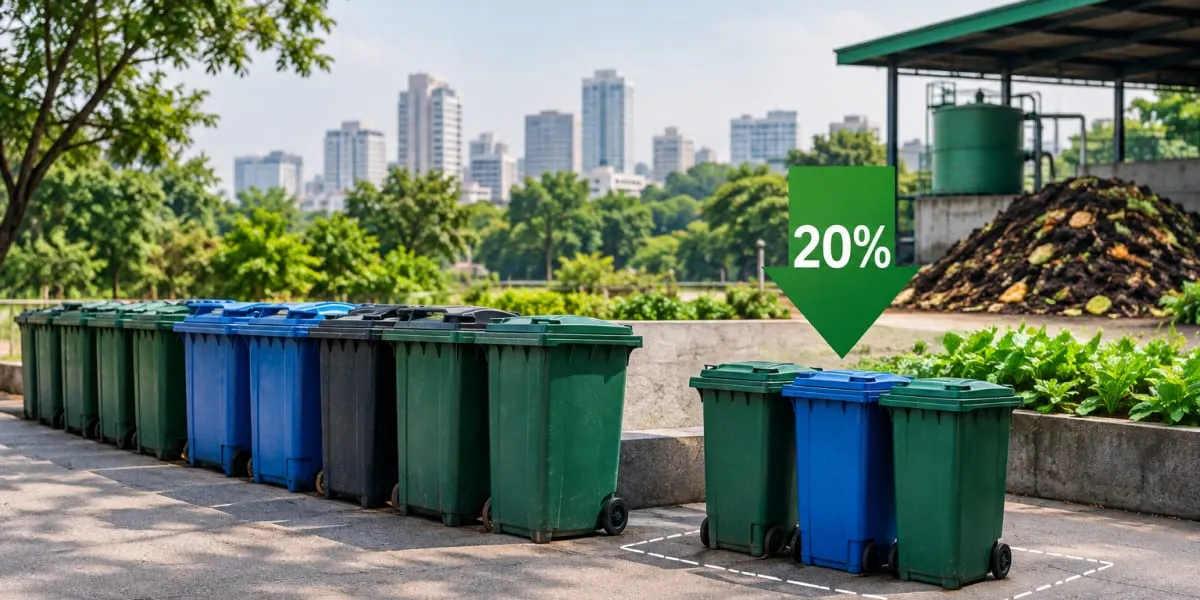
The Municipal Corporation of Delhi (MCD) plans to reduce conventional community garbage bins across the capital to 20 per cent of their existing level. A pilot project will be implemented in three zones within 90 days, following a meeting chaired by MCD Commissioner Sanjeev Khirwar to review the city’s solid waste management system.

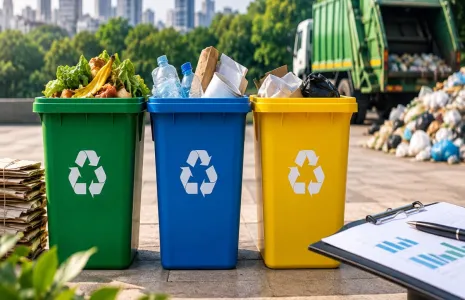
The civic body will prepare ward-wise action plans and identify land or facilities for decentralised treatment of wet waste. Proposed methods include composting, biogas production, compressed biogas and other technologies. The plans will also provide separate waste collection arrangements for residential colonies, congested streets, slum clusters, markets, hospitals and institutional areas.

The MCD intends to deploy smaller or specially designed vehicles in narrow lanes where conventional collection vehicles cannot operate. The measure is aimed at preventing roadside dumping and improving door-to-door collection. Officials will also progressively make markets bin-free through designated waste collection and transportation systems, while strengthening night sweeping and mechanised wet-cleaning in high-footfall and commercial areas.

The civic body is seeking to expand its Zero Waste Colonies model, which is currently implemented in 823 colonies and involves managing waste locally rather than sending it to landfill. The measures will be taken up ahead of the month-long Swachhata Hi Seva 2026 campaign, scheduled from 17 September to 17 October.

During the campaign, the MCD will focus on difficult and dirty spots, public places and Cleanliness Target Units. It will conduct awareness drives on waste segregation, composting and other waste-management practices, alongside activities involving school students and young people. Planned initiatives include waste-to-art and waste-to-wealth programmes, donation drives, plastic recycling events and welfare and recognition activities for sanitation workers. Zonal officials and department heads have been directed to ensure time-bound implementation and regular monitoring across the city.

The Municipal Corporation of Delhi (MCD) plans to reduce conventional community garbage bins across the capital to 20 per cent of their existing level. A pilot project will be implemented in three zones within 90 days, following a meeting chaired by MCD Commissioner Sanjeev Khirwar to review the city’s solid waste management system. The civic body will prepare ward-wise action plans and identify land or facilities for decentralised treatment of wet waste. Proposed methods include composting, biogas production, compressed biogas and other technologies. The plans will also provide separate waste collection arrangements for residential colonies, congested streets, slum clusters, markets, hospitals and institutional areas. The MCD intends to deploy smaller or specially designed vehicles in narrow lanes where conventional collection vehicles cannot operate. The measure is aimed at preventing roadside dumping and improving door-to-door collection. Officials will also progressively make markets bin-free through designated waste collection and transportation systems, while strengthening night sweeping and mechanised wet-cleaning in high-footfall and commercial areas. The civic body is seeking to expand its Zero Waste Colonies model, which is currently implemented in 823 colonies and involves managing waste locally rather than sending it to landfill. The measures will be taken up ahead of the month-long Swachhata Hi Seva 2026 campaign, scheduled from 17 September to 17 October. During the campaign, the MCD will focus on difficult and dirty spots, public places and Cleanliness Target Units. It will conduct awareness drives on waste segregation, composting and other waste-management practices, alongside activities involving school students and young people. Planned initiatives include waste-to-art and waste-to-wealth programmes, donation drives, plastic recycling events and welfare and recognition activities for sanitation workers. Zonal officials and department heads have been directed to ensure time-bound implementation and regular monitoring across the city.

Related Stories

Gold Stories
Next Story
Building Material

Hard Worker Wins Three Honours at Kyoorius Design Awards

The Ramco Cements Limited’s construction chemicals brand, Hard Worker, has won three honours at the Kyoorius Design Awards 2026, including the Grand Prix – Grey Elephant in the Design in Action category.The brand also secured two Blue Elephant honours, one for Design in Action and another for Packaging, recognising the design approach behind its brand identity and packaging.Launched in 2025, Hard Worker entered the construction chemicals segment with the brand promise, “Hard-working products for hardworking people.” Its visual identity uses animals and birds to represent product benefi..

Next Story
Infrastructure Transport

Kopri-Patni Creek Bridge to Improve Thane-Navi Mumbai Connectivity

Road connectivity between Thane and Navi Mumbai is set to receive a boost with the proposed six-lane Kopri-Patni Creek Bridge, which will provide a new route across Thane Creek. The project is intended to create a direct link between the two urban centres and add capacity to the region’s road network. The bridge will connect Kopri in Thane East with Patni in Navi Mumbai. It will begin at Mith Bandar Road in Kopri, about 750 metres from Thane railway station, cross Thane Creek and land near Airoli Knowledge City Road in Navi Mumbai. The project has advanced with Akshya Infra Projects emerging..

Next Story
Infrastructure Urban

Bengaluru Cuts Unaccounted-for Water to 26.5 Per Cent

The Bengaluru Water Supply and Sewerage Board (BWSSB) has reduced unaccounted-for water from nearly 51 per cent in 2013 to 26.5 per cent in 2025, improving efficiency across a metropolitan region of 14 mn people. The reduction has saved nearly 200 mn litres of water a day without requiring equivalent additional capacity. Bengaluru depends primarily on the Cauvery river system, with water transported over 100 km to the city. BWSSB operates six major treatment plants with combined installed capacity of 2,293 MLD and supplies nearly 150 litres per person per day. The Cauvery Water Supply Scheme S..

Advertisement

Subscribe to Our Newsletter

Get daily newsletters around different themes from Construction world.

STAY CONNECTED

Advertisement

SPECIAL OFFER
QR Code