+
MMRDA Waste Facility in Badlapur Reaches 60 Per Cent Progress
WATER & WASTE

MMRDA Waste Facility in Badlapur Reaches 60 Per Cent Progress

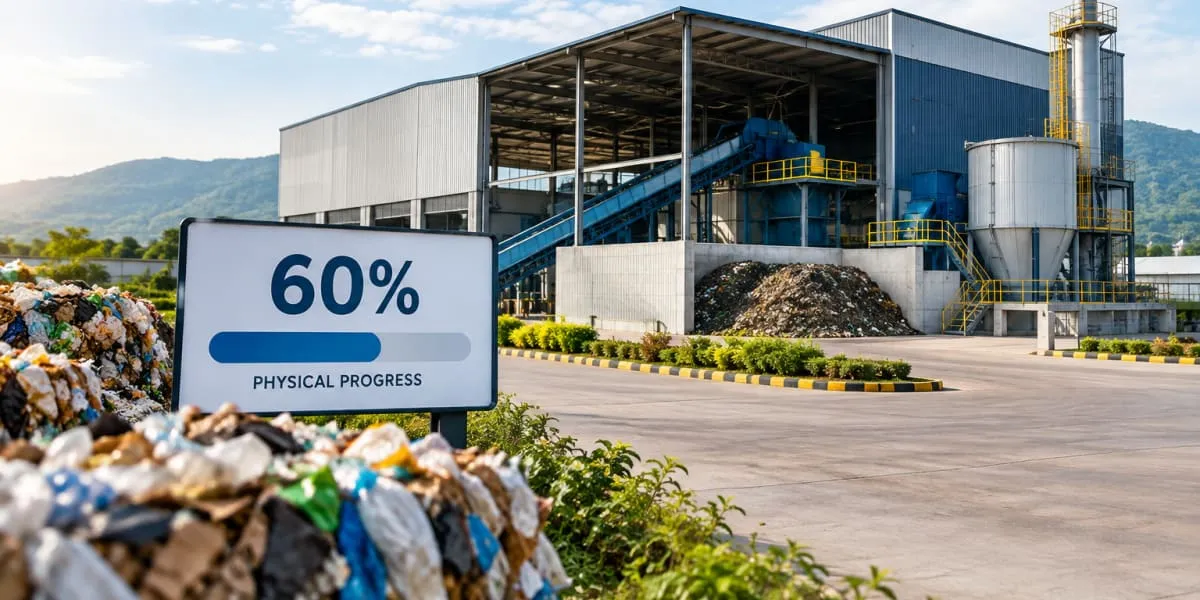
The Mumbai Metropolitan Region Development Authority (MMRDA) has achieved 60 per cent physical progress on its 600 tonnes per day (TPD) Integrated Solid Waste Processing Facility at Badlapur. The facility is being developed to serve Ambernath, Kulgaon-Badlapur and Ulhasnagar in Thane district.

The project is supported under the KfW-funded Mumbai Metropolitan Region Urban Infrastructure Improvement Programme (MMRUIIP). It is being implemented on a Design-Build-Operate-Transfer basis and is intended to strengthen scientific municipal solid waste management across the three participating urban local bodies.

The facility will include a Material Recovery Facility (MRF), biodegradable waste processing units and a sanitary landfill. It will recover materials including paper, plastics, metals and glass, while biodegradable waste will be converted into compost and Refuse Derived Fuel will also be produced. The authority expects the project to reduce dependence on open dumping and conventional landfill disposal.

MMRDA said scientific processing and disposal would help address sanitation and environmental concerns linked to unmanaged waste. The project is also intended to reduce odour, vector breeding and fire hazards, while leachate treatment will help protect soil and groundwater. Processing municipal waste through the facility is expected to support resource recovery and reduce the need for virgin raw materials.

Implementation involves coordination among MMRDA, the participating urban local bodies, KfW Development Bank, the project management consultant, contractors, technology providers and statutory authorities. Work has included stakeholder reviews, phased site development, statutory approvals, legacy waste removal, controlled blasting, supporting infrastructure and equipment installation. The project is expected to create direct and indirect employment during construction and operations, while offering more organised and safer livelihood opportunities to informal waste pickers through their integration into the formal waste management system. Once completed, the facility will support regional recycling and cleaner urban development across the Mumbai Metropolitan Region.

The Mumbai Metropolitan Region Development Authority (MMRDA) has achieved 60 per cent physical progress on its 600 tonnes per day (TPD) Integrated Solid Waste Processing Facility at Badlapur. The facility is being developed to serve Ambernath, Kulgaon-Badlapur and Ulhasnagar in Thane district. The project is supported under the KfW-funded Mumbai Metropolitan Region Urban Infrastructure Improvement Programme (MMRUIIP). It is being implemented on a Design-Build-Operate-Transfer basis and is intended to strengthen scientific municipal solid waste management across the three participating urban local bodies. The facility will include a Material Recovery Facility (MRF), biodegradable waste processing units and a sanitary landfill. It will recover materials including paper, plastics, metals and glass, while biodegradable waste will be converted into compost and Refuse Derived Fuel will also be produced. The authority expects the project to reduce dependence on open dumping and conventional landfill disposal. MMRDA said scientific processing and disposal would help address sanitation and environmental concerns linked to unmanaged waste. The project is also intended to reduce odour, vector breeding and fire hazards, while leachate treatment will help protect soil and groundwater. Processing municipal waste through the facility is expected to support resource recovery and reduce the need for virgin raw materials. Implementation involves coordination among MMRDA, the participating urban local bodies, KfW Development Bank, the project management consultant, contractors, technology providers and statutory authorities. Work has included stakeholder reviews, phased site development, statutory approvals, legacy waste removal, controlled blasting, supporting infrastructure and equipment installation. The project is expected to create direct and indirect employment during construction and operations, while offering more organised and safer livelihood opportunities to informal waste pickers through their integration into the formal waste management system. Once completed, the facility will support regional recycling and cleaner urban development across the Mumbai Metropolitan Region.

Related Stories

Gold Stories
Next Story
Building Material

Hard Worker Wins Three Honours at Kyoorius Design Awards

The Ramco Cements Limited’s construction chemicals brand, Hard Worker, has won three honours at the Kyoorius Design Awards 2026, including the Grand Prix – Grey Elephant in the Design in Action category.The brand also secured two Blue Elephant honours, one for Design in Action and another for Packaging, recognising the design approach behind its brand identity and packaging.Launched in 2025, Hard Worker entered the construction chemicals segment with the brand promise, “Hard-working products for hardworking people.” Its visual identity uses animals and birds to represent product benefi..

Next Story
Infrastructure Transport

Kopri-Patni Creek Bridge to Improve Thane-Navi Mumbai Connectivity

Road connectivity between Thane and Navi Mumbai is set to receive a boost with the proposed six-lane Kopri-Patni Creek Bridge, which will provide a new route across Thane Creek. The project is intended to create a direct link between the two urban centres and add capacity to the region’s road network. The bridge will connect Kopri in Thane East with Patni in Navi Mumbai. It will begin at Mith Bandar Road in Kopri, about 750 metres from Thane railway station, cross Thane Creek and land near Airoli Knowledge City Road in Navi Mumbai. The project has advanced with Akshya Infra Projects emerging..

Next Story
Infrastructure Urban

Bengaluru Cuts Unaccounted-for Water to 26.5 Per Cent

The Bengaluru Water Supply and Sewerage Board (BWSSB) has reduced unaccounted-for water from nearly 51 per cent in 2013 to 26.5 per cent in 2025, improving efficiency across a metropolitan region of 14 mn people. The reduction has saved nearly 200 mn litres of water a day without requiring equivalent additional capacity. Bengaluru depends primarily on the Cauvery river system, with water transported over 100 km to the city. BWSSB operates six major treatment plants with combined installed capacity of 2,293 MLD and supplies nearly 150 litres per person per day. The Cauvery Water Supply Scheme S..

Advertisement

Subscribe to Our Newsletter

Get daily newsletters around different themes from Construction world.

STAY CONNECTED

Advertisement

SPECIAL OFFER
QR Code