


MoHUA to Expand AMRUT Mitra Model to 5,000 Cities
WATER & WASTE

MoHUA to Expand AMRUT Mitra Model to 5,000 Cities

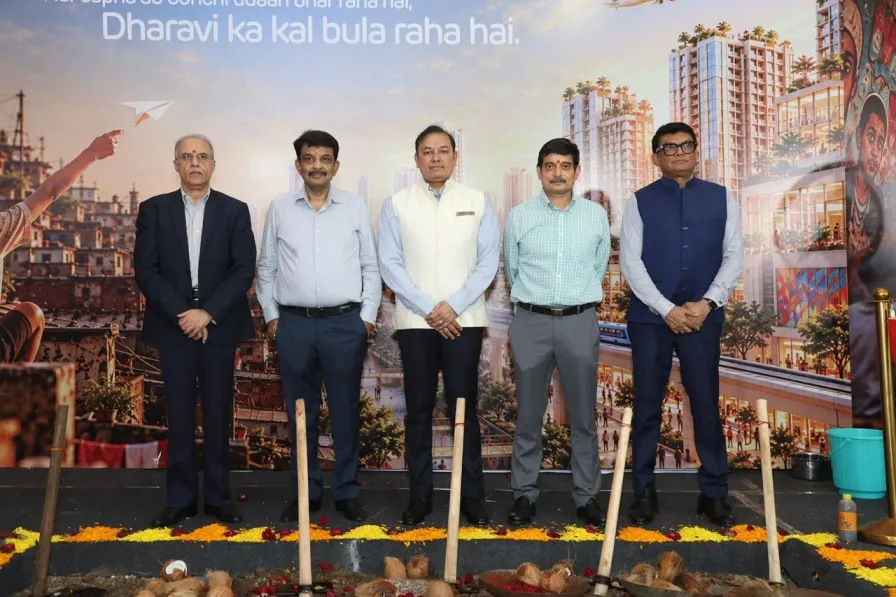
The Ministry of Housing and Urban Affairs (MoHUA) hosted the AMRUT Mitra Mahotsav at Bharat Mandapam in New Delhi to celebrate women-led leadership in urban water management under AMRUT 2.0. The event was chaired by Union Minister Manohar Lal and was attended by over 1,000 women and 300 officials from 30 States and Union Territories. The gathering brought together Self-Help Groups (SHGs) serving as AMRUT Mitras.

AMRUT Mitras from Arunachal Pradesh, Haryana, Uttar Pradesh, Maharashtra, Odisha, Tamil Nadu, Chhattisgarh and Karnataka presented accounts of livelihood improvements and community impact. Their participation covered water quality testing, billing and collection, community mobilisation, faecal sludge management operations and operation and maintenance of water assets. These activities enabled SHGs to become partners in urban service delivery.

The Union Minister said water management is a movement driven by people’s participation and that women often act as primary managers of household and community water. He noted that SHG involvement has contributed to improved service delivery, greater transparency and stronger links between citizens and urban local bodies. Empowering women in urban water management was presented as strengthening community ownership and sustainable governance.

The Ministry reiterated plans to integrate SHG women into reuse and recycling of treated wastewater, digital water management systems, smart metering and data-based monitoring. SHGs were also expected to lead city-level information, education and communication campaigns to promote water conservation and responsible use. Treated wastewater reuse was highlighted as a priority under AMRUT 2.0 as cities transition to a circular water economy.

The Minister announced a vision to extend the AMRUT Mitra model from the current 1,900 cities to 5,000 cities to deepen women-led governance in water and sanitation. More than 45,000 SHG members are currently engaged across 1,910 cities in 34 States and Union Territories, and the proposed expansion is expected to create greater livelihood opportunities and strengthen community participation in water security. The Mahotsav featured a photo exhibition, panel discussions and the launch of an AMRUT Mitra best practices compendium.

The Ministry of Housing and Urban Affairs (MoHUA) hosted the AMRUT Mitra Mahotsav at Bharat Mandapam in New Delhi to celebrate women-led leadership in urban water management under AMRUT 2.0. The event was chaired by Union Minister Manohar Lal and was attended by over 1,000 women and 300 officials from 30 States and Union Territories. The gathering brought together Self-Help Groups (SHGs) serving as AMRUT Mitras. AMRUT Mitras from Arunachal Pradesh, Haryana, Uttar Pradesh, Maharashtra, Odisha, Tamil Nadu, Chhattisgarh and Karnataka presented accounts of livelihood improvements and community impact. Their participation covered water quality testing, billing and collection, community mobilisation, faecal sludge management operations and operation and maintenance of water assets. These activities enabled SHGs to become partners in urban service delivery. The Union Minister said water management is a movement driven by people’s participation and that women often act as primary managers of household and community water. He noted that SHG involvement has contributed to improved service delivery, greater transparency and stronger links between citizens and urban local bodies. Empowering women in urban water management was presented as strengthening community ownership and sustainable governance. The Ministry reiterated plans to integrate SHG women into reuse and recycling of treated wastewater, digital water management systems, smart metering and data-based monitoring. SHGs were also expected to lead city-level information, education and communication campaigns to promote water conservation and responsible use. Treated wastewater reuse was highlighted as a priority under AMRUT 2.0 as cities transition to a circular water economy. The Minister announced a vision to extend the AMRUT Mitra model from the current 1,900 cities to 5,000 cities to deepen women-led governance in water and sanitation. More than 45,000 SHG members are currently engaged across 1,910 cities in 34 States and Union Territories, and the proposed expansion is expected to create greater livelihood opportunities and strengthen community participation in water security. The Mahotsav featured a photo exhibition, panel discussions and the launch of an AMRUT Mitra best practices compendium.

Next Story
Infrastructure Urban

MIDC and Ramky Unit Sign Concession for Life Sciences Park

Maharashtra Industrial Development Corporation has signed a concession agreement with Maha Integrated Life Sciences City Limited (MILeS City), a wholly owned subsidiary of Ramky Infrastructure Limited (RIL), to develop a high-tech pharmaceutical park at Dighi Port Industrial Area in Raigad. The project will follow a public-private partnership under a DBFOT model and has an estimated cost of Rs 30 billion (Rs 30 bn). The concession will run for 95 years, including a five-year construction phase, with MILeS City responsible for development and management. The development will occupy approximatel..

Next Story
Real Estate

BuzzWorks Leases Hyderabad Office to MyComplianceOffice

Brigade Group’s managed workspace provider BuzzWorks has leased 550 seats at Mindspace Business Park in Hyderabad to Dublin based MyComplianceOffice, in what is the company’s largest office in India. With this signing, BuzzWorks' total leased office space in Hyderabad stands at zero point one one million (mn) square feet. The new premises will house core functions including product engineering, product management, customer success and global operations. Artificial intelligence enabled compliance technology initiatives will also be part of the local delivery model. BuzzWorks will provide wo..

Next Story
Infrastructure Transport

Jindal Stainless Flags Operational Strain From Middle East Crisis

Jindal Stainless warned that the Middle East war crisis has affected its operations because of dependence on industrial gases such as propane and LPG and on natural gas. The scrap-based production route used by the stainless steel maker does not generate blast furnace or coke oven gases internally, unlike the conventional steel industry. Several plant processes have been adversely impacted and production is being run at rationalised capacity. Disruptions in global shipping routes have resulted in vessel diversions, longer transit times and cargo delays, adding pressure to supply chains and to ..

Advertisement

Subscribe to Our Newsletter

Get daily newsletters around different themes from Construction world.

STAY CONNECTED

Advertisement

Advertisement

Advertisement