

Railways Tighten Rules for On-Train Garbage Management
WATER & WASTE

Railways Tighten Rules for On-Train Garbage Management

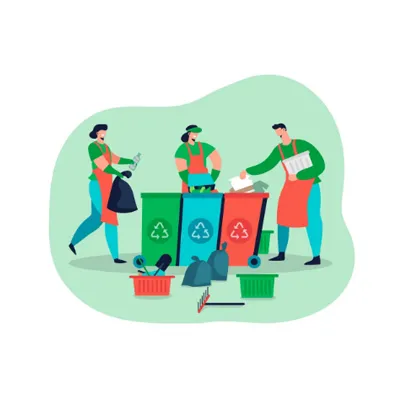
The Railway Board has issued detailed guidelines to all Zonal Railways to improve the systematic collection and disposal of garbage during train journeys. Under the revised protocol, On-Board Housekeeping Service (OBHS) teams and pantry car staff must collect waste across coaches and deposit it in sealed bags at designated stations en route. The directive reinforces consistent cleanliness standards to enhance passenger comfort.

A key part of the initiative is a one-month ‘Samvaad’ exercise, during which senior supervisors and officers from the Commercial and Mechanical Departments will directly engage with on-board staff. These sessions will sensitise teams on hygiene practices, demonstrate waste-management procedures through instructional videos, and emphasise their role in supporting the Swachh Bharat Mission. Divisions must share feedback with zonal PCCMs and PCMEs, who will consolidate reports for the Railway Board.

Zonal Railways have been instructed to provide adequate training and equipment to contractual housekeeping and catering staff. The Board has also tightened compliance norms: OBHS and pantry car licensees will be formally counselled, and any violation will be treated as a serious contractual breach, potentially leading to termination.

The guidelines build on instructions issued in July 2024, which mandated en-route waste disposal, assessment of garbage generation, and digital monitoring through the CRIS CMM system. The strengthened framework aims to deliver cleaner coaches, safer environments, and an improved travel experience for passengers.

The Railway Board has issued detailed guidelines to all Zonal Railways to improve the systematic collection and disposal of garbage during train journeys. Under the revised protocol, On-Board Housekeeping Service (OBHS) teams and pantry car staff must collect waste across coaches and deposit it in sealed bags at designated stations en route. The directive reinforces consistent cleanliness standards to enhance passenger comfort. A key part of the initiative is a one-month ‘Samvaad’ exercise, during which senior supervisors and officers from the Commercial and Mechanical Departments will directly engage with on-board staff. These sessions will sensitise teams on hygiene practices, demonstrate waste-management procedures through instructional videos, and emphasise their role in supporting the Swachh Bharat Mission. Divisions must share feedback with zonal PCCMs and PCMEs, who will consolidate reports for the Railway Board. Zonal Railways have been instructed to provide adequate training and equipment to contractual housekeeping and catering staff. The Board has also tightened compliance norms: OBHS and pantry car licensees will be formally counselled, and any violation will be treated as a serious contractual breach, potentially leading to termination. The guidelines build on instructions issued in July 2024, which mandated en-route waste disposal, assessment of garbage generation, and digital monitoring through the CRIS CMM system. The strengthened framework aims to deliver cleaner coaches, safer environments, and an improved travel experience for passengers.

Next Story
Equipment

Schwing Stetter India Unveils New Innovations at Excon 2025

Schwing Stetter India unveiled more than 20 new machines at Excon 2025, marking one of its most significant showcases and introducing several India-first technologies to the construction equipment sector. The company launched the country’s first 56-metre boom pump designed and manufactured in India, the first fully electric truck mixer, the first CNG mixer variant and the first hybrid boom pump. Executives said the launch portfolio was engineered to support India’s move toward faster, greener and more vertically oriented infrastructure through advanced engineering, clean-energy solutions a..

Next Story
Infrastructure Energy

SEPC Resolves Hindustan Copper Dispute, Wins Rs 725 Mn Order

Engineering, procurement and construction firm SEPC Ltd has recently settled a dispute with Hindustan Copper Ltd (HCL) and secured a mining infrastructure order valued at Rs 725 million from the state-owned company. SEPC informed the stock exchanges that it has executed a settlement deed with HCL, bringing closure to all inter-se claims and counterclaims arising from arbitration proceedings. As part of the settlement, SEPC will receive Rs 304.5 million as full and final payment, marking the resolution of all pending disputes between the two entities. The company also stated that Hindustan Co..

Next Story
Infrastructure Energy

20% Ethanol Blending Cuts India’s CO2 Emissions by 73.6 Mn Tonnes

Union Road Transport and Highways Minister Nitin Gadkari recently said that India has reduced carbon dioxide emissions by 73.6 million metric tonnes due to the adoption of 20 per cent ethanol blending in petrol. He made the statement while replying to supplementary questions during the Question Hour in the Lok Sabha. Describing ethanol as a green fuel, the minister said it plays a key role in reducing pollution while also supporting higher incomes for farmers. He underlined that ethanol blending contributes both to environmental sustainability and rural economic growth. Nitin Gadkari also po..

Advertisement

Subscribe to Our Newsletter

Get daily newsletters around different themes from Construction world.

STAY CONNECTED

Advertisement

Advertisement

Advertisement

Advertisement

Open In App