+
TDB Backs Indo-Canada Electric Boat Project
WATER & WASTE

TDB Backs Indo-Canada Electric Boat Project

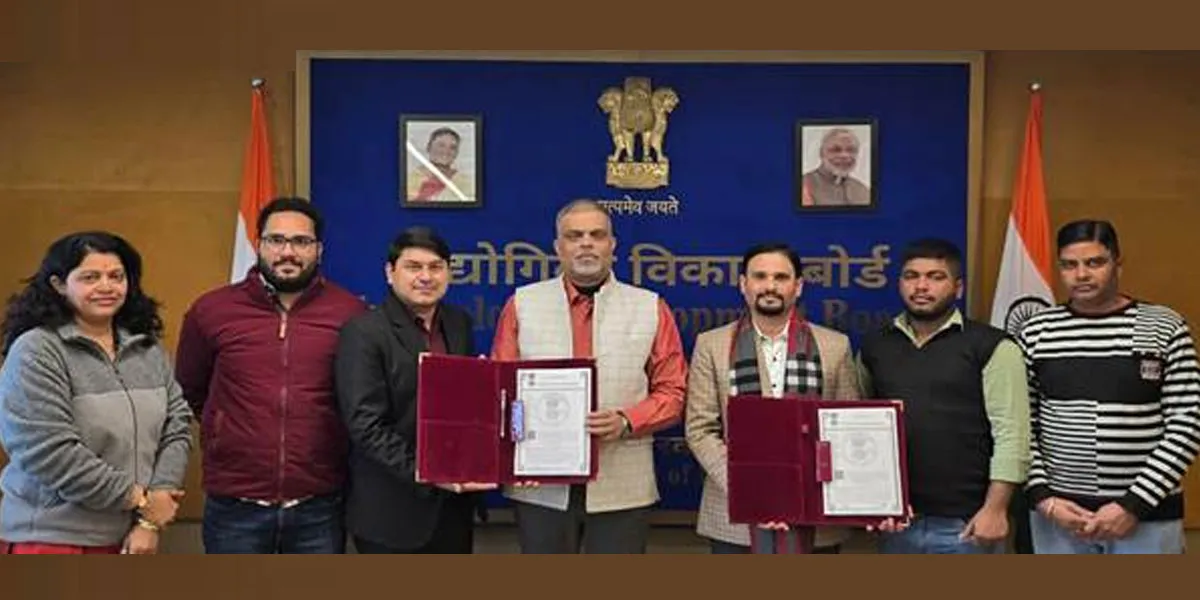
The supported project focuses on the development and demonstration of a 20-passenger electric boat, contributing to India’s goals of promoting environment-friendly waterways, reducing dependence on fossil fuels and enabling sustainable tourism. Under the initiative, VMSPL will design and construct a high-strength, low-weight fibre-reinforced plastic vessel in compliance with Indian Register of Shipping standards. The vessel will be integrated with electric outboard motors, advanced battery systems and a digital console interface developed by Canadian partner ACEL Power Inc.

The project is expected to create a scalable technology platform for clean inland and coastal water transport, delivering reduced emissions, minimal noise and improved operational efficiency. It aligns closely with government policies that encourage energy-efficient and cleaner mobility solutions across transport modes.

Vijai Marine Services Pvt. Ltd., which operates Vijai Marine Shipyards, is an ISO 9001:2008-certified Indian shipyard with established capabilities in the design, construction, commissioning and delivery of marine craft. The electric propulsion system developed under the project will be optimised for Indian operating conditions, particularly for feeder services and tourism-linked waterways.

Key outcomes of the project include the development of electric boats for water taxi services, eco-tourism routes and river-based passenger transport, support for responsible tourism through low-noise and non-polluting vessels suited to sensitive ecological zones, the use of carbon-fibre reinforced plastics and vacuum-infusion construction techniques for enhanced durability and performance, and the demonstration that electric boats can deliver endurance and reliability comparable to conventional diesel-powered systems.

Commenting on the initiative, Rajesh Kumar Pathak, Secretary, TDB, said that the Indo-Canada collaborative research and development programme is designed to encourage industry-oriented innovation that translates into deployable technologies. He added that the project supports green waterways, strengthens innovation in marine engineering and builds domestic capability in advanced mobility technologies.

Representatives of Vijai Marine Services Pvt. Ltd. said the support from TDB would help accelerate the deployment of commercially viable electric boats tailored for Indian conditions, contributing to safer, cleaner and more efficient water transport.

The supported project focuses on the development and demonstration of a 20-passenger electric boat, contributing to India’s goals of promoting environment-friendly waterways, reducing dependence on fossil fuels and enabling sustainable tourism. Under the initiative, VMSPL will design and construct a high-strength, low-weight fibre-reinforced plastic vessel in compliance with Indian Register of Shipping standards. The vessel will be integrated with electric outboard motors, advanced battery systems and a digital console interface developed by Canadian partner ACEL Power Inc. The project is expected to create a scalable technology platform for clean inland and coastal water transport, delivering reduced emissions, minimal noise and improved operational efficiency. It aligns closely with government policies that encourage energy-efficient and cleaner mobility solutions across transport modes. Vijai Marine Services Pvt. Ltd., which operates Vijai Marine Shipyards, is an ISO 9001:2008-certified Indian shipyard with established capabilities in the design, construction, commissioning and delivery of marine craft. The electric propulsion system developed under the project will be optimised for Indian operating conditions, particularly for feeder services and tourism-linked waterways. Key outcomes of the project include the development of electric boats for water taxi services, eco-tourism routes and river-based passenger transport, support for responsible tourism through low-noise and non-polluting vessels suited to sensitive ecological zones, the use of carbon-fibre reinforced plastics and vacuum-infusion construction techniques for enhanced durability and performance, and the demonstration that electric boats can deliver endurance and reliability comparable to conventional diesel-powered systems. Commenting on the initiative, Rajesh Kumar Pathak, Secretary, TDB, said that the Indo-Canada collaborative research and development programme is designed to encourage industry-oriented innovation that translates into deployable technologies. He added that the project supports green waterways, strengthens innovation in marine engineering and builds domestic capability in advanced mobility technologies. Representatives of Vijai Marine Services Pvt. Ltd. said the support from TDB would help accelerate the deployment of commercially viable electric boats tailored for Indian conditions, contributing to safer, cleaner and more efficient water transport.

Related Stories

Gold Stories

Next Story
Infrastructure Urban

Infrastructure Opportunity Outlook by IMPACCT.Info

India’s infrastructure pipeline is witnessing dynamic activity across stages — from immediate bidding to future planning. IMPACCT segments these into three categories: Immediate, 3–6 Month, and Future Opportunities, enabling businesses to identify, prepare, and participate in high-value tenders and projects across sectors.To read full article Click Here ..

Next Story
Real Estate

Glass, Reframed!

Glass façades, quintessential aesthetic building envelopes globally, have been widely adopted in India as well. But when the focus is high-performance building systems that deliver energy efficiency, comfort and architectural identity, glass isn’t the only preference. Combination solutions, involving glass and some other material, improve façade outcomes. Some combinations come at comparable prices, some at a higher price. Here is a selection of performance-oriented solutions...To read the full story Click Here ..

Next Story
Infrastructure Urban

Beyond Building Faster

India’s cities are expanding at an unprecedented pace, bringing new infrastructure and development opportunities while also intensifying challenges around mobility, public spaces, liveability and supporting infrastructure. The question, therefore, is not simply whether India can build faster, but whether it can build cities that work better.At a CW webinar, Are We Designing Better Cities – or Just Building Faster?, moderator Ar. Samir Shaikh, Founding Principal, AR&UD Studio, brought together perspectives from design, development, master planning and technology...To read the full artic..

Advertisement

Subscribe to Our Newsletter

Get daily newsletters around different themes from Construction world.

STAY CONNECTED

Advertisement

SPECIAL OFFER
QR Code