


Tezu Phase Of Himalayan Cleanup 2026 Waste Audit
WATER & WASTE

Tezu Phase Of Himalayan Cleanup 2026 Waste Audit

A two-day cleanup drive and waste audit under the Tezu phase of the Himalayan Cleanup 2026 was organised by Team Amala with the NGO AMYAA at Bamboosa Library and near the Tezu Nala bridge in Lohit district. The Himalayan Cleanup 2026 was initiated by Zero Waste Himalaya and the Integrated Mountain Initiative to address plastic waste in the region. The exercise combined awareness, community participation and data gathering on local waste streams.

At Bamboosa Library around 40 participants, including representatives of student organisations, welfare societies, teachers, business owners, youth volunteers and citizens, took part in interactive discussions and awareness sessions on waste management and responsible consumption. Sessions covered measures to reduce plastic use and encourage reuse and segregation at source. Organisers framed waste management as a shared community responsibility rather than solely a municipal concern.

Volunteers received training in waste segregation and waste audit procedures to help identify the composition and sources of waste generated in the locality. The training aimed to enable precise sorting during the field exercise and to improve data quality for subsequent recovery efforts. Participants were encouraged to adopt simple everyday practices such as carrying reusable water bottles and avoiding single-use packaging.

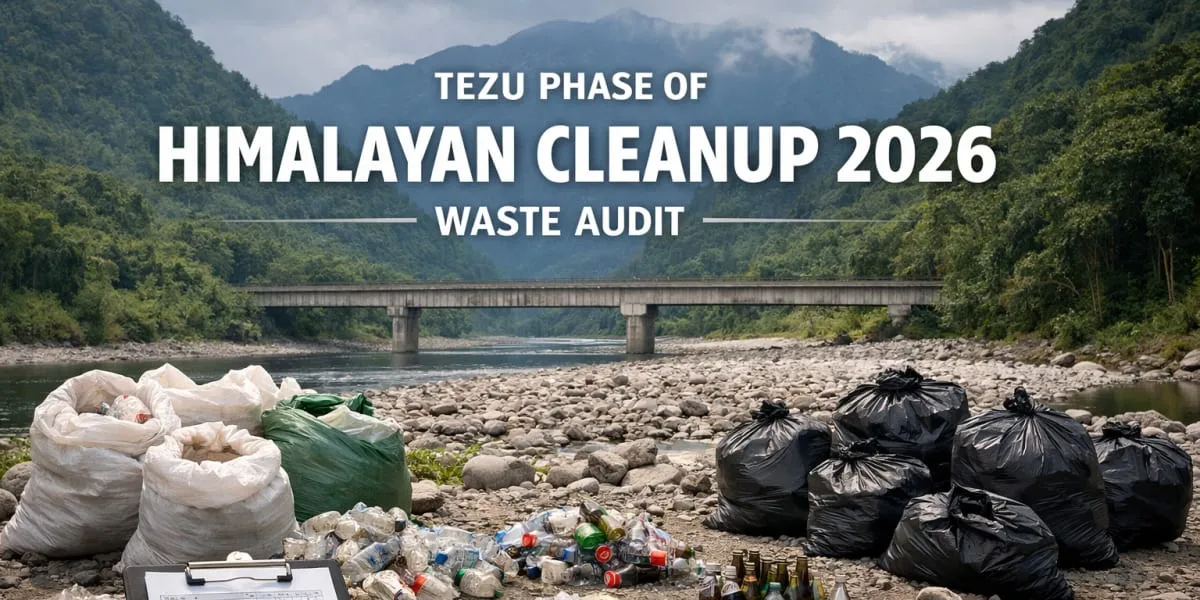
Around 60 volunteers, including members of the Lohit Green Foundation, the ex-SSB Welfare Society, students and other community members, took part in collecting and segregating waste near Tezu Nala bridge. Approximately 42.4 kilograms (kg) of plastic wrappers, 12.8 kg of glass bottles and 12 kg of PET bottles were collected, with single-use packaged drinking water bottles, chips packets and instant food packaging among the most common items.

Following the audit all segregated materials were handed to the Material Recovery Facility (MRF) in Tezu for recycling and resource recovery. The organisers said cleanup drives alone cannot resolve the waste challenge and urged sustained behavioural change, responsible consumption and collective community action under the guiding principle of My Waste, My Responsibility.

"Join industry leaders at RAHSTA Expo, India's premier platform for roads, highways and traffic infrastructure. Register now to explore innovations, network with experts and shape the future of mobility."

A two-day cleanup drive and waste audit under the Tezu phase of the Himalayan Cleanup 2026 was organised by Team Amala with the NGO AMYAA at Bamboosa Library and near the Tezu Nala bridge in Lohit district. The Himalayan Cleanup 2026 was initiated by Zero Waste Himalaya and the Integrated Mountain Initiative to address plastic waste in the region. The exercise combined awareness, community participation and data gathering on local waste streams. At Bamboosa Library around 40 participants, including representatives of student organisations, welfare societies, teachers, business owners, youth volunteers and citizens, took part in interactive discussions and awareness sessions on waste management and responsible consumption. Sessions covered measures to reduce plastic use and encourage reuse and segregation at source. Organisers framed waste management as a shared community responsibility rather than solely a municipal concern. Volunteers received training in waste segregation and waste audit procedures to help identify the composition and sources of waste generated in the locality. The training aimed to enable precise sorting during the field exercise and to improve data quality for subsequent recovery efforts. Participants were encouraged to adopt simple everyday practices such as carrying reusable water bottles and avoiding single-use packaging. Around 60 volunteers, including members of the Lohit Green Foundation, the ex-SSB Welfare Society, students and other community members, took part in collecting and segregating waste near Tezu Nala bridge. Approximately 42.4 kilograms (kg) of plastic wrappers, 12.8 kg of glass bottles and 12 kg of PET bottles were collected, with single-use packaged drinking water bottles, chips packets and instant food packaging among the most common items. Following the audit all segregated materials were handed to the Material Recovery Facility (MRF) in Tezu for recycling and resource recovery. The organisers said cleanup drives alone cannot resolve the waste challenge and urged sustained behavioural change, responsible consumption and collective community action under the guiding principle of My Waste, My Responsibility.

Next Story
Infrastructure Transport

L&T Achieves Third Bullet Train Tunnel Breakthrough

Larsen & Toubro (L&T) has achieved the breakthrough of Mountain Tunnel-07 (MT-07) on the Mumbai-Ahmedabad High Speed Rail (MAHSR) C-3 package, marking its third tunnel breakthrough within five months. Located in the Sahyadri range near Ambesari village in Dahanu Taluka, Maharashtra, the 417-metre-long tunnel was excavated over 516 days using the New Austrian Tunnelling Method (NATM) and 117 controlled blasts.The 12.6-metre-wide tunnel, designed to accommodate both up and down tracks, was constructed under challenging geological conditions with continuous monitoring and support systems,..

Next Story
Infrastructure Urban

Meghalaya Opens North East’s Largest Spice Plant

Union Finance Minister Nirmala Sitharaman recently inaugurated the Organic Spice Industrial Unit, PRIME-HUB, at Bhoirymbong in Meghalaya. The facility is being positioned as the North East’s largest organic spice processing plant and is expected to strengthen Meghalaya’s agro-industrial and organic farming ecosystem.The project was developed with an investment of Rs 300 million (mn) and is designed to process over 10,000 metric tonnes of organic spices annually. It will directly benefit 5,500 farmers across 112 villages, supporting improved livelihoods, value addition and market access for..

Next Story
Infrastructure Urban

Recykal Raises USD 23 Mn Bridge Round

Recykal, a Hyderabad-based technology platform for waste management and the circular economy, recently raised USD 23 million in a bridge round through a mix of primary and secondary capital. The round saw participation from existing investors and select new family offices.The fresh capital will be used to strengthen Recykal’s technology platform, accelerate its Deposit Return System (DRS) deployments, expand behavioural change solutions in waste management, and support international growth. In FY26, the company reported gross revenue of Rs 14.98 billion, up 53.2 per cent from Rs 9.78 billion..

Advertisement

Subscribe to Our Newsletter

Get daily newsletters around different themes from Construction world.

STAY CONNECTED

Advertisement

Advertisement

Advertisement