Three Ganderbal Wards Lag as Waste Generation Rises 30 Per Cent
WATER & WASTE

Three Ganderbal Wards Lag as Waste Generation Rises 30 Per Cent

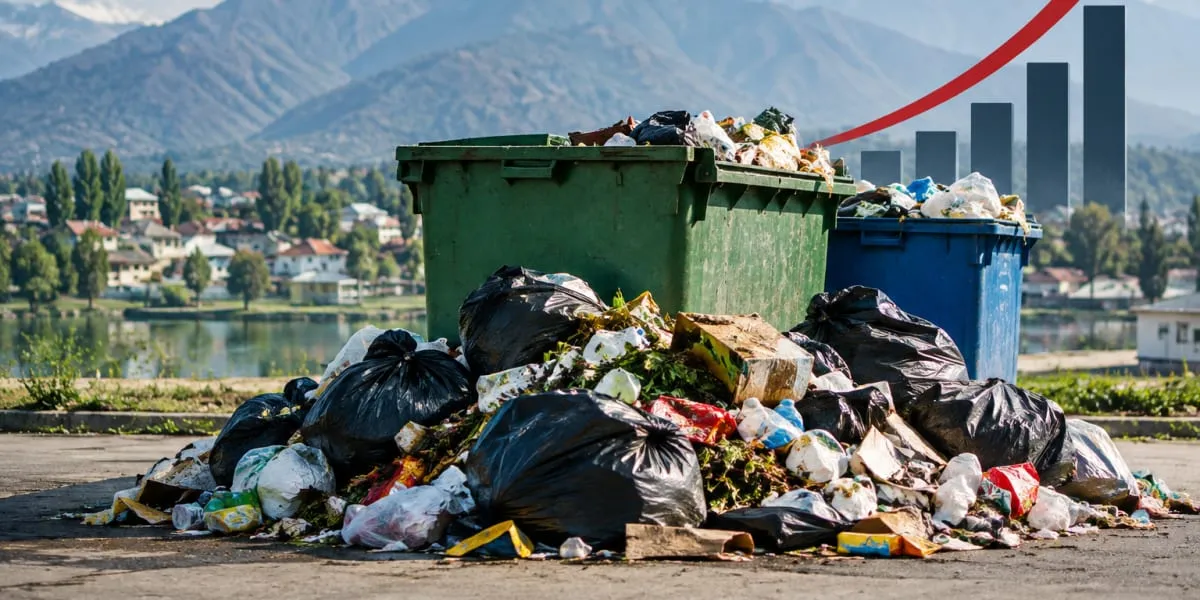
Waste generation in Ganderbal town rose 30 per cent between 2012 and 2020, while inadequate recycling facilities, limited composting infrastructure and uneven municipal services continued to weaken waste management, according to a study of the town's 17 municipal wards. Ganderbal B, Arampora B and Fatihpora A were identified as the three poorly managed wards.

The study drew on surveys of 400 households, interviews with 25 officials and community representatives, municipal records covering 13 years, and geographical mapping. Researchers used Principal Component Analysis (PCA), statistical clustering and Geographic Information System (GIS) mapping to assess waste management performance. None of the wards reached the highest management category.

Municipal records showed daily waste generation increasing from 5 t in 2012 to 6.5 t in 2020. The study linked the pressure to population growth, urban expansion, tourism and industrial activity, noting that Ganderbal serves as a gateway to destinations including Sonamarg, Mansbal Lake and the Amarnath Cave. Recorded generation later fell to about 3.5 t daily during 2022–2024.

Food waste formed the largest part of municipal garbage, accounting for an average of 56 per cent, while plastic and rubber represented 12 per cent. Inert waste, including metals, electronic waste and hazardous materials, made up about 16 per cent. About 80 per cent of surveyed households reported having no nearby composting facility, and the average infrastructure score was 1.41 on a five-point scale.

Only 40 per cent of households said they regularly recycled waste, while 33 per cent reported available recycling facilities and 45 per cent said such facilities were unavailable. Daily collection reached 60 per cent of households, with the remainder receiving services every two to three days. The study recommended decentralised composting, vermicomposting, stronger electronic waste systems, improved bin clearance, better monitoring and ward-specific interventions. It also found that 14 wards were moderately managed, while five ranked as high-performing and five as low-performing under statistical clustering.

Waste generation in Ganderbal town rose 30 per cent between 2012 and 2020, while inadequate recycling facilities, limited composting infrastructure and uneven municipal services continued to weaken waste management, according to a study of the town's 17 municipal wards. Ganderbal B, Arampora B and Fatihpora A were identified as the three poorly managed wards. The study drew on surveys of 400 households, interviews with 25 officials and community representatives, municipal records covering 13 years, and geographical mapping. Researchers used Principal Component Analysis (PCA), statistical clustering and Geographic Information System (GIS) mapping to assess waste management performance. None of the wards reached the highest management category. Municipal records showed daily waste generation increasing from 5 t in 2012 to 6.5 t in 2020. The study linked the pressure to population growth, urban expansion, tourism and industrial activity, noting that Ganderbal serves as a gateway to destinations including Sonamarg, Mansbal Lake and the Amarnath Cave. Recorded generation later fell to about 3.5 t daily during 2022–2024. Food waste formed the largest part of municipal garbage, accounting for an average of 56 per cent, while plastic and rubber represented 12 per cent. Inert waste, including metals, electronic waste and hazardous materials, made up about 16 per cent. About 80 per cent of surveyed households reported having no nearby composting facility, and the average infrastructure score was 1.41 on a five-point scale. Only 40 per cent of households said they regularly recycled waste, while 33 per cent reported available recycling facilities and 45 per cent said such facilities were unavailable. Daily collection reached 60 per cent of households, with the remainder receiving services every two to three days. The study recommended decentralised composting, vermicomposting, stronger electronic waste systems, improved bin clearance, better monitoring and ward-specific interventions. It also found that 14 wards were moderately managed, while five ranked as high-performing and five as low-performing under statistical clustering.

Related Stories

Gold Stories

Next Story
Infrastructure Energy

JSW Motors Signs MoU with ARAI for Vehicle Development

JSW Motors, the passenger vehicle arm of JSW Group, has signed a memorandum of understanding (MoU) with the Automotive Research Association of India (ARAI) for technical collaboration on the design, validation and localisation of new energy vehicles (NEVs). The agreement is intended to create technical foundations for vehicles designed for Indian operating conditions. The companies will work on vehicle engineering and technical baselines, testing, validation and performance assessment, according to JSW Motors. Their programme will also cover advanced driver assistance systems (ADAS), battery s..

Next Story
Infrastructure Urban

Karnataka Offers Support for Toyota Expansion Plans

Karnataka Chief Minister D K Shivakumar assured Toyota Motor Corporation of the state government’s support for expanding its manufacturing operations during a meeting with the company’s senior leadership in Japan. The discussions covered higher production, new mobility solutions and further investment in Karnataka, as Toyota looks to increase vehicle production capacity to 1 mn in the near future. Shivakumar was accompanied by M B Patil, Karnataka’s Minister for Large and Medium Industries and Infrastructure Development. The Toyota delegation was led by Masakazu Yoshimura, the company’..

Next Story
Infrastructure Transport

Railways to Begin Bullet Train Trial on Surat-Bilimora Section

Indian Railways will begin a trial run of its bullet train service on the 50 km Surat-Bilimora section by May 2027. The section is part of the Mumbai-Ahmedabad high-speed rail corridor and is expected to provide the first operational segment of the project. The trial will use an indigenous trainset capable of travelling at 280 km per hour. Railway Ministry sources said the first section of the corridor, extending from Surat to Vapi, is scheduled to become operational by the end of 2027. The planned trial marks a step towards introducing high-speed rail services on the corridor, which connects ..

Subscribe to Our Newsletter

Get daily newsletters around different themes from Construction world.

STAY CONNECTED

Advertisement

SPECIAL OFFER
QR Code