

+
Which features are in-demand in mining equipment?
Cement

Which features are in-demand in mining equipment?

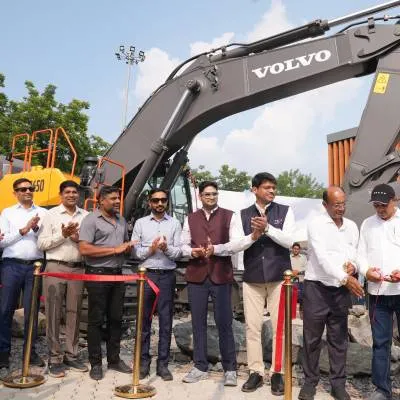
Photo courtesy: Volvo CE India

Safety and productivity technologies to look out for in Hitachi dumpers and excavators include the Arial Angle system, which gives the operator an integrated 360° view to remove any blind spot around the machines.

Additionally, Tata Hitachi mining equipment—especially the dumpers—are fitted with anti-collision and proximity devices. The roomy cabins comply with the falling overhead protective system, the highest safety standard. They offer enhanced visibility and a user-friendly console. Silicone-filled cabin mounting restricts the vibrations felt in the cabin. This, along with ergonomically designed seats and air-conditioning, reduces operator fatigue, facilitating long shifts and uninterrupted working.

Versatility allows a machine to work in varied conditions, thus contributing to productivity. “To maximise performance, Komatsu products can be programmed for specific operating conditions,” says Samaresh Mitra, National Sales Head – OE, Komatsu Mining Corp. Group, Joy Global (India). “The products come equipped with sensors that capture data, which complex algorithms translate into visual information that can predict significant changes in operating conditions in the mine to further optimise performance.”

“Versatility is inbuilt in Volvo machines in many ways,” says Dimitrov Krishnan, Vice-President and Head, Volvo CE India. The advanced drum control system allows the operator to adjust the frequency and amplitude for the machine to work in changing soil types and conditions. Machines adjust to the material depth through the adjustable dynamic force of the drum. Meanwhile, the traction system is well suited both to steep inclines and slippery surfaces.

Which mining segments are deploying bigger machines and why?
Larger, highly productive machines allow mining companies to do more with fewer operators, and fewer machines allow fleet size optimisation and have lower maintenance needs, observes Krishnan.

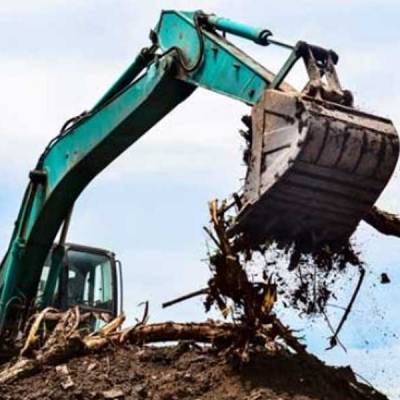
In this context, two popular Volvo products are the EC950E crawler excavator in the 90-100 tonne class and the A60H hauler, which sets new productivity standards for open cast mines and other large infrastructure projects. EC950EL excavators are operating in the cement industry (Sagar Cements) and for coal overburden work (VPR Mining Infrastructure). The EC750DL in the 70-85 tonne class has been deployed for coal overburden work and mining for iron ore, bauxite, zinc and barite, as well as in the cement industry.

Demand for state-of-the-art large mining equipment is being driven by mechanised underground mines and large-capacity surface mines, according to Mitra. “Coal India is one of the biggest buyers of such high-capacity equipment. However, with a lot of coal blocks being developed by state-owned power companies and NTPC, we are seeing a surge in demand from that sector as well.”

“Our large range of blasthole drills, which are RCS [rig control system] ready, are in use at Sasan (Reliance Power) and Gevra/Dipka in South Eastern Coalfields,” notes Animesh Nandy, Business Line Manager-Drilling Solutions, Epiroc Mining India. “Normally, large diameter drills are preferred for coal overburden and iron ore owing to the large volumes involved. In India, coal seam, quarries and limestone normally use small and medium-size drills, between 4-1/2” and 6-1/2”. We expect the more organised and technology-driven players who are dominating limestone mining to show demand for midsize equipment and automation.”

“We are now using 65 tonne trucks, 21 tonne loaders and M2C jumbos,” says Suprabhat Sarkar, Vice-President, Tekmonin Construction Ltd. “Higher-capacity machines are preferable from the productivity perspective but necessitate sufficient planning so as to benefit from the extra capacity. Otherwise, the machines remain underutilised. For instance, higher-capacity machines need different-sized drives and can use different parts. Also, operators and service personnel need to be trained in the special needs of bigger machines.”

- CHARU BAHRI

Photo courtesy: Volvo CE India Safety and productivity technologies to look out for in Hitachi dumpers and excavators include the Arial Angle system, which gives the operator an integrated 360° view to remove any blind spot around the machines. Additionally, Tata Hitachi mining equipment—especially the dumpers—are fitted with anti-collision and proximity devices. The roomy cabins comply with the falling overhead protective system, the highest safety standard. They offer enhanced visibility and a user-friendly console. Silicone-filled cabin mounting restricts the vibrations felt in the cabin. This, along with ergonomically designed seats and air-conditioning, reduces operator fatigue, facilitating long shifts and uninterrupted working. Versatility allows a machine to work in varied conditions, thus contributing to productivity. “To maximise performance, Komatsu products can be programmed for specific operating conditions,” says Samaresh Mitra, National Sales Head – OE, Komatsu Mining Corp. Group, Joy Global (India). “The products come equipped with sensors that capture data, which complex algorithms translate into visual information that can predict significant changes in operating conditions in the mine to further optimise performance.” “Versatility is inbuilt in Volvo machines in many ways,” says Dimitrov Krishnan, Vice-President and Head, Volvo CE India. The advanced drum control system allows the operator to adjust the frequency and amplitude for the machine to work in changing soil types and conditions. Machines adjust to the material depth through the adjustable dynamic force of the drum. Meanwhile, the traction system is well suited both to steep inclines and slippery surfaces. Which mining segments are deploying bigger machines and why? Larger, highly productive machines allow mining companies to do more with fewer operators, and fewer machines allow fleet size optimisation and have lower maintenance needs, observes Krishnan. In this context, two popular Volvo products are the EC950E crawler excavator in the 90-100 tonne class and the A60H hauler, which sets new productivity standards for open cast mines and other large infrastructure projects. EC950EL excavators are operating in the cement industry (Sagar Cements) and for coal overburden work (VPR Mining Infrastructure). The EC750DL in the 70-85 tonne class has been deployed for coal overburden work and mining for iron ore, bauxite, zinc and barite, as well as in the cement industry. Demand for state-of-the-art large mining equipment is being driven by mechanised underground mines and large-capacity surface mines, according to Mitra. “Coal India is one of the biggest buyers of such high-capacity equipment. However, with a lot of coal blocks being developed by state-owned power companies and NTPC, we are seeing a surge in demand from that sector as well.” “Our large range of blasthole drills, which are RCS [rig control system] ready, are in use at Sasan (Reliance Power) and Gevra/Dipka in South Eastern Coalfields,” notes Animesh Nandy, Business Line Manager-Drilling Solutions, Epiroc Mining India. “Normally, large diameter drills are preferred for coal overburden and iron ore owing to the large volumes involved. In India, coal seam, quarries and limestone normally use small and medium-size drills, between 4-1/2” and 6-1/2”. We expect the more organised and technology-driven players who are dominating limestone mining to show demand for midsize equipment and automation.” “We are now using 65 tonne trucks, 21 tonne loaders and M2C jumbos,” says Suprabhat Sarkar, Vice-President, Tekmonin Construction Ltd. “Higher-capacity machines are preferable from the productivity perspective but necessitate sufficient planning so as to benefit from the extra capacity. Otherwise, the machines remain underutilised. For instance, higher-capacity machines need different-sized drives and can use different parts. Also, operators and service personnel need to be trained in the special needs of bigger machines.” - CHARU BAHRI

Next Story
Infrastructure Transport

MMRDA Installs 325-Tonne Steel Spans on Mumbai Metro Line 4

The Mumbai Metropolitan Region Development Authority (MMRDA) has achieved a key construction milestone on Metro Line 4 with the successful installation of three large steel spans at Bhandup West during overnight operations.The spans, together weighing 325 metric tonnes, were launched using eight heavy-duty cranes and 12 multi-axle vehicles. The operation required precise engineering and meticulous planning to minimise disruption in the densely populated suburban area.Due to effective inter-agency coordination, the work—originally scheduled across four nights—was completed within just two n..

Next Story
Infrastructure Transport

CMRL Targets March 2027 Opening for Vadapalani–Panagal Park

Chennai Metro Rail Limited (CMRL) is progressing as scheduled to open the Vadapalani–Panagal Park section of Phase II’s Corridor 4 by March 2027. The 3.5 km underground stretch is part of the 26.1 km Corridor 4 connecting Lighthouse with Poonamallee Bypass.Construction activities are advancing steadily, with tunnelling works between Vadapalani and Panagal Park already completed. Track-laying operations are expected to commence shortly. At Panagal Park station, structural works have reached the concourse and platform levels, while excavation continues at the lowest level.CMRL is also consid..

Next Story
Infrastructure Transport

Maha-Metro Invites Pune Metro Civil Maintenance Bids

Maharashtra Metro Rail Corporation Limited (Maha-Metro) has invited bids for the annual civil maintenance contract of the Pune Metro Rail Project. The tender, bearing ID and number P1-O&M-20/2025, is scheduled to close on 23 February 2026, with a pre-bid meeting slated for 10 February 2026. The earnest money deposit (EMD) for the contract is Rs 3,50,500, and the duration of the contract is one year.The scope of work includes annual civil maintenance of 28 elevated and underground stations, 28.079 km of elevated viaduct including steel bridges, 12.15 km of tunnels, and two depots under the ..

Advertisement

Subscribe to Our Newsletter

Get daily newsletters around different themes from Construction world.

STAY CONNECTED

Advertisement

Advertisement

Advertisement

Open In App