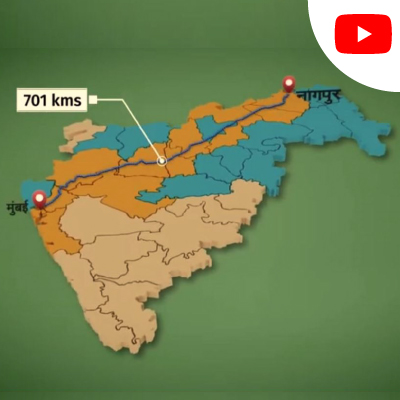
Mega Opportunities coming along Samruddhi Mahamarg
ROADS & HIGHWAYS

Mega Opportunities coming along Samruddhi Mahamarg

As updated on July 29, 2020, almost as much as 40 per cent work of the Samruddhi Mahamarg has been successfully completed and the highway lane from Igatpuri to Nagpur (623 km) will be operational beginning from December 2021. The construction of the remaining 78 km stretch located in Thane is expected to be postponed by three to four months. It has been reported that quite a few portions of the route in Vidarbha, including 10 new towns, and at least one of the 16 stretches of the road will be ready for commercial use by June 2021. Along the Samruddhi Mahamarg, optical fiber web, natural gas pipelines promoting gas-based industries and solar power projects up to around 250-300 MW will be created.

Passing through 10 districts, 26 tehsils, and 390 villages, the gigantic expressway will pave way for the development of around 20 townships and nodes along its way. An eight-phase programme has been set up for the above mentioned by the MSRDC, the organisation responsible for the execution of this project. The first five phases of the same have been completed. It includes geo-referenced mapping, inception, the study of exiting land use and the market demand assessment, drafting a development plan, and preparing the final report. Further, 93 out of 153 structures have been completed in Wardha, 151 out of 199 have been completed in Amravati and 96 out of 209 have been completed in Washim.

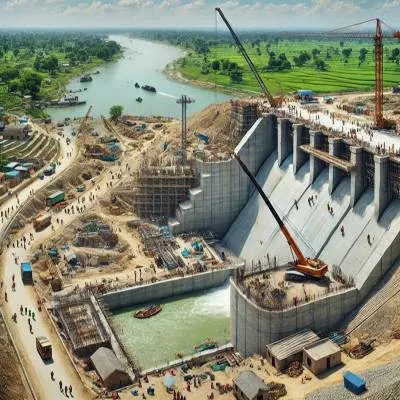
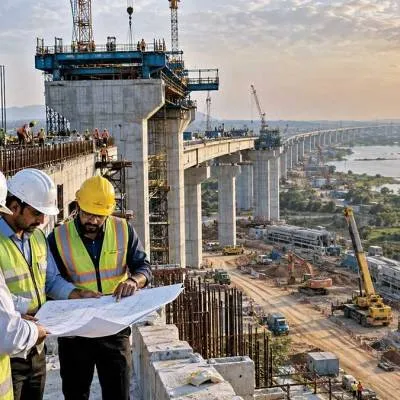
Despite the lockdown, the construction work of the expressway continued with special permission from the Central Government. The roadside camps where the workers resided were thoroughly sanitised and their COVID-19 tests were conducted, none being positive. However, the pace of the project had dropped as a fraction of the workers left for their hometowns. It was reported that out of 1,699 structures along the 701-km expressway including bridges, tunnels, and flyovers, 662 were completed and 461 were in progress in March 2020. Three of the eight rails-over-bridges and 31 of the 65 major bridges were under construction. Further, 134 minor bridges have been completed while 45 were in progress.

Furthermore, 8,311 hectares – which are 86 per cent of the total land required for the Samruddhi Mahamaarg – had been acquired in March 2020. The work has been divided among 14 contractors including giant corporations such as Reliance Infrastructure and Larsen & Toubro into 16 packages, with Megha Engineering and Infrastructure and Navayuga Engineering responsible for two of these packages. The total budget allocated for this project is Rs 450 billion. The state government had also provided a compensatory sum of Rs 69.11 billion to those affected by the project.

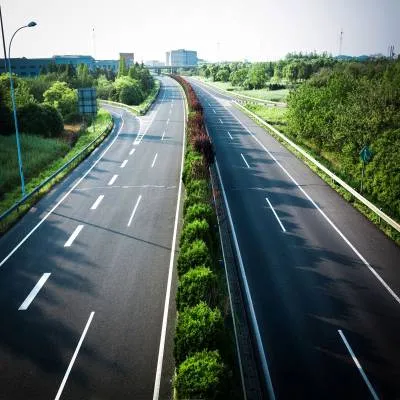
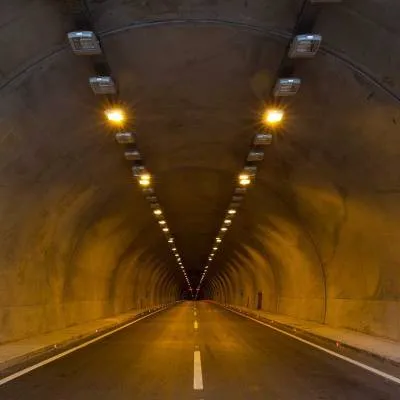
The Samruddhi expressway was primarily designed with keen precision to ensure a faster, more efficient journey of eight hours only. The expressway is flanked by four lanes on each side. It has a width of 120 m and a central median of 22.5 m. The expressway is expected to feature extensive landscaping, bridge beautification, enhanced street, and tunnel lighting rainwater harvesting and wayside amenities every 40 km. It offers a speed limit of 150 km per hour on flat terrain and 120 km per hour on an incline. The corridor of the Samruddhi Mahamarg is being built from scratch with minimal demolition of existing structures.

Undoubtedly, the project will prove to be a crucial step for the future success of Maharashtra's rural areas.

As updated on July 29, 2020, almost as much as 40 per cent work of the Samruddhi Mahamarg has been successfully completed and the highway lane from Igatpuri to Nagpur (623 km) will be operational beginning from December 2021. The construction of the remaining 78 km stretch located in Thane is expected to be postponed by three to four months. It has been reported that quite a few portions of the route in Vidarbha, including 10 new towns, and at least one of the 16 stretches of the road will be ready for commercial use by June 2021. Along the Samruddhi Mahamarg, optical fiber web, natural gas pipelines promoting gas-based industries and solar power projects up to around 250-300 MW will be created. Passing through 10 districts, 26 tehsils, and 390 villages, the gigantic expressway will pave way for the development of around 20 townships and nodes along its way. An eight-phase programme has been set up for the above mentioned by the MSRDC, the organisation responsible for the execution of this project. The first five phases of the same have been completed. It includes geo-referenced mapping, inception, the study of exiting land use and the market demand assessment, drafting a development plan, and preparing the final report. Further, 93 out of 153 structures have been completed in Wardha, 151 out of 199 have been completed in Amravati and 96 out of 209 have been completed in Washim. Despite the lockdown, the construction work of the expressway continued with special permission from the Central Government. The roadside camps where the workers resided were thoroughly sanitised and their COVID-19 tests were conducted, none being positive. However, the pace of the project had dropped as a fraction of the workers left for their hometowns. It was reported that out of 1,699 structures along the 701-km expressway including bridges, tunnels, and flyovers, 662 were completed and 461 were in progress in March 2020. Three of the eight rails-over-bridges and 31 of the 65 major bridges were under construction. Further, 134 minor bridges have been completed while 45 were in progress. Furthermore, 8,311 hectares – which are 86 per cent of the total land required for the Samruddhi Mahamaarg – had been acquired in March 2020. The work has been divided among 14 contractors including giant corporations such as Reliance Infrastructure and Larsen & Toubro into 16 packages, with Megha Engineering and Infrastructure and Navayuga Engineering responsible for two of these packages. The total budget allocated for this project is Rs 450 billion. The state government had also provided a compensatory sum of Rs 69.11 billion to those affected by the project. The Samruddhi expressway was primarily designed with keen precision to ensure a faster, more efficient journey of eight hours only. The expressway is flanked by four lanes on each side. It has a width of 120 m and a central median of 22.5 m. The expressway is expected to feature extensive landscaping, bridge beautification, enhanced street, and tunnel lighting rainwater harvesting and wayside amenities every 40 km. It offers a speed limit of 150 km per hour on flat terrain and 120 km per hour on an incline. The corridor of the Samruddhi Mahamarg is being built from scratch with minimal demolition of existing structures. Undoubtedly, the project will prove to be a crucial step for the future success of Maharashtra's rural areas.

Next Story
Infrastructure Urban

Mount Expands Tumkur Facility with New Automated Panel, PEB Lines

Mount Roofing & Structures Private Limited, one of India's fastest-growing manufacturers in PUF and a leading solutions provider across pre-engineered building (PEB) and polycarbonate sheets, simultaneously inaugurated its second fully automated continuous sandwich panel manufacturing line and a new PEB manufacturing plant at its integrated campus in Tumkur.The milestone expansion, part of a total investment of Rs 250 crore, marks a significant advancement in the company's commitment to engineered performance, manufacturing scale, and industrial growth. The integrated facility spans approx..

Next Story
Infrastructure Transport

India Becomes First to Produce Bio-Bitumen for Roads

India has become the first country in the world to commercially produce bio-bitumen for use in road construction, according to Road, Transport and Highways Minister Nitin Gadkari. Bitumen, a black and viscous hydrocarbon derived from crude oil, is a key binding material in road building, and the bio-based alternative is expected to significantly improve the sector’s environmental footprint.Addressing the CSIR Technology Transfer Ceremony in New Delhi, Mr Gadkari congratulated Council of Scientific and Industrial Research on achieving the milestone, noting that the initiative would help curb ..

Next Story
Infrastructure Urban

HILT Policy Seen Boosting Telangana Revenue Sharply

The Hyderabad Industrial Land Transformation (HILT) Policy is expected to generate around Rs 1.08 billion in revenue for the Telangana state exchequer, according to Deputy Chief Minister Bhatti Vikramarka Mallu. Speaking in the Telangana Legislative Assembly, he said the policy would be implemented within a six-month timeframe in a transparent manner, with uniform rules applicable to all stakeholders. Mr Vikramarka noted that without the HILT Policy, the state would have earned only about Rs 1.2 million per acre. Under the new framework, however, revenue is projected to rise sharply to Rs 70 ..

Advertisement

Subscribe to Our Newsletter

Get daily newsletters around different themes from Construction world.

STAY CONNECTED

Advertisement

Advertisement

Advertisement

Advertisement

Open In App