Net-Zero Buildings
Real Estate

Net-Zero Buildings

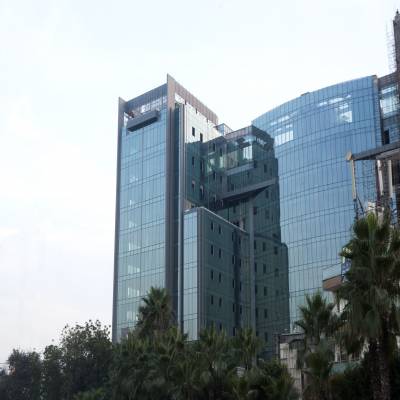
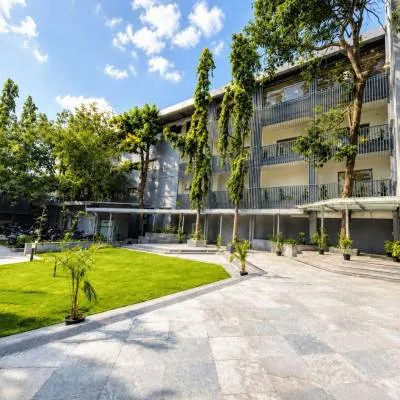
Photo: For representational purpose

Global warming has become a prime concern in current times. It has been researched that buildings are a prime source of the greenhouse gas emissions that are undermining the climatic conditions, thus accounting for nearly about forty percent of carbon pollution. Right from forgetting to turn off the lights, to running appliances and electronics continuously around-the-clock, your home could be a part contributing to this environmental problem. In order to chip away at the issue of global warming in our country, the Indian realty segment is taking all the required measures to follow an aggressive approach to facilitate in conserving the environment. Environmentally accountable and resource-efficient buildings in present times have become an indispensable part and future of the property industry. Today, the government, developers, builders and end-users comprehend the requirement and vitality of green buildings and are executing sustainable practices at a rapid stride during the process of property construction itself. They are actively taking the required steps to condense the carbon footprint by boosting sustainability through net-zero energy homes or zero energy homes. This futuristic trend of green buildings is fast catching traction particularly as the expenses for rooftop solar photovoltaics and LED lighting continue to tumble. A green building is most probable to flourish in its objective if ecological features are proposed and amalgamated right at the start.  
 
What exactly is a net-zero building?
          
Presently, zero energy homes are undeniably becoming the most predominant trend in the Indian property market. With the global climate fluctuation becoming a major pressing issue, it demands significant and instantaneous action to be taken. It is nothing but the vertical architectures that are mostly responsible for consuming a wide chunk from the total energy production. Taking this into consideration, the prevailing scenario calls for a rapid action pointing towards a reduced carbon future, which in turn makes net-zero energy homes as the keystones, one that is not reliant on the usage of fossil fuels. By disregarding the use of energy that results from fossil fuels, net-zero homes help in avoiding greenhouse gas emissions that are associated with electricity production, thus safeguarding the environment. These homes generate as much clean, renewable electricity as they consume, thus lending a net-zero annual energy impact. This is achieved by assimilating environmentally maintainable aspects like rooftop solar panels that can collect rainwater to condense the usage of treated water, battery storage, solar water heating, electric vehicle charging stations, geothermal heating, wind turbines, heat recovery systems, energy efficient LED lighting and airtight insulation to curb the dependency and usage of the HVAC system. These technologies can be used to attain a net-zero status.


Solar power is the key for net-zero homes: The key design and strategic-placement element of these homes are photovoltaic solar panels. The solar panels are tactically positioned to absorb most of the sun while they generate the power required for the home. A net zero home will also have a solar-powered water heater, thus mounting sustainability. Hence, these homes are built to use as less energy as possible, with solar-generated energy serving the modest requirements. 
 
Futuristic trends that should be a part of net-zero homes
 
Installation of greywater systems for residential landscaping: In the hot summer months, most of us end up using more amount of water for watering our landscapes and gardens. Installing greywater systems for residential purposes can offer an operative irrigation system by turning the water into recyclable water, thus saving you up to 40,000 litres of water per year and reducing the encumbrance on your septic system. Being inexpensive and extremely easy-to-install, these futuristic systems offer overflow protection along with three-dimensional filter webs that avert harmful waste particles like lint and debris, from getting deposited up in the lawn or garden.
 
Low-flow toilets: The flushing of a toilet is known to account for the major portion of your housing water usage. With most areas of the country facing a shortage of water with restricted water availability, fixing a low flush toilet can facilitate in easing the burden of water usage. Its installation offers a distinct benefit to your home if listed on the Indian real estate market. The installation of low-cost toilets in the net-zero properties is an indication that Indian realty developers are not just cost-conscious but are also environmentally aware, thus promoting sustainable living.
 
High-efficiency windows: The loss of energy occurs through conduction, radiation, convection currents, and air leakage, but energy-efficient windows are a functional way to combat these processes and cut back on energy usage. Energy-efficient windows have been considered as a way to condense your home’s energy loss. After all, your regular pane of glass fails to do much to keep your room warm or cold, based on what's desired for the season. So, energy-efficient windows are well worth considering for homeowners looking to regulate their costs. A low emissivity window coating composed from approximately invisible metallic oxides on the glass pane overturns the radiant heat flow all through the window. While selecting energy-efficient windows, one must take into consideration the specifications like U-factor, Solar heat-gain coefficient (SHGC), Visible transmittance (VT), Light-to-solar gain (LSG), gas fills and air leakage, Low-emissivity (low-e) glazes. These windows can help in decreasing the requisite for artificial lighting by letting in natural light, which will also facilitate in saving on energy costs.
 
Reasons to go net-zero

Nearly about 40 per cent of the energy in India is consumed by residential and commercial buildings. The total energy that has been consumed can be reduced by bringing in energy-efficient plans during the stage of design, construction and operations. An important module of the invention to achieve net-zero energy performance is a profound drive towards the sustainable conservation of nature. Net-zero energy buildings take benefit of daytime temperature swings, and obtainable naturally deposited thermal energy, thus seizing and retaining what is required to serve the building. Most of the key technologies which are a part of net-zero energy buildings react to natural phenomena, such as evaporative cooling, stack effect, and the gas/liquid/solid phase variations.
 
Energy efficiency

Net zero energy buildings are designed and built with a wide range of energy-efficient features, such as denser walls and windows that are triple paned to facilitate it to create as much energy from its solar collectors as the residence makes use of over the course of a year – thus resulting in a zero “net” energy bill. The measures of energy efficiency comprise of design tactics and aspects that diminish the demand-side loads such as air barrier systems, daylighting, sunlight control and shielding devices, prudent selection of windows and finishing, passive solar heating, natural ventilation and efficient conservation of water resources. Once the competency measures have been assimilated, the remaining energy requisites can be met by making utilization of renewable energy technologies.
 
Due to its zero net energy consumption these buildings advance energy efficiency at homes, thus taking resource saving to the next level. They deliver advanced indoor air quality through an Energy Recovery Ventilation (ERV) or Heat Recovery Ventilation (HRV) system that filters and cleans the air. The constructive implementation of green building approaches can make the most of both the financial and recyclable performances of buildings, thus leading Indian real estate a green prospect in the forthcoming years.
 
The green net-zero buildings are essential for sustainable development

These buildings bestow end-users with a lot of rewards in the long term over old-style building constructions. One can cut down the dependence on public services such as the power grid owing to the utilization of solar panels for energy and save up to fifty to seventy-five percent on the costs of heating and cooling. This also decreases the reliance on fossil fuels and lessens the levels of atmospheric contaminants. Additionally, the air circulation in net-zero buildings is a lot purer, unadulterated healthier, cleaner and fresher as there are no poisonous materials used during the construction stage. With our cities slowly moving towards becoming more vertical, going net-zero seems to be an obvious solution.
 
Net-zero energy buildings are all set to represent the commencement of a new era of building design evolution. Net-zero energy is also a very convincing concept to the general public, which manifests the central requirements of dramatic energy fall and the generation of renewable energy into one simple idea. While it can be very perplexing to excite the average person about the sometimes obscure world of energy efficiency, net-zero energy has an established capability to stimulate and involve people in taking charge towards conservation of our environment and crucial resources. These eco-friendly buildings bring forward a can-do spirit not just among the realty developers but also the community of homebuyers which amalgamates the best of applied technology and design. It is also a handy and stirring response to builders and end-users beleaguered by a sense of bleakness around larger energy usage and climate problems.

About the Author:
Apurva Gupta is the Chief Marketing Officer at Rivali Park CCI Projects.

Photo: For representational purposeGlobal warming has become a prime concern in current times. It has been researched that buildings are a prime source of the greenhouse gas emissions that are undermining the climatic conditions, thus accounting for nearly about forty percent of carbon pollution. Right from forgetting to turn off the lights, to running appliances and electronics continuously around-the-clock, your home could be a part contributing to this environmental problem. In order to chip away at the issue of global warming in our country, the Indian realty segment is taking all the required measures to follow an aggressive approach to facilitate in conserving the environment. Environmentally accountable and resource-efficient buildings in present times have become an indispensable part and future of the property industry. Today, the government, developers, builders and end-users comprehend the requirement and vitality of green buildings and are executing sustainable practices at a rapid stride during the process of property construction itself. They are actively taking the required steps to condense the carbon footprint by boosting sustainability through net-zero energy homes or zero energy homes. This futuristic trend of green buildings is fast catching traction particularly as the expenses for rooftop solar photovoltaics and LED lighting continue to tumble. A green building is most probable to flourish in its objective if ecological features are proposed and amalgamated right at the start.   What exactly is a net-zero building?          Presently, zero energy homes are undeniably becoming the most predominant trend in the Indian property market. With the global climate fluctuation becoming a major pressing issue, it demands significant and instantaneous action to be taken. It is nothing but the vertical architectures that are mostly responsible for consuming a wide chunk from the total energy production. Taking this into consideration, the prevailing scenario calls for a rapid action pointing towards a reduced carbon future, which in turn makes net-zero energy homes as the keystones, one that is not reliant on the usage of fossil fuels. By disregarding the use of energy that results from fossil fuels, net-zero homes help in avoiding greenhouse gas emissions that are associated with electricity production, thus safeguarding the environment. These homes generate as much clean, renewable electricity as they consume, thus lending a net-zero annual energy impact. This is achieved by assimilating environmentally maintainable aspects like rooftop solar panels that can collect rainwater to condense the usage of treated water, battery storage, solar water heating, electric vehicle charging stations, geothermal heating, wind turbines, heat recovery systems, energy efficient LED lighting and airtight insulation to curb the dependency and usage of the HVAC system. These technologies can be used to attain a net-zero status.Solar power is the key for net-zero homes: The key design and strategic-placement element of these homes are photovoltaic solar panels. The solar panels are tactically positioned to absorb most of the sun while they generate the power required for the home. A net zero home will also have a solar-powered water heater, thus mounting sustainability. Hence, these homes are built to use as less energy as possible, with solar-generated energy serving the modest requirements.  Futuristic trends that should be a part of net-zero homes Installation of greywater systems for residential landscaping: In the hot summer months, most of us end up using more amount of water for watering our landscapes and gardens. Installing greywater systems for residential purposes can offer an operative irrigation system by turning the water into recyclable water, thus saving you up to 40,000 litres of water per year and reducing the encumbrance on your septic system. Being inexpensive and extremely easy-to-install, these futuristic systems offer overflow protection along with three-dimensional filter webs that avert harmful waste particles like lint and debris, from getting deposited up in the lawn or garden. Low-flow toilets: The flushing of a toilet is known to account for the major portion of your housing water usage. With most areas of the country facing a shortage of water with restricted water availability, fixing a low flush toilet can facilitate in easing the burden of water usage. Its installation offers a distinct benefit to your home if listed on the Indian real estate market. The installation of low-cost toilets in the net-zero properties is an indication that Indian realty developers are not just cost-conscious but are also environmentally aware, thus promoting sustainable living. High-efficiency windows: The loss of energy occurs through conduction, radiation, convection currents, and air leakage, but energy-efficient windows are a functional way to combat these processes and cut back on energy usage. Energy-efficient windows have been considered as a way to condense your home’s energy loss. After all, your regular pane of glass fails to do much to keep your room warm or cold, based on what's desired for the season. So, energy-efficient windows are well worth considering for homeowners looking to regulate their costs. A low emissivity window coating composed from approximately invisible metallic oxides on the glass pane overturns the radiant heat flow all through the window. While selecting energy-efficient windows, one must take into consideration the specifications like U-factor, Solar heat-gain coefficient (SHGC), Visible transmittance (VT), Light-to-solar gain (LSG), gas fills and air leakage, Low-emissivity (low-e) glazes. These windows can help in decreasing the requisite for artificial lighting by letting in natural light, which will also facilitate in saving on energy costs. Reasons to go net-zeroNearly about 40 per cent of the energy in India is consumed by residential and commercial buildings. The total energy that has been consumed can be reduced by bringing in energy-efficient plans during the stage of design, construction and operations. An important module of the invention to achieve net-zero energy performance is a profound drive towards the sustainable conservation of nature. Net-zero energy buildings take benefit of daytime temperature swings, and obtainable naturally deposited thermal energy, thus seizing and retaining what is required to serve the building. Most of the key technologies which are a part of net-zero energy buildings react to natural phenomena, such as evaporative cooling, stack effect, and the gas/liquid/solid phase variations. Energy efficiencyNet zero energy buildings are designed and built with a wide range of energy-efficient features, such as denser walls and windows that are triple paned to facilitate it to create as much energy from its solar collectors as the residence makes use of over the course of a year – thus resulting in a zero “net” energy bill. The measures of energy efficiency comprise of design tactics and aspects that diminish the demand-side loads such as air barrier systems, daylighting, sunlight control and shielding devices, prudent selection of windows and finishing, passive solar heating, natural ventilation and efficient conservation of water resources. Once the competency measures have been assimilated, the remaining energy requisites can be met by making utilization of renewable energy technologies. Due to its zero net energy consumption these buildings advance energy efficiency at homes, thus taking resource saving to the next level. They deliver advanced indoor air quality through an Energy Recovery Ventilation (ERV) or Heat Recovery Ventilation (HRV) system that filters and cleans the air. The constructive implementation of green building approaches can make the most of both the financial and recyclable performances of buildings, thus leading Indian real estate a green prospect in the forthcoming years. The green net-zero buildings are essential for sustainable developmentThese buildings bestow end-users with a lot of rewards in the long term over old-style building constructions. One can cut down the dependence on public services such as the power grid owing to the utilization of solar panels for energy and save up to fifty to seventy-five percent on the costs of heating and cooling. This also decreases the reliance on fossil fuels and lessens the levels of atmospheric contaminants. Additionally, the air circulation in net-zero buildings is a lot purer, unadulterated healthier, cleaner and fresher as there are no poisonous materials used during the construction stage. With our cities slowly moving towards becoming more vertical, going net-zero seems to be an obvious solution. Net-zero energy buildings are all set to represent the commencement of a new era of building design evolution. Net-zero energy is also a very convincing concept to the general public, which manifests the central requirements of dramatic energy fall and the generation of renewable energy into one simple idea. While it can be very perplexing to excite the average person about the sometimes obscure world of energy efficiency, net-zero energy has an established capability to stimulate and involve people in taking charge towards conservation of our environment and crucial resources. These eco-friendly buildings bring forward a can-do spirit not just among the realty developers but also the community of homebuyers which amalgamates the best of applied technology and design. It is also a handy and stirring response to builders and end-users beleaguered by a sense of bleakness around larger energy usage and climate problems.About the Author:Apurva Gupta is the Chief Marketing Officer at Rivali Park CCI Projects.

Next Story
Infrastructure Urban

VECV Sales Rise 7.8 Per Cent In May 2026

VE Commercial Vehicles recorded sales of 7,978 units in May 2026, compared to 7,401 units in May 2025, registering growth of 7.8 per cent. This included 7,789 units from the Eicher brand and 189 units from the Volvo brand.Eicher branded trucks and buses reported sales of 7,789 units during the month, up 7.3 per cent from 7,258 units a year earlier. In the domestic commercial vehicle market, Eicher sales rose 9.1 per cent to 7,375 units from 6,758 units in May 2025.Exports declined 17.2 per cent to 414 units from 500 units in the corresponding month last year. Volvo Trucks and Volvo Buses recor..

Next Story
Infrastructure Urban

Table Space Strengthens DESYN Leadership Team

Table Space has announced strategic leadership appointments within DESYN, its integrated Design and Build business, as it looks to strengthen operations across key enterprise and GCC markets in India. DESYN was launched as a strategic extension of Table Space’s workspace solutions portfolio to meet rising demand for agile, high-quality and rapidly deployable enterprise workspaces.Shruti Ookabhoy has joined DESYN as Executive Director and will lead the Design vertical, focusing on design capability, operational excellence and team development across markets. She brings over 22 years of experi..

Next Story
Infrastructure Transport

Concord Associate Bags Rs 2.79 Bn Kavach Order

Concord Control Systems said its associate company, Progota India, has received a Rs 2.79 bn domestic order from Indian Railways for the supply, installation, testing and commissioning of on-board Kavach 4.0 loco equipment.The order is scheduled for execution within 12 months and strengthens Concord’s role in India’s railway safety and signalling ecosystem. Kavach is India’s indigenous automatic train protection system, designed to improve operational safety by helping prevent signal passing at danger and reducing collision risks.Gaurav Lath, Joint Managing Director, Concord Control Syst..

Advertisement

Subscribe to Our Newsletter

Get daily newsletters around different themes from Construction world.

STAY CONNECTED

Advertisement

Advertisement

Advertisement