
Building flexibly for working flexibility
Real Estate

Building flexibly for working flexibility

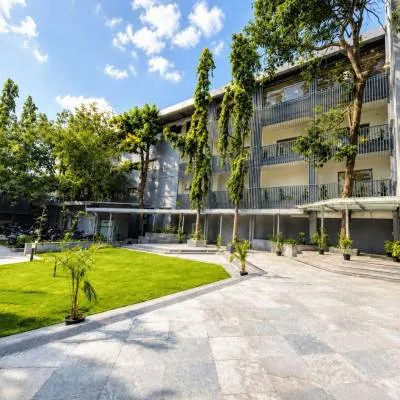
The idea of a workplace has significantly evolved over time in terms of space utilisation, equipment placement and automation. Particularly over the past decade, there has been a special focus on office design to enhance employee productivity, as seen in our roundtables and featured in our stories over the past year. As the smart office projects featured in our column ‘Special Project-Green’ demonstrate, offices have begun to focus increasingly on natural light, indoor air quality, greenery, lighting and HVAC, among others. 

Co-working spaces have started to put a lot of thought into design to suit the requirements of tenants. The industry is seeing an increase in the ‘design, build and operate’ model, where companies can focus on their core product or service and outsource the responsibility of designing, building and managing office infrastructure to workspace solution providers. Co-working providers can then use their expertise in international design and technology to greatly enhance user experience and make workspaces fun, enjoyable and productive.

Finding the right aesthetic and creating the right balance of creativity and functionality lie at the heart of co-working design. “Exposed ceilings, engineered wood flooring, customised lights, walls with a raw concrete finish, modern furniture, lots of glass, and the creative use of natural light and indoor greens are ideas finding favour with co-working designers and architects today,” says Harsh Lambah, Country Manager-India, IWG Plc. The design sensibility of Spaces, for example, is deeply inspired by its Nordic heritage. “Our design is recognisable, consistent and inspirational, while being customised to each Spaces location around the world,” he adds. “In addition to avant-garde styling, each Spaces centre is infused with a sense of calm and quiet that encourages creative thinking and calm workflow.”

Design trends in co-working spaces are focused on creating collaborative, flexible and personalised spaces, with a blend of design and aesthetics that meet every user’s visual and psychological acceptance. “We have designed minimalistic yet vibrant spaces exhibiting the energy of the millennial workforce by offering workspaces with collaboration zones, meeting lounges, activity-based settings and phone booths,” says Amit Ramani, CEO & Founder, Awfis. “The inclusion of artificial intelligence (AI) will be significant in coming years, aiding new-age, technology-enabled smart workspaces.”

As CoWrks’ spaces are designed to cater to all working styles, says Sidharth Menda, Founder & Vice Chairman, CoWrks. “Members can choose from ergonomic desks, private all-glass enclosures, comfortable lounge seating, uniquely designed meeting rooms and prime event space. Our spaces also include fuel bars, complete with gourmet coffee and bar-style seating that encourage conversation. Our spaces are infused with natural light and our aesthetic is engaging and modern, with bold and inspirational artwork on the walls.” 

Across co-working offices, some elements remain constant: break-out spaces, lounge areas, a well-serviced pantry, gaming zones and varied reading material. “A key selling point for co-working spaces is the presence of a fluid, interactive design that encourages collaboration and productivity,” says Neetish Sarda, Founder, Smartworks. “Spaces designed to the needs of our clients while providing flexibility are a big draw. At the same time, a work environment that enhances creativity, innovation and collaboration is at the core of most designs. Open cubicles, natural light, funky innovative furniture, etc, tend to be common aspects.”

Most co-working spaces offer a number of features such as private offices, flexible workstations (hot desking), ready access to meeting rooms, and even virtual office services. As Shray Rattha, Co-Founder & Director, Workafella, tells us, “Each of our centres is aesthetically designed with soothing interiors, lighting conducive to a good working environment, custom-designed chairs to ensure lumbar support and easy access to all plug points to maximise comfort.”

SERAPHINA D’SOUZA

The idea of a workplace has significantly evolved over time in terms of space utilisation, equipment placement and automation. Particularly over the past decade, there has been a special focus on office design to enhance employee productivity, as seen in our roundtables and featured in our stories over the past year. As the smart office projects featured in our column ‘Special Project-Green’ demonstrate, offices have begun to focus increasingly on natural light, indoor air quality, greenery, lighting and HVAC, among others. Co-working spaces have started to put a lot of thought into design to suit the requirements of tenants. The industry is seeing an increase in the ‘design, build and operate’ model, where companies can focus on their core product or service and outsource the responsibility of designing, building and managing office infrastructure to workspace solution providers. Co-working providers can then use their expertise in international design and technology to greatly enhance user experience and make workspaces fun, enjoyable and productive.Finding the right aesthetic and creating the right balance of creativity and functionality lie at the heart of co-working design. “Exposed ceilings, engineered wood flooring, customised lights, walls with a raw concrete finish, modern furniture, lots of glass, and the creative use of natural light and indoor greens are ideas finding favour with co-working designers and architects today,” says Harsh Lambah, Country Manager-India, IWG Plc. The design sensibility of Spaces, for example, is deeply inspired by its Nordic heritage. “Our design is recognisable, consistent and inspirational, while being customised to each Spaces location around the world,” he adds. “In addition to avant-garde styling, each Spaces centre is infused with a sense of calm and quiet that encourages creative thinking and calm workflow.”Design trends in co-working spaces are focused on creating collaborative, flexible and personalised spaces, with a blend of design and aesthetics that meet every user’s visual and psychological acceptance. “We have designed minimalistic yet vibrant spaces exhibiting the energy of the millennial workforce by offering workspaces with collaboration zones, meeting lounges, activity-based settings and phone booths,” says Amit Ramani, CEO & Founder, Awfis. “The inclusion of artificial intelligence (AI) will be significant in coming years, aiding new-age, technology-enabled smart workspaces.”As CoWrks’ spaces are designed to cater to all working styles, says Sidharth Menda, Founder & Vice Chairman, CoWrks. “Members can choose from ergonomic desks, private all-glass enclosures, comfortable lounge seating, uniquely designed meeting rooms and prime event space. Our spaces also include fuel bars, complete with gourmet coffee and bar-style seating that encourage conversation. Our spaces are infused with natural light and our aesthetic is engaging and modern, with bold and inspirational artwork on the walls.” Across co-working offices, some elements remain constant: break-out spaces, lounge areas, a well-serviced pantry, gaming zones and varied reading material. “A key selling point for co-working spaces is the presence of a fluid, interactive design that encourages collaboration and productivity,” says Neetish Sarda, Founder, Smartworks. “Spaces designed to the needs of our clients while providing flexibility are a big draw. At the same time, a work environment that enhances creativity, innovation and collaboration is at the core of most designs. Open cubicles, natural light, funky innovative furniture, etc, tend to be common aspects.”Most co-working spaces offer a number of features such as private offices, flexible workstations (hot desking), ready access to meeting rooms, and even virtual office services. As Shray Rattha, Co-Founder & Director, Workafella, tells us, “Each of our centres is aesthetically designed with soothing interiors, lighting conducive to a good working environment, custom-designed chairs to ensure lumbar support and easy access to all plug points to maximise comfort.”SERAPHINA D’SOUZA

Next Story
Infrastructure Transport

India Becomes First to Produce Bio-Bitumen for Roads

India has become the first country in the world to commercially produce bio-bitumen for use in road construction, according to Road, Transport and Highways Minister Nitin Gadkari. Bitumen, a black and viscous hydrocarbon derived from crude oil, is a key binding material in road building, and the bio-based alternative is expected to significantly improve the sector’s environmental footprint.Addressing the CSIR Technology Transfer Ceremony in New Delhi, Mr Gadkari congratulated Council of Scientific and Industrial Research on achieving the milestone, noting that the initiative would help curb ..

Next Story
Infrastructure Urban

HILT Policy Seen Boosting Telangana Revenue Sharply

The Hyderabad Industrial Land Transformation (HILT) Policy is expected to generate around Rs 1.08 billion in revenue for the Telangana state exchequer, according to Deputy Chief Minister Bhatti Vikramarka Mallu. Speaking in the Telangana Legislative Assembly, he said the policy would be implemented within a six-month timeframe in a transparent manner, with uniform rules applicable to all stakeholders. Mr Vikramarka noted that without the HILT Policy, the state would have earned only about Rs 1.2 million per acre. Under the new framework, however, revenue is projected to rise sharply to Rs 70 ..

Next Story
Infrastructure Urban

India Post, MoRD Tie Up to Boost Rural Inclusion

The Department of Posts and the Ministry of Rural Development have signed a Memorandum of Understanding to accelerate rural transformation and expand financial, digital and logistics services for Self-Help Groups (SHGs) and rural households across India. The agreement was signed in the presence of Union Minister of Communications and Development of North Eastern Region Jyotiraditya M. Scindia and Union Minister of Rural Development and Agriculture and Farmers’ Welfare Shivraj Singh Chouhan. The collaboration aligns with the government’s “Dak Sewa, Jan Sewa” vision and seeks to repositi..

Advertisement

Subscribe to Our Newsletter

Get daily newsletters around different themes from Construction world.

STAY CONNECTED

Advertisement

Advertisement

Advertisement

Advertisement

Open In App