Infrastructure should precede residential development and not the other way round.
Real Estate

Infrastructure should precede residential development and not the other way round.

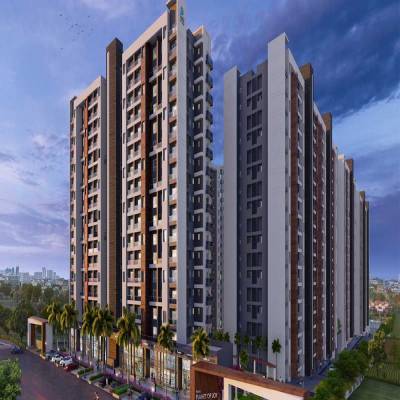
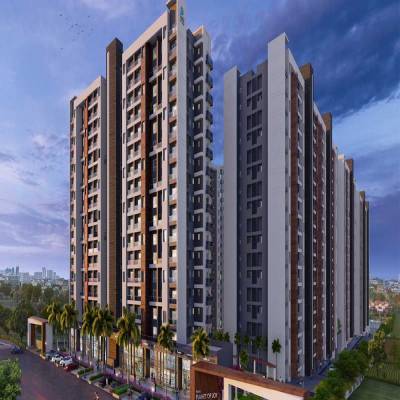
Sriram Mahadevan, Managing Director, JoyvilleShapoorji Housing, shares more on the potential of affordable housing in India and the company’s focus going forward with SHRIYAL SETHUMADHAVAN.

How do you view the availability of funds for project execution? 
For corporate developers, availability of funds has never been a challenge. The situation has not changed much, even during the current liquidity crunch witnessed overall in the financial market.

How do you view the construction opportunities in the sector for the next five years?
Demand for affordable housing has always been there; this lends itself to huge construction opportunities. The healthy pipeline of construction activities in the affordable segment will keep generating employment opportunities that, in turn, will fuel the GDP growth rate going forward. Thus, construction of affordable housing will surely contribute positively to the overall growth of the economy.

Any recommendations to give a further fillip to the sector?
Building affordable housing in far-flung areas with scanty connectivity and social infrastructure is not desirable as the target segment may not like to displace themselves and move to such a place. The solution is to fuel the infrastructure of metros connecting the far-flung areas through an efficient mass transport system, which would ensure that an increasing amount of landis made available in the market for development. Infrastructure should precede residential development and not the other way round. Approval timelines have remained a challenge for the real-estate sector. Single-window clearance with defined timelines will surely help the viability of the business and ensure more supplies are infused in the market.

How do you view growth in affordable housing in the coming five years? 
Joyville is catering to the mid-income segment, which is important in the overall growth story for the next five years in India. We are present in four metros in India so far and would like to focus on getting into other job-creating metros like Bengaluruand Hyderabad, apart from expanding in Mumbai, Pune and Delhi (NCR).

Sriram Mahadevan, Managing Director, JoyvilleShapoorji Housing, shares more on the potential of affordable housing in India and the company’s focus going forward with SHRIYAL SETHUMADHAVAN.How do you view the availability of funds for project execution? For corporate developers, availability of funds has never been a challenge. The situation has not changed much, even during the current liquidity crunch witnessed overall in the financial market.How do you view the construction opportunities in the sector for the next five years?Demand for affordable housing has always been there; this lends itself to huge construction opportunities. The healthy pipeline of construction activities in the affordable segment will keep generating employment opportunities that, in turn, will fuel the GDP growth rate going forward. Thus, construction of affordable housing will surely contribute positively to the overall growth of the economy.Any recommendations to give a further fillip to the sector?Building affordable housing in far-flung areas with scanty connectivity and social infrastructure is not desirable as the target segment may not like to displace themselves and move to such a place. The solution is to fuel the infrastructure of metros connecting the far-flung areas through an efficient mass transport system, which would ensure that an increasing amount of landis made available in the market for development. Infrastructure should precede residential development and not the other way round. Approval timelines have remained a challenge for the real-estate sector. Single-window clearance with defined timelines will surely help the viability of the business and ensure more supplies are infused in the market.How do you view growth in affordable housing in the coming five years? Joyville is catering to the mid-income segment, which is important in the overall growth story for the next five years in India. We are present in four metros in India so far and would like to focus on getting into other job-creating metros like Bengaluruand Hyderabad, apart from expanding in Mumbai, Pune and Delhi (NCR).

Next Story
Infrastructure Urban

Implementation Status of Jal Jeevan Mission

Since August 2019 the Government has implemented Jal Jeevan Mission to provide assured potable water through household tap connections in rural India. At the start of the mission only 32.3 million (mn) rural households, representing 16.7 per cent, were reported to have tap water connections. States and union territories have reported that 125.8 mn additional rural households have since been provided with tap connections. As a result, of about 193.6 mn rural households roughly 158.2 mn, or 81.71 per cent, are reported to have tap water supply at home.\n\nThe State, district and village level st..

Next Story
Infrastructure Urban

Jal Jeevan Mission Reaches Eighty One Per Cent Rural Coverage

The Government reported substantial progress under the Jal Jeevan Mission, launched in August 2019 to provide tap water to every rural household. At launch only 32.3 million (mn) rural households had tap connections and states and Union territories reported provision of 125.8 mn additional households by March 2026. Consequently, out of about 193.6 mn rural households around 158.2 mn, or 81.71 per cent, are reported to have tap water at home. The Finance Minister announced extension of the mission until 2028 in the 2025-26 budget speech. The Swachh Bharat Mission Grameen, launched in October 20..

Next Story
Infrastructure Urban

Empowering Local Governance for Sustainable Rural Water Supply

The Ministry of Jal Shakti has aligned the Jal Jeevan Mission (JJM) with the 73rd Amendment to strengthen village level planning and community ownership of water supply. Gram Panchayats, village water and sanitation committees and Pani Samitis are to plan, implement, manage and maintain piped water systems, with gram sabha processes formalising handover and oversight. Implementation support agencies including non government organisations, community based organisations and self help groups have been empanelled to train local committees and promote women participation. Under JJM, the department ..

Advertisement

Subscribe to Our Newsletter

Get daily newsletters around different themes from Construction world.

STAY CONNECTED

Advertisement

Advertisement

Advertisement