unWOOD transforms plastic waste into durable wood alternative
Products

unWOOD transforms plastic waste into durable wood alternative

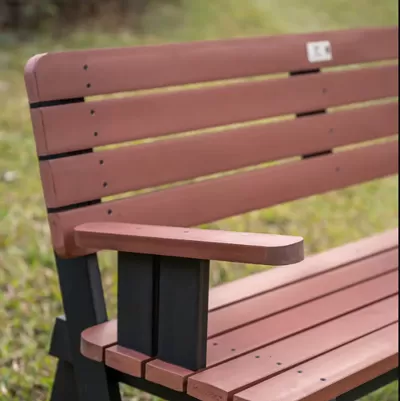
unWOOD, a breakthrough innovation, is converting hard-to-recycle plastic waste into a durable alternative to natural wood. Developed through a proprietary process called Intelligent Compounding, unWOOD uses a Macro Molecular Fiber Matrix (MMFM) structure to replicate the strength, look, and feel of hardwood—without the environmental cost.

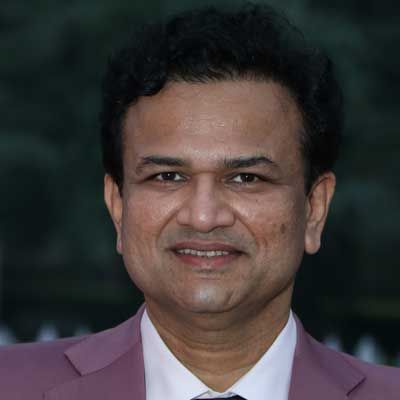
Conceptualised by Dr Babu Padmanabhan, the material addresses key flaws in traditional plastic recycling by consuming minimal energy, using zero water, and generating no microplastics. “Any application that introduces plastics into areas where it cannot be recovered and recycled is a no-go for us,” he says.

Each kilogram of unWOOD repurposes 500 grams of plastic waste and helps preserve fully matured trees. The company’s circular production model ensures products like school benches and outdoor furniture can be recycled repeatedly.

Through its “Benches for Change” CSR initiative, unWOOD works with NGOs to provide school furniture made from waste plastic. “This focus on design reduces transportation costs, expands access to remote locations, and enhances the overall customer experience,” adds CEO Vishal Mehta.

unWOOD is now scaling across public infrastructure and design sectors.

unWOOD, a breakthrough innovation, is converting hard-to-recycle plastic waste into a durable alternative to natural wood. Developed through a proprietary process called Intelligent Compounding, unWOOD uses a Macro Molecular Fiber Matrix (MMFM) structure to replicate the strength, look, and feel of hardwood—without the environmental cost.Conceptualised by Dr Babu Padmanabhan, the material addresses key flaws in traditional plastic recycling by consuming minimal energy, using zero water, and generating no microplastics. “Any application that introduces plastics into areas where it cannot be recovered and recycled is a no-go for us,” he says.Each kilogram of unWOOD repurposes 500 grams of plastic waste and helps preserve fully matured trees. The company’s circular production model ensures products like school benches and outdoor furniture can be recycled repeatedly.Through its “Benches for Change” CSR initiative, unWOOD works with NGOs to provide school furniture made from waste plastic. “This focus on design reduces transportation costs, expands access to remote locations, and enhances the overall customer experience,” adds CEO Vishal Mehta.unWOOD is now scaling across public infrastructure and design sectors.

Next Story
Infrastructure Transport

MMRDA advances 250 m on Orange Gate–Marine Drive tunnel

The Mumbai Metropolitan Region Development Authority (MMRDA) has completed 250 m of underground tunnelling for the Orange Gate–Marine Drive Urban Road Tunnel using India’s largest slurry shield tunnel boring machine (TBM) deployed for an urban road project.The project involves twin tunnels extending over 7 km beneath critical transport corridors, including Central Railway, Western Railway and Metro Line 3. The work requires high-precision engineering to navigate densely developed urban infrastructure.Once completed, the tunnel is expected to reduce travel time between Orange Gate and Marin..

Next Story
Infrastructure Urban

Hindustan Zinc Pays Rs 188.46 Billion in FY26

Hindustan Zinc contributed Rs 188.46 billion to the public exchequer in FY 2025-26, according to its 9th Tax Transparency Report. The contribution, equivalent to 46 per cent of the company’s revenue, included direct and indirect taxes, government royalties, dividends to the Government of India, withholding taxes and other statutory levies.The company’s five-year cumulative contribution to the exchequer stood at Rs 915.72 billion. In FY26, Hindustan Zinc reported revenue of Rs 408.44 billion, EBITDA of Rs 221.62 billion and profit after tax of Rs 138.32 billion. It also achieved its highest..

Next Story
Infrastructure Urban

World of Concrete India 2026 Opens in Mumbai

Informa Markets in India will host the 12th edition of World of Concrete India 2026 from 3–5 June 2026 at the Bombay Exhibition Centre, Mumbai. The specialised B2B exhibition will bring together manufacturers, suppliers, contractors, developers, architects, consultants, infrastructure companies, project leaders and government stakeholders.The event is expected to feature over 350 brands and more than 18,000 trade professionals. It will cover concrete and cement, dry mortar, precast technologies, formwork, construction chemicals, industrial and commercial flooring, scaffolding, safety solutio..

Advertisement

Subscribe to Our Newsletter

Get daily newsletters around different themes from Construction world.

STAY CONNECTED

Advertisement

Advertisement

Advertisement

-->