Railways Boost Cement Movement by 170 Per Cent and Eye Fly Ash
Cement

Railways Boost Cement Movement by 170 Per Cent and Eye Fly Ash

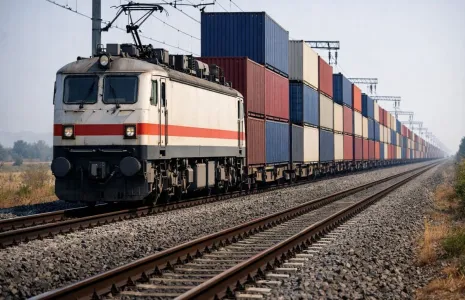
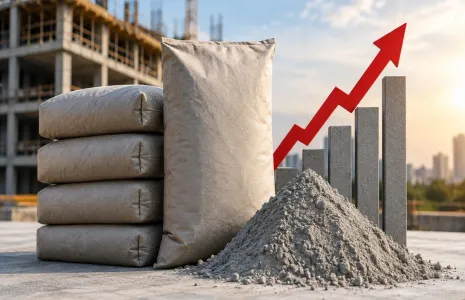
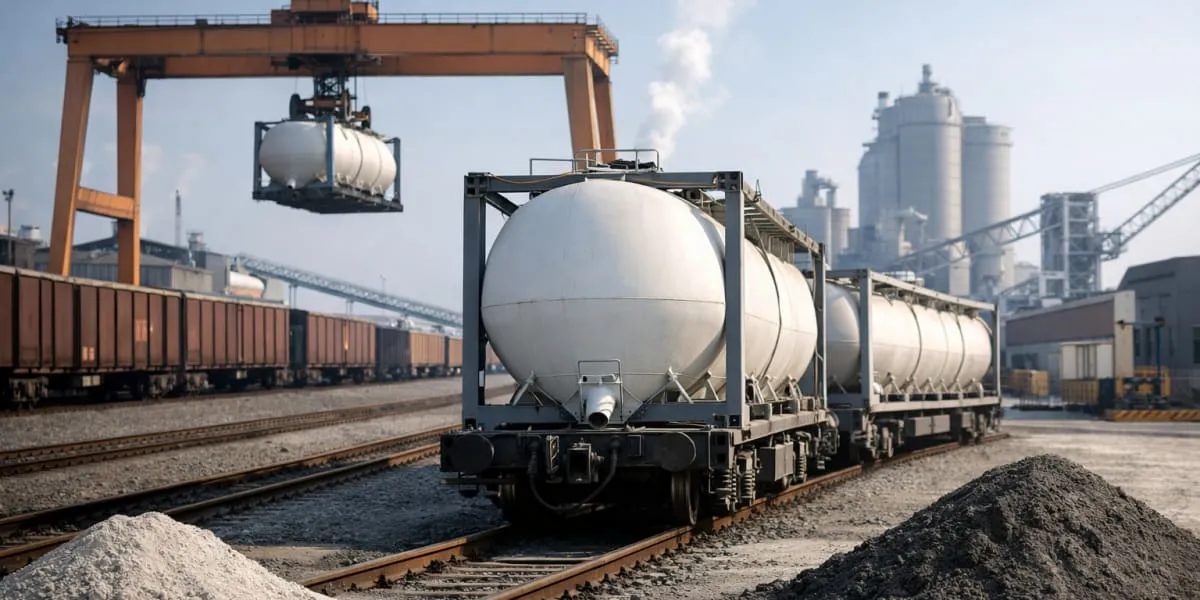
Indian Railways has recorded a 170 per cent rise in cement movement in the last four months after reforms launched in November to promote rail based bulk cement logistics. The Union Railway Minister, Ashwini Vaishnaw, reviewed the container sector reforms and their implementation and described the shift as improving plant to market efficiency. The reforms introduced customised bulk cement tank containers and a bulk cement terminal policy to support multimodal handling and door to door solutions.

The new system has simplified loading and unloading by enabling mechanised operations and by reducing package losses compared with bagged cement transport. Since cement can move directly from manufacturing centres to consumption centres in standardised tank containers compatible with Ready Mix Concrete machines, two stages of handling have been eliminated and material loss has been reduced. The standard shape of the containers facilitates faster turnaround and lowers logistics costs for suppliers and builders.

The improved freight turnaround is helping to lower the delivered cost of cement, which can ease pressure on housing costs for the poor and middle class and support affordable construction. The reform is said to be environment friendly as dust generation during material transfer has fallen and fuel consumption and emissions have reduced due to modal shift from road to rail. The Make in India tank containers are designed for seamless movement between train and trailer and to enable efficient door to door movement while cutting congestion on roads.

Building on the cement reforms, officials were urged to tap the fly ash transportation market to convert industrial waste into national wealth. The minister noted that nearly 300 million metric tonnes (mn t) of fly ash is produced in the country while only about 13 million t is transported by rail and asked officials to substantially increase Railways share to serve brick kilns, cement industries and construction sites. Wider utilisation of fly ash should reduce pollution, promote recycling and lower construction material costs while strengthening sustainable freight movement across infrastructure sectors.

Indian Railways has recorded a 170 per cent rise in cement movement in the last four months after reforms launched in November to promote rail based bulk cement logistics. The Union Railway Minister, Ashwini Vaishnaw, reviewed the container sector reforms and their implementation and described the shift as improving plant to market efficiency. The reforms introduced customised bulk cement tank containers and a bulk cement terminal policy to support multimodal handling and door to door solutions. The new system has simplified loading and unloading by enabling mechanised operations and by reducing package losses compared with bagged cement transport. Since cement can move directly from manufacturing centres to consumption centres in standardised tank containers compatible with Ready Mix Concrete machines, two stages of handling have been eliminated and material loss has been reduced. The standard shape of the containers facilitates faster turnaround and lowers logistics costs for suppliers and builders. The improved freight turnaround is helping to lower the delivered cost of cement, which can ease pressure on housing costs for the poor and middle class and support affordable construction. The reform is said to be environment friendly as dust generation during material transfer has fallen and fuel consumption and emissions have reduced due to modal shift from road to rail. The Make in India tank containers are designed for seamless movement between train and trailer and to enable efficient door to door movement while cutting congestion on roads. Building on the cement reforms, officials were urged to tap the fly ash transportation market to convert industrial waste into national wealth. The minister noted that nearly 300 million metric tonnes (mn t) of fly ash is produced in the country while only about 13 million t is transported by rail and asked officials to substantially increase Railways share to serve brick kilns, cement industries and construction sites. Wider utilisation of fly ash should reduce pollution, promote recycling and lower construction material costs while strengthening sustainable freight movement across infrastructure sectors.

Next Story
Infrastructure Energy

India Adds Record 44.61 GW Solar Capacity in FY2026

India’s solar sector reached a milestone in FY2026, with cumulative installed capacity crossing 150 GW and annual additions hitting a record 44.61 GW, exceeding the government target of 34 GW and nearly doubling FY2025’s 23.83 GW. Distributed Renewable Energy contributed 16.3 GW, while PPA and C&I segments accounted for 34 per cent and 30 per cent, respectively.India has risen from 9th globally in 2015 to 3rd in cumulative solar capacity by 2025 and is set to become the world’s second-largest solar market in annual installations in 2026. Seven states, led by Rajasthan and Gujarat, ac..

Next Story
Real Estate

Abhee Ventures unveils Scottish-themed 45-acre township in Bengaluru

Abhee Ventures, a leading South Indian real estate developer, has announced “Codename New Dimension,” a 45-acre Scottish-themed residential township at Gunjur on Whitefield–Sarjapur Road, Bengaluru. Strategically located between Whitefield and Sarjapur Road, Gunjur benefits from strong connectivity to the Outer Ring Road IT corridor, ITPL, EPIP, the upcoming Dommasandra Metro Station, and the proposed SWIFT City and Peripheral Ring Road.The township, designed in collaboration with London-based UHA London and India’s RSP Architects, offers low-density living with 85 per cent open spaces..

Next Story
Infrastructure Urban

Hindalco unveils Eternia experience centre for high-performance aluminium windows

Hindalco Industries, the metals flagship of the Aditya Birla Group, has launched its Eternia experience centre in Lajpat Nagar, New Delhi, highlighting its high-performance aluminium window systems designed for India’s evolving construction sector. The company is also expanding its manufacturing footprint in North India with a new Bilaspur facility.Eternia has emerged as one of the fastest-growing brands in system aluminium windows, registering nearly 65 per cent CAGR over the last three years. With a nationwide network of 170+ channel partners across 100+ cities, the brand serves homeowners..

Advertisement

Subscribe to Our Newsletter

Get daily newsletters around different themes from Construction world.

STAY CONNECTED

Advertisement

Advertisement

Advertisement

-->