+
The Deep Bid Trap
ECONOMY & POLICY

The Deep Bid Trap

In the last one year, bidding has turned negative. As per IMPACCT, the project intelligence database, across 99 projects in 22 states, 224 companies made negative bids. Of these 224 companies, 49 emerged as L1 winners. The maximum number of companies making negative bids came from Maharashtra, ...

In the last one year, bidding has turned negative. As per IMPACCT, the project intelligence database, across 99 projects in 22 states, 224 companies made negative bids. Of these 224 companies, 49 emerged as L1 winners. The maximum number of companies making negative bids came from Maharashtra, followed surprisingly by Arunachal Pradesh, Madhya Pradesh, Uttarakhand and Rajasthan. The deepest bid went up to minus 69 per cent.One way to look at this is that competition has become so intense that the private sector is pulling out all the stops to become highly efficient in deploying its resources. That, however, may be wishful thinking, as we all know that the truth in the brick-and-mortar sector is often quite different. So then, what are these companies thinking? If the authority issuing the tender has arrived at a cost of construction for a project that is conservative and reasonably close to reality, and yet a contractor agrees to take up the project at a price lower than the estimated cost by as much as 69 per cent, then there are only a few likely outcomes:The likelihood of the project being delivered as per specification would be highly doubtful.The possibility of the project being left incomplete would be high.The possibility of the project being delayed would be very high.The government may appear to benefit on paper in the short term, as its resources would not seem to be committed at the budgeted level. But as the project completion date draws near, the possibility of project failure would loom large. The authorities ask why they should not accept a negative bid if it is beneficial, arguing that perhaps the bidder has built in credits accruing from savings in materials lying in inventory, or from the availability of equipment and labour. But this, again, is wishful thinking. With average EPC margins of 5 to 10 per cent, how can a contractor magically create such inherent advantages? The authorities are clearly not willing to bell the cat and should ideally call off the bid, re-tender it, and announce that any negative bid deeper than minus 15 per cent will be rejected.There is another thought: in cases of such deep negative bids, the tendering authority should seek an additional 50 per cent bank guarantee on the portion below 15 per cent of the estimated cost. Such bids also make lenders wary, because project viability becomes questionable from the outset. Once financing comfort is shaken, the risk spreads far beyond the contractor and into the very bankability of the project.The reason we have landed here is that, in 2022, MoRTH and the NHAI relaxed thresholds to boost industry participation. Following extensive project delays—where over 50 per cent of HAM projects faced setbacks—the criteria were strengthened to filter out financially incapable bidders. The net worth requirement had been watered down to 5 per cent of the project cost and the annual turnover requirement brought down to 15 per cent of the estimated project cost. These and other parameters have since been tightened, but clearly not enough.We run the danger of subjecting such projects to the risk of failure, with potentially disastrous consequences. Deep negative bids also threaten the entire project value chain. When cash flows come under pressure, subcontractors, suppliers and workers are often the first to suffer, and the stress quickly transmits itself into poor execution, delayed payments and compromised quality.At the RAHSTA Conference, we have a line-up of brilliant speakers, and we will deliberate on efficient financing methods, including PPP, EPC, HAM, surety bonds and more. We will also delve into the contractors’ perspective and get to the depth of this deep-bid ravine. Alongside the 16th annual RAHSTA Conference, we will showcase the latest that the roads and highways sector has to offer. We are also organising a two-day Highway Construction Masterclass, with certification, at the venue. Details can be found in this issue on page xxx and xxx, respectively.RAHSTA is ready to receive you. Have you registered yet? See you there.

Related Stories

Gold Stories

Next Story
Infrastructure Urban

Assam Gets Approval For 350,000 PMAY Homes

Assam Chief Minister Himanta Biswa Sarma met Union Agriculture Minister Shivraj Singh Chouhan in New Delhi, where the minister handed an approval document for 310,000 new homes under the Pradhan Mantri Awas Yojana. The chief minister subsequently posted on X expressing gratitude and noting that the minister had formally handed approval for 380,000 homes as well. The release and the social media post contained varying figures, with broader references to 350,000 homes reported in some summaries. The approvals carry central assistance equivalent to Rs 50 billion (bn), corresponding to the five th..
Next Story
Infrastructure Urban

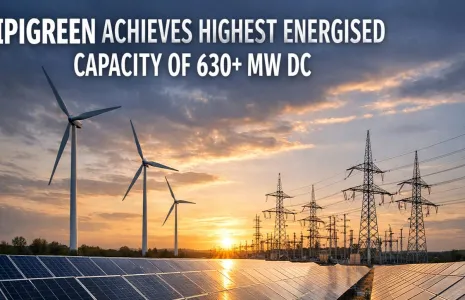
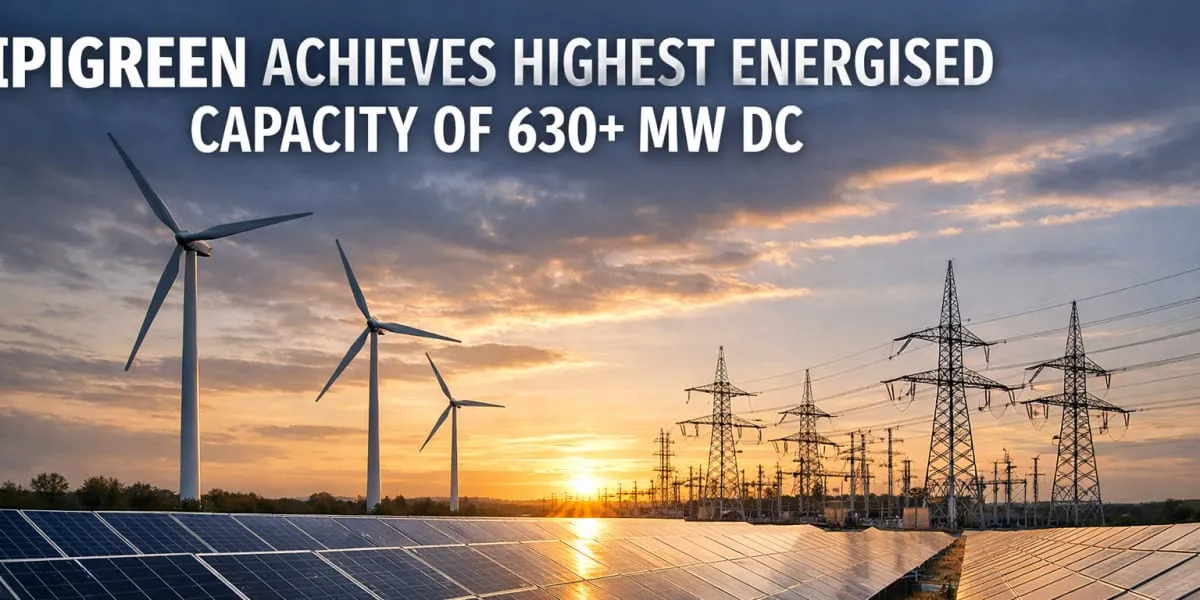
KPIGreen Achieves Highest Energised Capacity of 630+ MW DC

KPI Green Energy energised more than 630 MW DC of capacity in the June to August quarter, marking the highest quarterly addition in the company's history. The capacity was brought online across its Independent Power Producer (IPP) and Engineering, Procurement and Construction (EPC) businesses. The company said the achievement reflected the scale, speed and consistency of its project execution engine. The firm described the quarter as a material operational milestone since its founding. The milestone covers a diversified mix of IPP assets and projects executed under the EPC vertical, spanning u..
Next Story
Infrastructure Energy

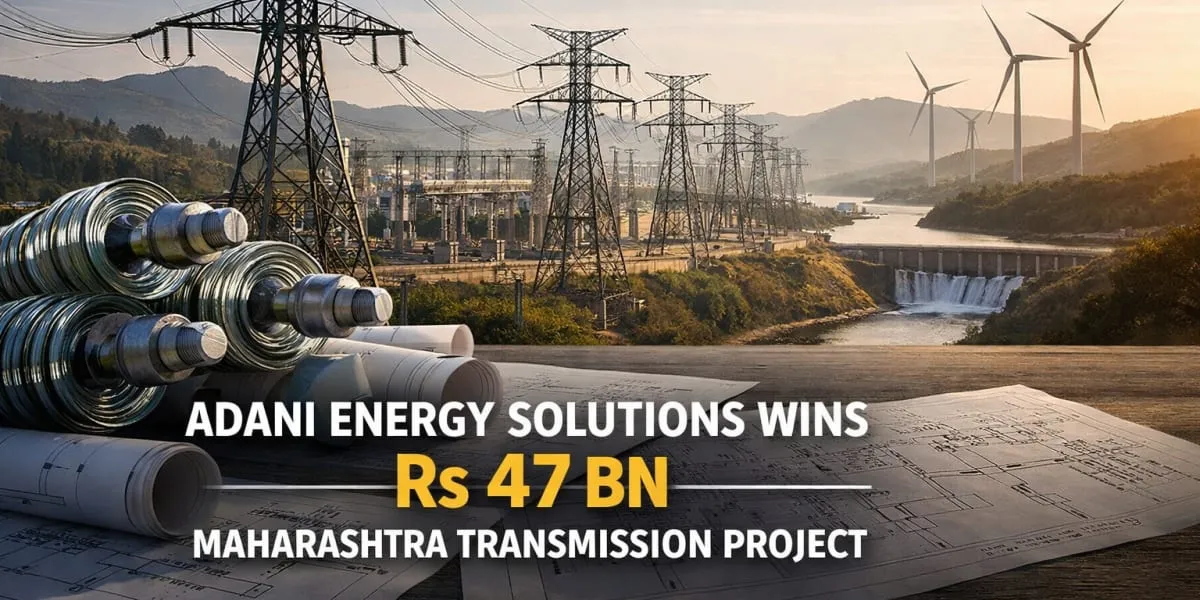
Adani Energy Solutions Wins Rs 47 bn Maharashtra Transmission Project

Adani Energy Solutions has won a transmission contract in Maharashtra valued at Rs 47 billion (Rs 47 bn) to evacuate 4,500 megawatt (MW) of renewable and storage power. The company informed exchanges that the project will facilitate pumped storage potential near Satara and strengthen the inter-regional corridor between the Western and Southern grids. The award follows a competitive bidding process and will support renewable energy evacuation to major load centres in the state. The scope includes establishment of a 765/400 kV substation at Satara, construction of a Kolhapur-Satara 765 kV double..

Advertisement

Subscribe to Our Newsletter

Get daily newsletters around different themes from Construction world.

STAY CONNECTED

Advertisement

SPECIAL OFFER
QR Code