



Government to Launch Coal Gasification Urea Policy
COAL & MINING

Government to Launch Coal Gasification Urea Policy

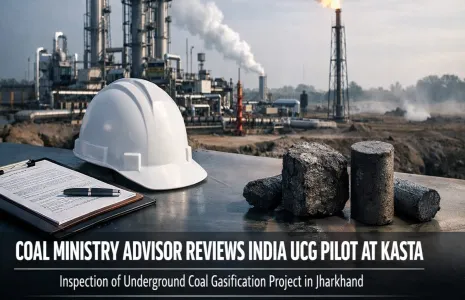
The government will unveil a coal gasification based policy for urea production within one month, aiming to promote the use of domestic coal feedstock in synthetic fertiliser manufacture. The move seeks to enhance self reliance in fertiliser supply and to provide an alternative route to natural gas based synthesis. Officials said the policy will set out technical standards, permitting norms and incentives for projects that adopt coal gasification technology. It will aim to attract investments from both public sector undertakings and private manufacturers.

The scheme will address logistical and economic challenges by linking coal supply arrangements with project financing and long term offtake agreements. Environmental safeguards will be integrated into the approval process to ensure emissions management and compliance with existing pollution standards. The policy framework will also examine the role of carbon capture technologies where feasible and the potential for co producing power or chemicals to improve project economics.

The initiative is aimed at reducing reliance on imported natural gas based urea plants and stabilising domestic fertiliser availability, especially during peak sowing seasons. The ministry intends to provide a clear tariff and incentive regime to improve bankability of projects and to reduce gestation risk for developers. Coordination with state governments will be sought for land, water and infrastructure support.

Industry associations and potential investors are to study the draft and submit project proposals under the new guidelines. Public sector fertiliser producers are positioned to play a role in early adoption to demonstrate feasibility and scale technology deployment. The government will monitor progress and allow periodic adjustments to the policy based on implementation feedback.

Stakeholders will be given a defined timeframe for clearances to reduce lead times and a single window mechanism will be proposed to expedite approvals. The policy is intended to complement broader energy and agricultural objectives nationally.

The government will unveil a coal gasification based policy for urea production within one month, aiming to promote the use of domestic coal feedstock in synthetic fertiliser manufacture. The move seeks to enhance self reliance in fertiliser supply and to provide an alternative route to natural gas based synthesis. Officials said the policy will set out technical standards, permitting norms and incentives for projects that adopt coal gasification technology. It will aim to attract investments from both public sector undertakings and private manufacturers. The scheme will address logistical and economic challenges by linking coal supply arrangements with project financing and long term offtake agreements. Environmental safeguards will be integrated into the approval process to ensure emissions management and compliance with existing pollution standards. The policy framework will also examine the role of carbon capture technologies where feasible and the potential for co producing power or chemicals to improve project economics. The initiative is aimed at reducing reliance on imported natural gas based urea plants and stabilising domestic fertiliser availability, especially during peak sowing seasons. The ministry intends to provide a clear tariff and incentive regime to improve bankability of projects and to reduce gestation risk for developers. Coordination with state governments will be sought for land, water and infrastructure support. Industry associations and potential investors are to study the draft and submit project proposals under the new guidelines. Public sector fertiliser producers are positioned to play a role in early adoption to demonstrate feasibility and scale technology deployment. The government will monitor progress and allow periodic adjustments to the policy based on implementation feedback. Stakeholders will be given a defined timeframe for clearances to reduce lead times and a single window mechanism will be proposed to expedite approvals. The policy is intended to complement broader energy and agricultural objectives nationally.

Next Story
Real Estate

CREDAI-MCHI to Host 10th Design & Construction Conference

CREDAI-MCHI will host the 10th anniversary edition of its Design & Construction Conference on August 19, 2026, at the Jio World Convention Centre in Mumbai.The event is expected to bring together more than 500 procurement leaders, construction heads, architects, consultants and senior real estate decision-makers, alongside over 50 construction and ancillary brands.The conference will feature product launches, technology showcases, knowledge sessions, strategic business-to-business networking and recognition of procurement professionals contributing to the transformation of the construction..

Next Story
Infrastructure Energy

BorgWarner Wins Extension for High-Voltage Inverter Programmes

BorgWarner has secured a major extension of several high-volume high-voltage inverter programmes from a leading European automotive manufacturer.The contracts cover updated inverter designs for plug-in hybrid and 800V battery-electric vehicle applications. Production is scheduled to begin in 2029.Isabelle McKenzie, President and General Manager, BorgWarner PowerDrive Systems, said the programme extensions demonstrate the company’s position in power electronics and reflect the strength of its technology, in-house expertise and customer relationships.For plug-in hybrid vehicles, BorgWarner wil..

Next Story
Infrastructure Urban

Castrol India Q2 Profit Rises 43% to Rs 3.48 bn

Castrol India reported a 43 per cent year-on-year increase in profit after tax to Rs 3.48 billion for the quarter ended June 30, 2026, supported by growth across its consumer, industrial and institutional businesses.Revenue from operations increased 25 per cent to Rs 18.71 billion during the second quarter of 2026, compared with Rs 14.97 billion in the corresponding period of 2025. EBITDA rose 41 per cent to Rs 4.94 billion from Rs 3.50 billion.Sequentially, revenue increased from Rs 15.45 billion in the first quarter of 2026, while EBITDA rose from Rs 3.29 billion. Profit after tax increased ..

Advertisement

Subscribe to Our Newsletter

Get daily newsletters around different themes from Construction world.

STAY CONNECTED

Advertisement

Advertisement

Advertisement