Karnataka Kerala Telangana To Challenge New Mining Law
COAL & MINING

Karnataka Kerala Telangana To Challenge New Mining Law

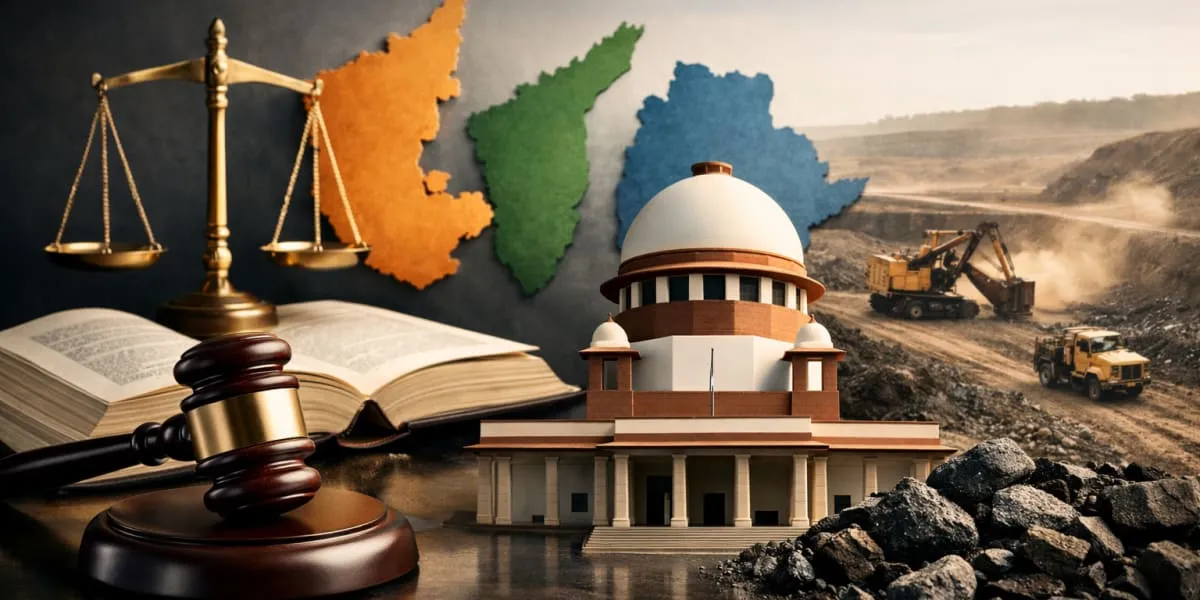
Three Congress-ruled states — Karnataka, Kerala and Telangana — will challenge the Mines and Minerals (Development and Regulation) Amendment Act, 2026 in the Supreme Court after the President approved the measure on August 18. The states oppose the amendment because it prevents state governments from imposing taxes, cess or other levies on mineral rights and mineral-bearing lands, a change they say undermines state revenues and the federal balance. The move to litigate follows coordinated steps by state leaders and the party.

Congress general secretary for communications Jairam Ramesh announced that the three southern states have decided to file petitions and that legal papers have been prepared. The amendment removes a state power to levy charges based on mineral quantity, mineral value, royalty or other bases except where conditions are prescribed by the central government. It further provides that levies not deposited with or recovered by a state before the law's commencement will be regarded as invalid.

The legislation was framed to overturn a 2024 Supreme Court judgment that had affirmed state authority to tax mineral rights, and the Centre has insisted that the change is necessary to ensure uniformity in mineral taxation. The amendment also specifies that any tax, cess or levy already deposited prior to commencement will not require refund, a provision that the government says avoids retrospective liabilities.

In the bill the Union government argued that regional disparities in fiscal impositions distort markets, prompt industry to bypass local supply chains, raise transport costs and increase pollution, and could encourage higher mineral imports despite domestic reserves. The Union mines minister framed uneven state levies as causing heavy tax burdens, unpredictable charges after operations commence, multiple levies on production or dispatch, varied rates across states and retrospective impositions.

Karnataka deputy chief minister G Parameshwara raised concerns about the implications for India's federal structure and highlighted the fiscal pressures on states that already carry extensive responsibilities. The three states now intend to pursue their legal challenge in the Supreme Court as the matter proceeds through the judiciary.

Three Congress-ruled states — Karnataka, Kerala and Telangana — will challenge the Mines and Minerals (Development and Regulation) Amendment Act, 2026 in the Supreme Court after the President approved the measure on August 18. The states oppose the amendment because it prevents state governments from imposing taxes, cess or other levies on mineral rights and mineral-bearing lands, a change they say undermines state revenues and the federal balance. The move to litigate follows coordinated steps by state leaders and the party. Congress general secretary for communications Jairam Ramesh announced that the three southern states have decided to file petitions and that legal papers have been prepared. The amendment removes a state power to levy charges based on mineral quantity, mineral value, royalty or other bases except where conditions are prescribed by the central government. It further provides that levies not deposited with or recovered by a state before the law's commencement will be regarded as invalid. The legislation was framed to overturn a 2024 Supreme Court judgment that had affirmed state authority to tax mineral rights, and the Centre has insisted that the change is necessary to ensure uniformity in mineral taxation. The amendment also specifies that any tax, cess or levy already deposited prior to commencement will not require refund, a provision that the government says avoids retrospective liabilities. In the bill the Union government argued that regional disparities in fiscal impositions distort markets, prompt industry to bypass local supply chains, raise transport costs and increase pollution, and could encourage higher mineral imports despite domestic reserves. The Union mines minister framed uneven state levies as causing heavy tax burdens, unpredictable charges after operations commence, multiple levies on production or dispatch, varied rates across states and retrospective impositions. Karnataka deputy chief minister G Parameshwara raised concerns about the implications for India's federal structure and highlighted the fiscal pressures on states that already carry extensive responsibilities. The three states now intend to pursue their legal challenge in the Supreme Court as the matter proceeds through the judiciary.

Related Stories

Gold Stories
Next Story
Real Estate

Gradiant expands Coimbatore engineering centre

Gradiant has expanded its Global Engineering Center (GEC) in Coimbatore, more than doubling its engineering workforce from approximately 100 to over 200 professionals as it strengthens its global project execution capabilities.The expanded centre will bring together multidisciplinary expertise across process engineering, detailed design and project engineering, enabling the India team to take on greater responsibility for the engineering and design of Gradiant’s international projects.According to Govind Alagappan, COO, Gradiant, Coimbatore’s engineering talent and industrial heritage make..

Next Story
Infrastructure Urban

Domestic Firms Choose Locally Designed Reactors to Cut Delays

Domestic companies in the nuclear sector are choosing locally designed reactors to avoid time consuming approvals and supply chain bottlenecks that can delay project execution. The shift reflects an emphasis on reducing dependence on foreign designs and accelerating construction schedules by aligning design, manufacturing and regulatory processes within national frameworks. Industry participants expect that locally designed systems will allow closer coordination with regulators and vendors, shortening lead times for certification and component delivery. Localisation is projected to stimulate t..

Next Story
Infrastructure Urban

Kadiyam Kavya Seeks Separate Railway Division For Kazipet

Warangal Member of Parliament Kadiyam Kavya has urged the establishment of a separate railway division based at Kazipet and submitted a representation to the South Central Railway (SCR) general manager at the headquarters in Secunderabad. She highlighted Kazipet's role as a major railway hub and argued that the junction has not seen development commensurate with its strategic importance. The representative action aimed to press for administrative reorganisation to address local operational and developmental needs. She noted that creation of an independent Kazipet division has been a long stand..

Advertisement

Subscribe to Our Newsletter

Get daily newsletters around different themes from Construction world.

STAY CONNECTED

Advertisement